Do You Have to Insulate a Camper Van? Let’s Find Out

When converting a van to be used as a camper van, it can be a challenge trying to figure out everything that needs to be done. It can also be an expensive undertaking and some try to cut corners and reduce the overall cost of the build. Insulation is one of those areas that often gets cut or reduced. Some consider it a necessary part of a build while others may not.

This article will tackle the question of insulating or not insulating a van based on my experience of converting and years of traveling in one.

Do you even need insulation in a camper van?

You don’t have to insulate a camper van BUT insulation is essential if you desire a comfortable, temperature-controlled living space. Beyond helping to regulate temperatures, insulation can also serve as a sound dampener and make the overall experience much more pleasurable.

As someone who has spent a lot of time in a camper van, I consider insulation to be one of the most important steps of a van conversion. This is your opportunity to build a foundation in your van that will allow you to complete a build that will be comfortable to travel in.

There are some who disagree and consider insulation to be an unnecessary step but anyone who has spent a fair amount of time living or traveling in a van will certainly appreciate the benefits of an insulated van versus an uninsulated van.

To further explore why insulation is essential, let’s look at some of the pros and cons of having insulation. While insulation isn’t totally necessary and you do not have to use it, you may agree after seeing the pros and cons that it is a good idea to do it in the early stages while you have the chance.

Pros of Insulating a Camper Van

If you are on the fence and are unsure whether or not you want to spend the time and money involved in adding insulation to your van build, the following pros will help you to decide. I only have two pros for insulating a van but they are pretty big ones and they can make or break your van build in the end.

Better Temperature Control

The obvious reason for adding insulation to a van or any type of structure is to help regulate the temperature. Without insulation, heat transfer can happen without any friction holding it back. Insulation gives a barrier that will slow the heat transfer down.

This will help to keep your van cooler in the summertime as well as keep the interior of your van warmer in the wintertime. If you do not include any type of insulation that has a decent R-value, you will be riding around and living in a big metal box that will get extremely hot in summer temperatures and will not retain heat very well in winter temperatures.

To avoid this, high R-value insulation can be used. Many people choose an insulation type such as wool, Rockwool, Polyisocyanurate foam board, Thinsulate, or fiberglass batt. All of these have a respectable R-value that will do a good job in a van. However, each has its own pros and cons.
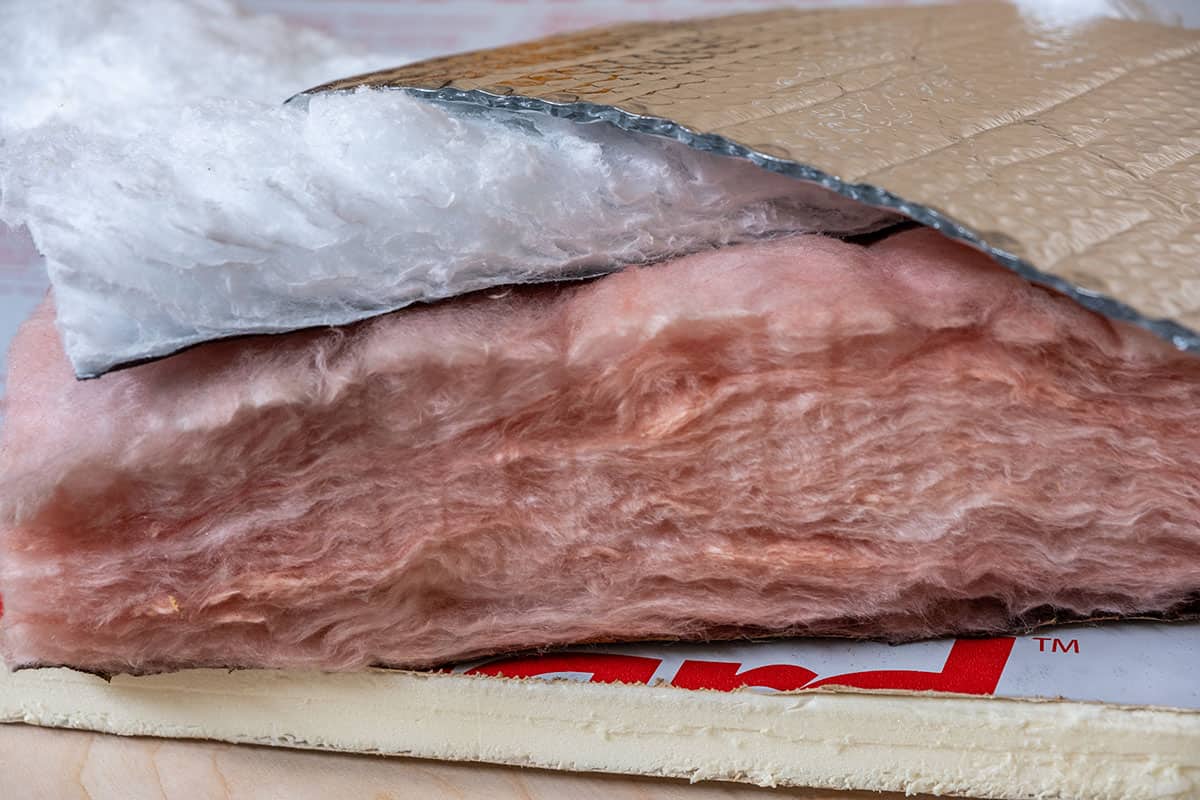
four types of insulation on top of one another

It’s a good idea to consider the way you will be living and the environment that you will be in when you make your final decision as to the type of insulation that you will use. Those who live in extreme climates will need more insulation and those who live in more moderate climates will need less.

Noise Reduction

One of the biggest benefits that many people do not even consider is the added bonus of reducing overall noise in your van. Insulation can do an excellent job at dampening the noise whether it be road noise as you are driving or outside noises as you are trying to sleep at night.

Noise-reducing insulation such as Thinsulate will help to muffle sounds and give you an overall better experience. You will hear less outside noise while you are in campgrounds or other loud areas such as parking lots.

When combined with sound deadening material, insulation will give you a quiet ride and will help make the long drives more bearable.

When I first purchased my van, it was just a large metal box and the noise level was pretty high as I drove home from where I purchased it. I was already wondering if it would always be this loud or if there was something I could do. This experience prompted me to research the subject more and come up with a solution that would reduce the noise throughout the cabin and living area so that I could experience more joy in the journey.

When you combine different types of insulation that are designed to do different things, the noise level can be reduced dramatically. I experienced this after installing Noico sound deadening material along with Thinsulate insulation throughout my entire van. The noise level was noticeably less and driving in the empty cargo van was much quieter than it had been on my original ride.

Now, after driving my van and using it for a few years, it has been a pleasurable experience and I attribute a lot of this to the prior planning I did to combat noises like this.

Cons of Insulating a Camper Van

Of course, there are always cons to doing anything no matter what it is. It’s up to you to decide whether the cons matter more or the pros matter more. In my case, the pros of having insulation far outweigh the cons and I am happy I went that route. You, on the other hand, may find a different conclusion. Let’s look at a couple of cons that may arise.

Possible Moisture Buildup

A van is a place where you will be introducing moisture through cooking, showering, and traveling in humid climates. Some worry that insulation will only add to the problem and create areas where moisture and dampness could accumulate. However, this is likely only a problem if ventilation is not thoroughly considered in your van build.

I have never had any problem with condensation or moisture whatsoever. I have built in proper ventilation throughout my van including a roof fan along with a window on the side that pulls air through my van anytime I need additional ventilation.

I even have a shower with a water heater in my van that I use often and even with the moisture that this shower creates, the moisture has not caused any issues that I have noticed. This may be a problem if you insulate your van with a type of insulation that does not do well with moisture such as fiberglass batts.

If your van is not properly ventilated, you could see an issue over time with normal levels of condensation and moisture buildup during cooking, high humidity, and just normal breath when in a non-ventilated area.

Additional Cost & Time Commitment

The second con is the obvious cost and extra time involved in installing it. Many people just want to get to the fun part of the conversion which generally involves setting up the kitchen and living space to look like a dream home.

However, it won’t be much of a dream home if you don’t consider this step and take the time to install insulation while you have the chance. The best time to do this is in the beginning before you have done anything else. Yes, it is an additional cost that can be quite expensive depending on the type of insulation you choose.

However, if you skip on this choice, the foundation of your van may be at risk because the temperature will not be regulated as nicely as it otherwise could be.

This is important for your living comfort, as well as resale value. If you decide to resell your van, many people won’t be happy that insulation is not installed behind the walls because this means that if they want to do it themselves, they will need to rip apart the van and basically start from scratch. Consider this as you build your van and plan your layout.

Including insulation into your van build is just good common sense and is a win-win for everyone.

In my opinion, going with good quality insulation like Thinsulate is worth the cost, and the time it takes to install it is minimal.

Is Van Insulation Worth It?

Insulation in a camper van is more than worth the cost and time that it takes to install it. There are so many benefits that you will notice when you have your van properly insulated. If you want to keep your van cooler in the summer or warmer in the winter, it’s a no-brainer.

It comes down to the type of environment you plan on traveling in.

The weather varies greatly in different parts of the world. I live in the Midwest and often experience very hot summers with lots of humidity as well as cold winters with snow and ice. These temperature swings put you in predicaments where controlling the temperature better inside your living area is important.

If I lived in an idyllic area that was a nice 75 degrees year-round, perhaps the answer to this question may be different. However, this isn’t the reality for most people and van travelers often experience large swings in temperature and weather patterns.

My advice, as someone who has experience with a properly insulated camper van, is to make the extra effort to make your van more comfortable from the beginning. You’ll be glad in the and once you begin traveling and experiencing the fun that this lifestyle provides.

Conclusion

You don’t have to insulate a camper van. There is no one forcing you to do it and you can still enjoy traveling, sleeping, or camping in your van without it. However, if you want to take the experience to the next level, adding insulation to the van is an easy way to level up on your total experience.

Insulation is a tricky subject and there are numerous videos and websites online discussing the good and the bad of it. I speak from experience and know that I am extremely happy that I insulated my van and put extra thought into it.

I went a little overboard on my insulation, mainly because I purchased too much and had a lot leftover and also because I just assumed the more insulation I could pack into it, the better off it would be. This has proven to be a good decision for me but each person is on a different journey and may experience a different result altogether.

Whatever you do, don’t skip over this part and assume it doesn’t matter. Consider the options and make an educated decision before you continue with your build. After all, you can’t easily go back and install insulation once the van has been fully converted. You’ll have to tear it back apart and start over! It’s best to take care of it now.

Having insulation can make a huge difference in a van and make it feel more comfortable, cozy, and professionally made. Buyers will appreciate it once you are ready to put it up for sale.

7 Benefits of Camper Van Travel

Traveling in a camper van is something I have gained a lot of experience in during the last few years and I have come to appreciate the benefits of doing so. Even when I am just traveling and not using the van to live in, it serves a purpose and makes the trip more pleasant. Once you have experienced traveling in a small home on wheels like this, it’s hard not to appreciate the benefits of it.

While the intended use for a camper van is to travel on adventurous camping trips, it doesn’t have to end there. There is no need for it to sit in your driveway only to be used on the next summer vacation. Unlike a larger RV, the size of a van allows you to make use of it in many other ways.

I’d like to share some ways I use my van for travel and some of the benefits I have found over the years. Some of these may not be so obvious unless you are a seasoned van lifer yourself.

1. Convenience

The number one reason for camper van travel has to be the conveniences associated with it. When compared to other RV types, it provides an experience that is extremely convenient to the point that it doesn’t seem like you are even in an RV. Instead, it seems that you are traveling in your personal vehicle–with extra perks.

The convenience of traveling in a camper van is mostly due to its small size.

When you compare the class B RV to a class A motorhome, for example, you can see how convenient it is when driving and maneuvering around as well as parking in small locations. Although the class A will provide a more roomy interior and luxurious sleeping arrangement, one has to weigh the pros and cons of each to determine the best option for their use.

Convenience generally tops the list in the pros column for camper vans and makes them an ideal choice for those who want to travel with less hassle.

Even outside the realm of camping, a camper van can also be used as a daily driver. It doesn’t need to simply sit in a driveway and wait for the next RV trip. Instead, since a van is small, it can be driven for additional purposes beyond the yearly camping trip.

A van makes a perfect solution for full-timers which is why van life has taken off in recent years. It can provide a great living environment with such a small footprint that it can be driven anywhere without much trouble.

2. Less Travel Stress

If you have ever driven a large RV or towed a travel trailer of some type, you may be aware of some of the stressors involved in doing this. Well-seasoned campers may have no issue with it but for the less experienced, it can be a bit overwhelming.

Car towing a large travel trailer

With a large RV, there is always the added stress of being able to find a place large enough to park, turn around, or just get through traffic safely.

With a van, this type of stress is almost non-existent. You can simply hop in the vehicle and head out without much planning. There is no need to worry about a trailer being towed behind you or whether or not your rig will fit into your next RV spot.

3. Ability To Stop & Rest in Comfort

Traveling in a van gives you the opportunity to stop and rest as needed. Of course, you can do this when traveling in anything but the van makes it MUCH easier. The ability to pull into a rest stop or store parking lot and park in any normal parking spot gives you the flexibility to be able to stop no matter where you are.

Even when we are not on a camping trip, we generally drive our van for this purpose alone. It makes for an easier way to stop, get something to eat, take a short nap, fix coffee or food, use the toilet, or do any other thing we might need to do. All of this while parked in a standard parking space.

We have done this many times as we have stopped at grocery stores or restaurants and eaten our food in the comfort of our own van dining area. If you get tired on a long trip, having a camper van with a bed and other comforts gives you the opportunity to pull into locations like this and get some shut-eye. In my opinion, it’s a safer way to travel even if you are using it for other purposes beyond camping adventures.

Even on trips where a hotel or other living arrangement was the end goal, the camper van has served as a great way to travel and offers us lots of comfort and amenities while on the journey.

4. Easy to Park and Blend In

Once you have stopped and settled into your desired location, you will have no problems being parked in an area where other cars are coming and going. Rather than taking up additional parking spaces as a larger RV might do, you’ll be nestled in tightly amongst other vehicles. With a bigger RV, you may not have enough space to even park or could be asked to move if you are in the way of others. You won’t have this issue in a van.

Not only that but you will also blend in with your surroundings easier. Rather than sticking out like a sore thumb, you look as though you’re just another vehicle parked in a parking spot. Some people may not even know whether it is a camper or just a work van.

5. A Camper Van Can Be Used For Multiple Purposes

Unlike a standard RV, a class B van could have multiple uses. I use my van for all kinds of purposes beyond adventure excursions. I am often using my van to haul lumber or larger items that might not fit in other vehicles. It makes it handy when I need to pick up something from a hardware store and it’s raining outside. The van can be used to easily load a larger item and keep it out of the weather while I drive it back home.

Of course, this will depend on the layout of the van inside. Some vans may not be flexible enough to provide an open area for hauling loads. However, many RV manufacturers of class B vans have considered this and often include beds and other areas that convert or can be folded up out of the way.

As an example, the Storyteller Overland van has a rear bed that can be stowed out of the way to make room for a passthrough area. This area can be used for storing large items or simply making it easier to walk through. Check out the van below in the video to see this feature.

Some vans have access space for you to haul a motorcycle or bicycle inside. I have often hauled my bicycle inside my van just to take it on a bike ride somewhere. The van makes it easy to store the bike inside and take it out when needed and I don’t have to worry as much about it getting stolen while I’m out on the road.

Try this in a larger RV and you won’t be able to do it. It’s not likely that you’ll drive your class A RV to Home Depot so that you can pick up some lumber. It wouldn’t be ideal with nearly any other type of RV or motorhome. The van stands out among the crowd of RV types as something that can be used for camping and traveling but also can handle other uses without a problem.

6. A Camper Van Gets Great Fuel Mileage

One of the best benefits of a camper van is the money-saving benefit that it has with lower fuel mileage. You’ll be able to drive further per gallon of gas which, in the end, will add up to a lower-cost trip in the long run. I have often been very surprised at the fuel economy of my van. Even when up and down mountain roads and hilly terrain, my Promaster van gets great fuel mileage for a gasoline engine.

The RAM Promaster 2500 that I have with its V6 engine, generally averages between 15 – 20 miles per gallon.

This is the type of fuel mileage that you might expect from any full-size vehicle which makes it similar to driving a personal vehicle around. When compared to larger motorhomes, you’ll find that a class B is going to give you the best bang for your buck in terms of fuel mileage.

7. Easier Maintenance

Another great benefit of owning and traveling in a class B van is that you can generally take them anywhere for service. Rather than finding an RV dealership, these can generally be taken to any dealership or mechanic that can do the job. Oil changes are easy no matter where you are. The only problem that I have run into with my camper van is the high roof. I have taken my van to one dealership that didn’t have a high enough bay to service it.

This usually isn’t a problem as most dealerships have at least a few tall bay doors to accommodate higher roof vehicles like this.

Otherwise, the standard maintenance items that you would expect on any type of RV are easy to maintain on a camper van. Since they have a smaller footprint, there is less maintenance required and the roof is easy to reach, systems are generally small and easy to work with.

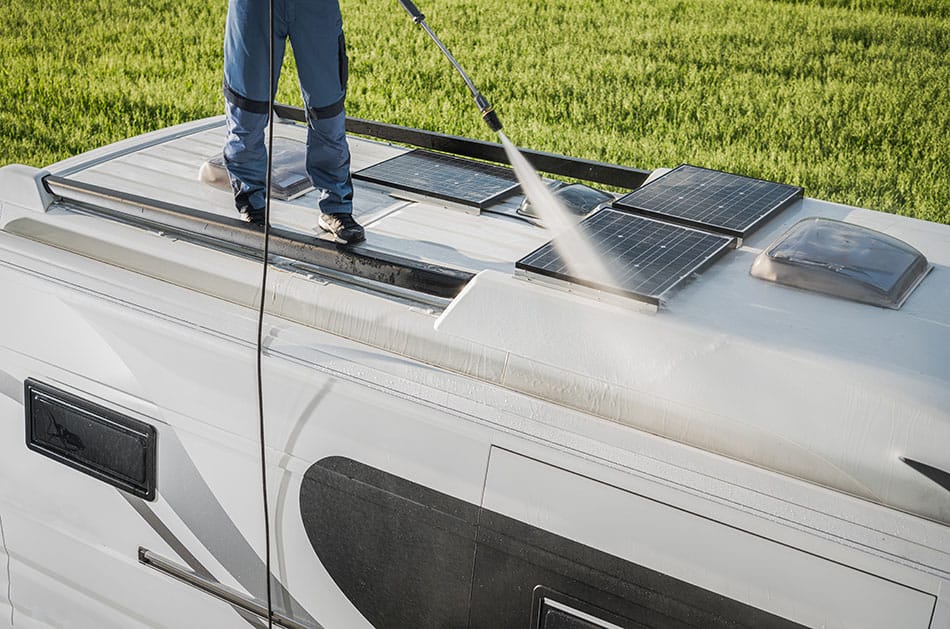
Man pressure washing top of a class B RV

Beyond maintenance, washing a van is considerably less work than washing a large RV.

Bottom Line

There are many benefits to owning and traveling in a camper van. It’s a no-brainer if you are interested in adventure travel and want a small home to carry along on the journey with you. Having a larger one presents some issues that many people don’t consider.

Anything larger than a class B RV will often require you to tow another vehicle so that you can have a drivable car when you get to your destination. With a van, you have the benefit of being able to drive away in your van at any given time which eliminates the need for a towable car.

If you are looking for convenience and a way to travel lightly while reducing travel stress, a van may be perfect for you. It has been an amazing journey as I have traveled in my van and often feel grateful that I do not have the struggles that come along with driving a large RV or towing a large camper trailer.

It’s nice to be able to have the convenience of a motorhome in the small footprint that a van provides. Because of this convenience, many have been able to enjoy van life and the ability to travel freely to destinations all over the globe.

What Size RV Do I Need? Size Comparisons of Each Type

Choosing the best RV can be a difficult task! It isn’t always easy to pick the perfect solution on the first go-around, especially if you are new to the lifestyle. I drive a camper van but it may not be the right choice for you. There are times when I think it’s not even the right choice for me. I often think about owning a more spacious solution but the benefits of the Class B keep me content.

There are benefits to owning the Class B that I own and the same can be said for all the rest of the different RV types. Each has its pros and cons list and different things matter to different people. If you are unsure or still on the fence, this article will help you decide by looking at the different types of RVs and their sizes while laying out the good and bad of each.

RV Size at a Glance

RV TypeTypical Size (length)Who’s It For?
Class A25ft – 45ftfamilies who want a luxurious, spacious experience
Class B17ft – 25ftsingle people or couples who seek adventure over comfort, those who want an easy-to-drive rig
Class B+22ft – 25ftcouples or small families who want a small, drivable option
Class C20ft – 35ftfamilies who want a small drivable, affordable RV
Truck Camper10ft – 15ftsingle people or couples who already own a capable truck and seek off-road adventure
Small to Medium Travel Trailer8ft – 20ftsingle people or couples who own a standard vehicle and want to spend less and don’t require much space
Large Travel Trailer20ft – 35ftfamilies that need space but want a more affordable option than a motorhome
Fifth Wheel25ft – 45ftfamilies that want lots of room and owns a capable vehicle to tow it

Drivable RVs (Motorhomes)

Motorhomes offer a ton of benefits with my favorite being that they provide an all-in-one solution. You can move between the driving and living areas without ever leaving the vehicle. This provides more convenience and safety.

Class A

Class A RV driving down the road

A class A RV is going to be the largest of all of the drivable types of RVs. This is the one you want if you have a large family or you want a lot of room inside so that you can get comfortable. It’s like a small house on wheels that has all the room and amenities inside that you can imagine. These come in all sizes and some of the largest ones can be upwards of 45 feet in length.

Some of the smaller class A RVs can be 25 feet in total length. However, even with this short length, these are often very accommodating with a well-thought-out floor plan and also may include slide outs that add additional living space inside.

These are usually gas hogs and will cost a lot of money to operate and drive long distances. If you are looking for an RV that will fit you, your family, and all of your belongings while maintaining a comfortable living space, a class A may be a good choice for you.

There are some downsides such as being more challenging to drive, being very expensive, and having to tow a vehicle behind for personal use.

Pros

  • A class A RV has lots of living space inside
  • A class A RV has all of the amenities you could expect for a comfortable living setup
  • It’s drivable
  • Gives you a luxurious, homey feel no matter where you go

Cons

  • You will likely need a towable vehicle to pull along with you
  • They are big and challenging to drive
  • They are the most expensive type of RV that you can buy
  • They are expensive to operate
  • They require a lot of space for parking

Who’s It For?

The class A motorhome is for those who want luxury at its finest! You’re the type who has a lot to spend on an RV and wants to make sure you are comfortable no matter where you go. You’re the envy of every other camper in the campground as they look at your massive rig in amazement of all the space you must have inside. You’re not looking for the camping experience but for the feeling of traveling in comfort and style.

If you have the money, a small car to pull, and no fear of driving one of these big rigs, you’ll love it!

Class B – Camper Van

Class B van parked at campground

Class B RVs are the complete opposite of the Class A’s mentioned above. You won’t find lots of elbow room inside one of these RVs but you will find a lot of other conveniences. A class B (camper van) is an amazing vehicle for being able to get you into places that larger RVs just can’t go. Besides that, you can use it like a car without the need to tow an additional vehicle with you.

While you won’t find the space inside comparable to a larger motorhome, you’ll appreciate just how nimble a motorhome of this size is.

Pros

  • Small and nimble, easy to drive and park
  • No need for a towed car
  • Fits into nearly any parking spot
  • Resale value higher than most classes of RVs
  • Good fuel mileage

Cons

  • Small living space
  • Expensive for what you get

Who’s It For?

A camper van is for someone who is looking to be able to travel far without the inconvenience of a large vehicle. A camper van can go nearly anywhere so this type of RV or for those who are a bit more adventurous and aren’t concerned as much with spacious living arrangements.

A camper van is great for one or two people but may be a challenge for a family. This type of RV has been my preferred choice for a few years now and I have thoroughly enjoyed it. While there are times that I wish I had more room inside, the benefits of driving a small home around like this outweigh any comfort issues.

Class B RVs can be quite expensive with some in the range of $200,000 or more. Most of them sell for over $100,000 brand new with only a few on the market that are below this amount. You can find used ones for a decent price but they do keep their value pretty well for an RV. You may be better off converting your own as I did if you want to save money.

Class B+

If a Class B is too small for you but you still want a small footprint, the class B+ is a good compromise. These are also built on a van chassis but usually have a custom-built living area that is larger than the van itself. Because of this, you get more living space inside which can be a game-changer for this small of an RV.

Some of the best on the market include the Leisure Travel Vans Unity and the Airstream Atlas. While these are classified as Class C, they are smaller than the typical class C and more akin to a van than most. This is an expensive option but worth the price if you intend to travel and use it a lot.

Pros

  • Good size without being too small or too large
  • High-end features that rival that of a larger RV

Cons

  • You may need to tow a vehicle
  • Expensive
  • Hard to find due to the popularity

Who’s It For?

This type of RV is for those who like the small footprint of a class B van but find the van alone to be too small. A B+ van will allow for more living space inside and be more comfortable to travel with. They maintain a small footprint but open up inside to a more spacious and luxurious living environment.

If you have a small family but want to stay small with your choice of RV, this size will fit perfectly. You will truly be traveling in style and will be able to drive and maneuver the rig without the troubles of a much larger one.

Class C

Class C RV parked in the desert

The Class C RV is the most popular of all the motorhomes on the road. This is mainly due to their spacious floorplans and affordable prices. You can find these on the new market at a good price but used ones for even better. These RVs come in all shapes and sizes and vary in total length.

Whether you are looking for a small one or a large one, you’ll find a huge range of sizes between manufacturers and models.

Pros

  • Affordable motorhome option
  • Variety of sizes and floorplans readily available
  • Lot’s of living space inside
  • Comfortable to drive, usually on a van chassis

Cons

  • Lower priced models can be inferior in quality
  • You will need to tow a car if you want the freedom to explore an area once you set up camp

Who’s It For?

A Class C RV is a great choice for a small family who wants to travel with a spacious living area. These often are designed with multiple sleeping areas and usually always have an extra bed over the cab. This area works great if you have children or other visitors while you are camping.

These range in size from about 20 – 40 feet in total length.

They usually have slide outs and the space can be opened up further for an even larger living space. They are often affordable and easy to acquire as most RV dealers have a wide range of this type of RV in stock.

Truck Camper

Truck camper driving on road in desert

Unlike the other motorhomes mentioned above, a truck camper requires you to have a vehicle in order to use it. This is a good thing since you can choose the exact model of truck you wish to drive. Many people use a four-wheel-drive option for this and a truck camper serves as an excellent adventure vehicle.

You can drive into locations and enjoy it where you might not be able to drive other RVs. These come in a range of sizes and the size you choose will be determined by the type of truck you have. There is a truck camper that will fit almost every truck model on the market including the most compact trucks, all the way up to the most capable trucks on the road.

Unlike the other motorhomes mentioned above, you’ll need to exit the truck in order to access the camper in the back of the truck.

Pros

  • It can be removed from your truck as needed
  • Affordable
  • Small and easy to store when not in use

Cons

  • You must have a truck that can handle it
  • Layouts and interior space is minimal
  • Larger models can extend up high making them top-heavy

Who’s It For?

If you already own a capable truck, finding a camper to put on the back of it may be a great choice for you. This is especially true if you only camp occasionally and it’s only you or you and another person. The space is limited inside one of these so you won’t be able to comfortably fit a family inside in most cases.

For the person who wants to get away on off-road adventures, and camp for the night, a truck camper makes a great choice.

Towable RVs

Towable RVs are generally more affordable and offer spacious living arrangements for the size. You’ll need a vehicle to tow one and you’ll also have to get out of your vehicle in order to access the RV.

Small to Medium Trailer

Teardrop trailer in campground

A small travel trailer such as a teardrop trailer or a pop-up camper is an affordable option that allows anyone with a capable vehicle to tow it to a camping destination. While these aren’t very spacious, they do provide all that one needs to be able to enjoy a comfortable getaway in nature.

The main benefit of these types of RVs is that they are small and affordable. Not only that but they do not require a large vehicle to be able to tow them. Many SUVs and small passenger vehicles can tow a small travel trailer with no problem. This makes it a great choice for a family who already owns cars and just wants an RV to be able to go camping occasionally.

These range in prices but a small teardrop trailer can be purchased for as low as $15,000 and a small trailer that you may be able to walk around in such as the R-Pod, can run up to $30,000 and beyond for a brand new model.

Pros

  • Affordable
  • Can be towed with almost any car
  • Once camp is set up, your car can be used to drive freely
  • The used market is full of them

Cons

  • Not very spacious
  • Requires a vehicle to be towed rather than being drivable

Who’s It For?

A small travel trailer is great for someone who wants to get away on camping trips but doesn’t want to spend the money for a drivable option. The interior in small travel trailers can often be compared to a smaller class C or class B van. They are easy to maneuver around even though they do require towing.

If you already have a capable vehicle, a small travel trailer can be an instant way that you can become an RVer. They are affordable and with many of them on the market, you can purchase used for deep discounts.

Large Trailer

Large travel trailer being towed by truck

A large travel trailer can provide the space needed for real family fun. These are larger than the smaller ones mentioned above but can be perfect if you are wanting more room with more luxurious amenities during your travels. These often come decked out with features and provide a great experience at an affordable price.

A large travel trailer ranges in size from about 20 feet to 40 feet. There is something for everyone but some of the larger ones will require a more beefy vehicle to tow them. Some of the large trailers can weigh over 10,000 pounds so will need something that can do the job of towing it.

These are popular and you see them all over campgrounds. They are easy to find and purchase and are readily available at an affordable price.

Pros

  • Spacious interior with a homey feel
  • Class A motorhome size at a more affordable price
  • Insurance is cheaper than a motorhome
  • Lots of used options are available

Cons

  • A larger vehicle is needed to tow it
  • No easy access to the trailer while traveling
  • Size may be too big for maneuvering in small campgrounds

Who’s It For?

If you like the size of a class A motorhome but don’t want the costs associated with one, a large travel trailer will be a great option. If you already own a vehicle capable of towing a travel trailer of this size, it may be the perfect solution for you.

For people who have families and need a large capacity RV, a travel trailer is a good route to go.

Fifth Wheel

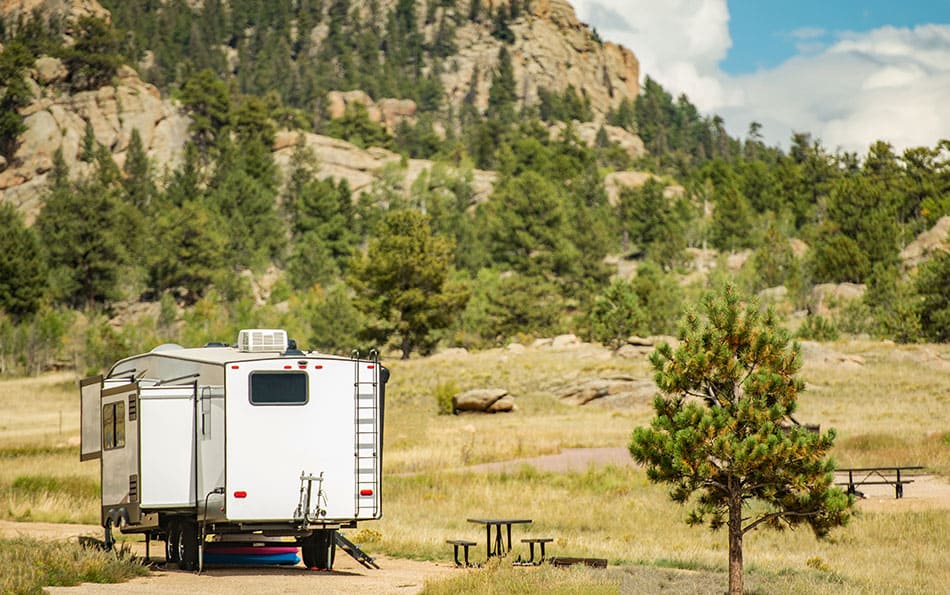
Fifth wheel RV parked at campground

A fifth wheel is a behemoth of an RV that requires a vehicle with a large towing capacity. These RVs are amongst the largest on the market and are like a luxury home that you are towing around. These require a fifth wheel hitch and are considered safer to tow than traditional trailers.

With a fifth wheel, you will have a small turning radius even though it is such a large rig. This is helpful when needing to back in or maneuver around in small areas. These are not cheap and when combined with a truck capable of towing them, becomes a very expensive package.

The interiors of fifth wheels are among the nicest that you will find in an RV. They contain all the essentials and plenty of room for families to not only stay in but stretch out and be completely comfortable.

Pros

  • Large capacity living area
  • Easy to tow if you have a capable vehicle

Cons

  • Requires a vehicle with a fifth wheel hitch capable of towing it
  • Requires a lot of parking space for camping and storage

Who’s It For?

A fifth wheel is perfect for someone who wants the largest RV that they can get in a towable solution. If you already have a truck with a fifth wheel hitch or one that is capable of handling one, these make a great option. If you don’t mind towing around a huge trailer, these can feel like you are in a luxury home at the campground.

Bottom Line

There is an RV for everyone and each person will require a different solution. This all depends upon personal preferences and the type of camping that you will be doing. It also depends on how many people are involved and the amount of space required for a comfortable experience.

My suggestion is to rent some RVs to find out which one may be perfect for you. If you have never been inside the different types and sizes of RVs, go look at some on a dealer’s lot. Just don’t get suckered into buying one before you are ready! Figure out which sizes you are most interested in and look into a few rental options. Only after spending some time camping in them will you know the type that you prefer and will work best for you and your family.

9 Best Weapons For Camping

Camping is a relatively safe experience. I have been a camper for most of my life and have never had an issue where I felt that a deadly weapon was necessary. However, that doesn’t mean that it will always be that way. Having some way to protect yourself when things go wrong is just good common sense.

When many people think of carrying a weapon for protection, a gun may be the first thing that comes to mind. While this is certainly an option if it’s legal and you obey the laws, there are many other options that are less deadly but extremely effective.

Different rules apply depending on where you are on whether or not you can carry a gun. I choose not to go this route but I do have a keen sense of my surroundings and am generally prepared for bad things that might happen.

If you camp regularly and are looking to beef up your defenses, there are some common items that will work very well as weapons. Many of these are already at your disposal and you will simply need to be more aware of them.

When considering a weapon, you need to first establish what you are trying to protect yourself from. It could be wild animals or it could be the most dangerous of all; other humans with bad intentions. It’s good to be prepared for both in case something goes down that threatens your well-being.

If you are going to use a weapon, it should be a last line of defense. Some weapons could get you hurt if you don’t know what you are doing. For example, someone with a greater skill set could take a knife away from you and use it against you instead. Only consider a weapon as a last resort when your back is against the wall and you have to protect yourself from serious harm.

Let’s look at some great weapons to have on hand while camping that can help ensure your safety. These are in no particular order EXCEPT the first one.

NOTE: if you choose to carry any type of weapon when camping, make sure it is legal to do so and you understand any consequences involved in using it.

1. Your Brain / Awareness

The number one way to stay safe while camping is with the weapon you have right between your ears; your brain! Being aware of a situation and using your brain to direct your actions is the first step in ensuring your safety.

Our intuition can help us avoid something that might cause us harm. The trick is to listen to that intuition and avoid getting caught in dangerous situations. Not only that, but it also takes awareness to understand how and where to park your RV or pitch your tent.

Avoiding bad areas or other places where you just don’t feel comfortable will go a long way in protecting you.

Being aware of your surroundings and prepared in the best way that you can should be the first action. Only then does it make sense to even discuss weapons.

2. Pepper Spray / Bear Spray

Hand holding pepper spray

Pepper spray is a great way to protect yourself against other humans who are up to no good. It’s an easy weapon to carry with you and can easily be kept in your pocket at all times or in a location in your RV that’s easy to get to. With numerous varieties on the market, it’s easy to find an effective pepper spray that will protect you from intruders and other sketchy people that come around.

Pepper spray is designed to incapacitate an attacker long enough so that you can get away. Don’t expect it to take someone down for good.

Bear spray is great to have on hand as well if you camp in areas where bears and other wild animals could cause Harm. While bear spray isn’t designed for protecting yourself against humans, it can be highly effective in the event of a bear attack. It’s good to have both of these on hand on a camping trip and use them accordingly.

With both of these, it’s a good idea to understand how to use them and what the spray bottles are capable of. You don’t want to get caught in a situation where you need to use one and be fiddling around with the spray nozzle. Even worse, spraying towards yourself rather than the intended target.

3. Knife / Axe

Folding knife at campsite

Every camper should have a knife on hand. Not only for protection but for the practicality of having one. There are so many things you need a knife for while living off the land. A folding knife can easily be carried in your pocket at all times and it’s great to have on hand for those times when you just need a knife. You may need to open a package, cut a cord, slice up some food, or even protect yourself.

A sturdy pocket knife can be a great way to arm yourself and provide you with a weapon if you ever encounter a situation where when is needed. In an RV, you may have a plethora of knives sitting around for cooking and other needs. These may also be used if someone breaks into your RV or someone is up to no good and you need to ward them off.

Similar to a knife, an axe is also effective as a potential weapon. Axes are sometimes needed on a camping trip in order to cut firewood or chop something down. While you hope to never use such a thing, it’s an option that can do a lot of damage and protect you from unwanted visitors if needed.

4. Fire Extinguisher

If you are an RVer, you likely have a fire extinguisher handy in your RV. While a fire extinguisher is meant to put out fires, it may also serve another purpose if your back is against the wall and you need a weapon to ward off an intruder. If you can locate your fire extinguisher in a timely manner and be able to spray it in the vicinity of the person or other being in question, it can potentially save your life.

The CO2 that is emitted from a fire extinguisher can serve to temporarily incapacitate a person and make it easier for you to get away. Not only that but a fire extinguisher could serve as something that can be used to hit someone over the head.

This would be a last resort measure but since most RVs are, or should be, equipped with a fire extinguisher, it is something to consider as a possible life-saving weapon.

Even tent campers should have a fire extinguisher on hand in case a fire starts burning out of control. Keep it close by and easy to grab and use whether it’s to put out a fire or to run someone away from your campground.

5. Trekking Poles / Walking Stick

Woman holding trekking poles

Campers are often hikers and hikers often carry trekking poles or some type of walking stick. If you don’t, it’s a good idea to start! A walking stick or trekking poles can serve multiple purposes. The most obvious is giving you a stabilized place to hold onto as you walk across areas that could be potentially slippery or dangerous. A trekking pole gives you a place to hold onto as it firmly pushes into the ground while you hold tightly to it as if it’s a handrail.

A stick like this can also be used in the event of an emergency or if someone is trying to harm you. Not only a person but it can also ward off wild animals that have wandered upon you as you can use it as a weapon to poke, prod, or swing in order to hit the assailant. Having trekking poles like this provides a great additional barrier of protection that can be of help during an encounter with a crazed individual.

Besides being handy for keeping you stable as you are hiking, these trekking poles can become your best friends in times of danger.

6. Rocks

You’ll find plenty of rocks out in nature while you’re camping. After your campsite has been set up, a few select rocks from around the area can be positioned inside your tent, RV, or sleeping area. These rocks may come in handy if you were to hear rustling weeds or a person drawing near that shouldn’t be there.

Having a selection of rocks nearby gives you some weapons to throw or hit onto something. This can provide you with some additional protection and could buy you time so that you can acquire another weapon, run away, or call for help.

Rocks can be thrown, as long as you have a good aim, and will likely make a wild animal run away or stop a human intruder in his or her tracks.

7. Dog

Dog next to man sitting in chair at campsite

We campers love our dogs and besides being a best friend, a dog can be a great security system! Depending on the dog you have, you may have a partner that can fully protect you or you may have a partner who will only alert you of danger. Either way, having a best friend on hand that has some sharp canines and an instinct to protect, will go a long way in providing you with a weapon that intruders would not want to tangle with.

Even if your dog is not a powerful breed that can take down a large person, he or she will likely still be a fighter that will stand up for you and protect you in times of need. Not only this but a dog can help to draw attention with its barking and possibly alert others who may be around in the campground or nearby.

8. Stun Gun / Taser

A stun gun or taser might be a weapon that you haven’t considered before but can be highly effective if something tries to harm you. If a person comes into your campground causing a ruckus or breaks into your RV and puts your life in danger, a stun gun or taser can be used to stop them in their tracks. The high voltage of these devices is designed to shock and temporarily disable a person as it gives you time to get away or figure out your next move.

A taser is great for taking someone down from a distance, typically 15 to 25 feet away. However, a stun gun can be highly effective if an intruder is upon you and you are fighting for your life. A stun gun temporarily can disable a person if activated while making contact with their body.

The video below shows what happens when a stun gun is used.

There are laws regarding these depending on the locality that you are camping in but in general, are legal to use in most US states and can provide some additional protection when you need it most. Learn more about stun gun laws.

9. Personal Alarm

A personal alarm is something that is more of a deterrent than a weapon. While there won’t be much you can do as far as injuring someone, a loud piercing alarm that you can push when in danger will alert others in the area and potentially cause the intruder to disappear.

Animals may not like the sound either and can be startled enough to run away when the alarm is sounding. These types of personal alarms can be carried in your pocket, on your keychain, in a purse, or backpack. It’s best to have them in a place that is easy to get to without much difficulty.

Having an alarm like this hanging from your backpack strap as you are hiking for example gives you a way to instantly press it in a time of danger. The WETEN Personal Alarm Keychain (affiliate link) is a great option that is easy to use and can be carried on your keychain.

Bottom Line

Overall, camping is a safe experience and there may be no need to worry about carrying a weapon. However, it’s good to know that there are some objects easily accessible that can be highly effective. When your back is against the wall and you are fighting for your life, these items may come in handy as long as you plan in advance.

As the saying goes, expect the best but prepare for the worst. This is just good common sense! It’s better to think about these things now and be prepared when you need them rather than not knowing what to do when the time does come.

6 Reasons Why Renting an RV Is a Good Idea

Purchasing an RV can be quite an expensive undertaking! Not only is it expensive but also requires space in which to park it. Many people just don’t have the room for a large RV sitting in their driveway or out in the street. In this case, there is another option for you to enjoy all that an RV has to offer.

Renting an RV is an option that allows anyone to enjoy the RV lifestyle without the downsides associated with owning one. The RV lifestyle is fun but comes with drawbacks to consider before deciding to purchase one. Renting an RV allows you to “test the waters” before you leap into ownership.

After you have gone through the rental process, you may even decide that you don’t want to own one. The occasional camper will probably be better off renting rather than owning since there is a high cost to owning and maintaining an RV. Renting is not for everyone and those who use their RV often or intend to live or travel in it will obviously not be satisfied with renting.

However, there are certain times that renting an RV is a great idea. It can be expensive depending on the type of RV you choose but in the end, it can allow you to experience the lifestyle without committing to a large purchase that will likely go down in value.

Let’s look at 6 reasons why renting an RV is a good idea.

1. It Gives You a Chance to Try It Out

Renting an RV is perfect for those who have never experienced the lifestyle. If you have always dreamed of having an RV and traveling, or living in it, renting one will give you a firsthand look at what it is really like. Rather than depending on what you see on social media, spend a little money to test out the waters for yourself to see if the lifestyle matches up with the way you think it will.

If you go and purchase an RV only to find out that you don’t like the lifestyle, you are then stuck with an RV that you have to turn around and sell and likely lose money on.

If you rent an RV and do not like the lifestyle, you can simply turn the rental back in and go on about your life. The only thing you will take from it is an education and an experience to remember.

Renting is great for this type of person and in fact, it might be a good idea to rent more than once before you decide on ownership. Renting different types and classes of RVs may be the best choice as you can figure out what you like and don’t like before you commit.

You may start with a class B van only to end up needing more space and feeling more comfortable in a class A. In this case, you’ll be glad that you rented multiple times so that you could discover just what it is that you need.

2. Helps You Decide Which RV Type Is Best for Your Needs

Woman driving an RV

Choosing the best type of RV for you and your family can be a difficult task. You may think you know exactly what you need but until you experience it on an actual trip, you won’t know for sure if it meets your needs or not. Class B camper vans are great small RVs to travel around in but they certainly are not for everyone.

However, van lifers make it look amazing online so you may assume that you could just make it work. However, once you begin traveling in one, you may have a completely different opinion of it.

Likewise, all of the room inside of a class A motorhome seems wonderful but once you experience the challenges that go along with that, you may long for something smaller and more maneuverable. All of these considerations are things that you won’t know until you experience actually being inside whatever RV it is you are interested in.

Once you have taken it out on a road trip or a local camping trip, you will be able to decide with greater confidence whether or not this is the RV type for you.

Renting RVs of different types allows you to experience them all and make a better decision.

3. No Commitment to an Expensive RV Purchase

An RV can be a very expensive purchase. Not only that but they almost always lose value so if you are not happy with what you have purchased, you will have lost money after driving it off of the lot. To avoid making a mistake like this, renting an RV is a good choice, especially for those who only want to go camping occasionally.

If you are someone who wants to take a trip once a year for a few days, there is no need to purchase a camper for this. You can find nice rental units from online services such as Outdoorsy or RVShare, or Cruise America.

The costs associated with an RV don’t just include the purchase itself but also all of the other things that go along with it including insurance, registration, maintenance, and storage. There are lots of additional costs that you might not think about when the RV bug has hit you.

If you are renting an RV, you don’t have to worry about any of these costs after your payment is made for the rental time. You can simply pay the rental fee, be on your way without the weight of all of these additional costs being on your shoulders.

4. No Maintenance Required

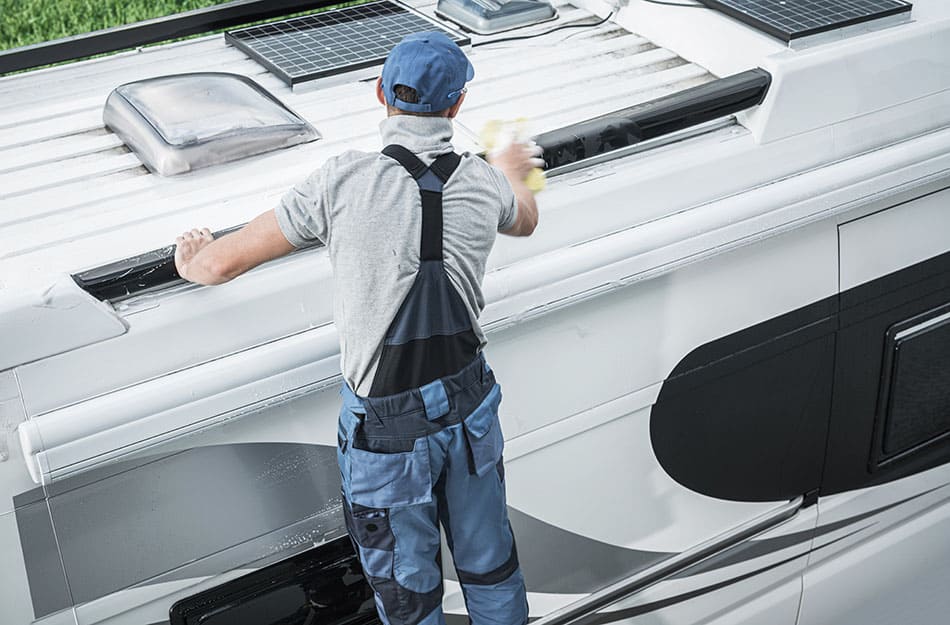
Man cleaning the roof on a camper van

Once you have purchased an RV, there is maintenance that goes along with it if you want to keep it running in tiptop shape. It will have to be treated like any other vehicle with basic maintenance items. These regularly scheduled maintenance items could include:

  • Oil changes
  • Tire replacements
  • Tire rotations
  • Wheel alignment
  • Cleaning
  • Recharging or replacing batteries
  • Repairing water leaks
  • Re-caulking and sealing windows, vents, and other openings where possible leaks could occur
  • Winterizing / De-winterizing

And the list goes on and on and on!

Maintenance like this requires a regular commitment. You will have to stay on top of it in order to make sure your RV lasts for an extended amount of time.

A rental RV comes to you with all the maintenance done! Even if the maintenance isn’t done, it isn’t your responsibility so you won’t care. This gives you a freer feeling as you rent your RV not having to worry about whether the oil needs to be changed or if the RV is going to break down.

5. No Parking Space Needed

An RV requires a lot of space to park depending on the size of the unit. A small camper van like I own doesn’t require much and sits in my driveway when not can use but a larger RV would be in the way most of the time. Unless you have a dedicated building for your RV, it may be a challenge to find a place to park it without it being an eyesore and in the way of others.

You may have to resort to paying for a storage location if you do not have the space. This introduces an additional cost and inconvenience. A class A RV can be anywhere from 25 to 45 feet long and that large of a footprint requires a big amount of space. Similarly, a travel trailer such as a large trailer or a fifth wheel will be just as large and will need to be parked somewhere when not in use.

By renting an RV, you won’t be required to have a parking space for it. Once you pick it up from where you are renting it from, you will be on your way and then simply drop it back off once you are finished. Whether you live in an apartment or a home that has a tiny amount of space for parking, you won’t have to worry about it if you choose a rental RV.

6. It Gives You a Unique Family Fun Adventure

Man and daughter enjoying RV life

If you travel on family vacations occasionally, renting an RV is another way to add some variety to the mix. Rather than the same trips to hotels and vacation homes, why not try an RV trip?

Renting an RV and going camping or traveling across the country is a great way to introduce something new. It will allow you to experience vacations in a new way. Trips like this can be fun for families as it allows a family to travel comfortably and stay together, spending lots of healthy family time together.

If you have never taken a family trip in an RV, perhaps renting is a great way to start. You can choose the size of unit you need based on the size of your family and enjoy a few nights away. This could turn into something that you do yearly or you may decide that one time was enough. Either way, you aren’t out any more money than the cost of the few nights you paid to rent the unit.

Best Places To Rent RVs

There are numerous websites that are dedicated to matching up people who want to camp with people who own RVs. These websites offer rentals from real people who own RVs and want to rent them out in order to earn some extra money. Many times, RVs sit dormant in a person’s driveway for much of the year. Renting it out becomes a win-win for both parties involved.

Here are a few locations that you might consider if you would like to rent an RV directly from another individual.

These companies allow users to list RVs for rent in order to earn extra income. You can take advantage of this and find nearly any type of RV you are looking for. Chances are, you’ll find one close by and for an affordable price.

If you are wanting to take a more traditional approach and rent directly from a company dedicated to RVs only, you might consider Cruise America. You’ll find motorhomes of all sizes here. You’ve probably seen these before because they usually have large amounts of advertising on them. No big deal though because you are only renting and it’s a good way to see what the RV life is all about.

If you know you want to rent a camper van, there are many companies that are dedicated to this type of RV alone. Many of them are regional so they may be hard to find nearby. However, Escape Campervans has quite a few locations throughout the US and Canada and may just have what you are looking for to experience a few days of van life.

Bottom Line

Renting an RV can be a great way to decide whether or not the lifestyle is for you. Even for those who just want to go on a camping trip occasionally, renting is a perfect way to make it happen without the commitment of ownership.

Renting an RV is comparable to renting a vacation home a week or two out of the year. Rather than just buying a home, you get to pick and choose where you stay and do not have to deal with the downsides of owning the property. You wouldn’t buy a vacation home in an area that you’ve never been before without first testing it out, would you?

Why buy an RV when you can rent one first to make sure you are making a good choice?

If you are in the market for an RV and are looking to spend a lot of money on one, it just makes sense to rent a few first to make sure you will be happy with the choice. It’s better to decide against it when you are renting an RV than to realize you made a bad choice after purchasing one.

Why Is Camping So Popular? 7 Reasons To Consider

When I was young, I used to wonder why anyone would enjoy camping! We had a family camping trip every year but it was because my parents enjoyed it and I just tagged along. I couldn’t imagine actually choosing to do this on my and assumed that I would have no interest in it once I “grew up.”

Fast forward 35 years and now it’s one of my favorite things to do! There are just so many things to love about it and as you mature in life, you tend to appreciate all the good things camping can bring to your life.

Camping is popular because it offers an escape from the modern world and allows you to recharge. It’s an affordable way to travel and experience nature up close and personal. Social media has also made it very attractive as people post alluring photos of their glamorous camping lifestyles.

Whether it’s glamorous or not, it certainly helps me to overcome brain blocks and anxiety issues as well as a host of other problems that I, as well as many other adults, encounter in life.

Let’s look at some of the reasons why camping has become so popular.

1. Social Media

It’s not hard to find a plethora of camping posts on all sources of social media. It seems to have become a popular thing to post adventurous photos of camping and other outdoor, adventurous activities in amazing locations. Because of this, people have swarmed locations in search of that perfect social media post. This has made camping seem like a glamorous lifestyle and as if you are truly living the life!

Many of these photos are a misrepresentation of what camping is really like but it has made camping more and more popular for all of those who constantly see it in their social media feed.

It makes you want to go out and do it on your own and experience it yourself. Camping has become a popular activity amongst people of all ages and even younger people are taking hold of the idea. Whereas camping used to be a lifestyle that more mature adults enjoyed, younger people are starting to see the value that it provides.

A camping trip can have many wonderful benefits and is great if you just want to get away from it all. Social media posts have proven that the lifestyle can be amazing but be careful because everything you see online isn’t true.

These posts are often faked or at least set up to look more glamorous than it actually is. A photoshoot set in a perfect scene may have taken a user a long time to get that perfect shot. Most likely, if you could see the location and spot where the picture was taken, it wouldn’t look as attractive as the picture had led you to believe.

However, nature is beautiful and amazing locations are found in all corners of the Earth.

Social media has provided the world with a glimpse of the possibilities while camping. It’s been the motivator that has put the idea in many people’s minds and caused them to try it out. This has caused the popularity to rise in recent years and only time will tell how it plays out.

2. Camping Provides Affordable Fun

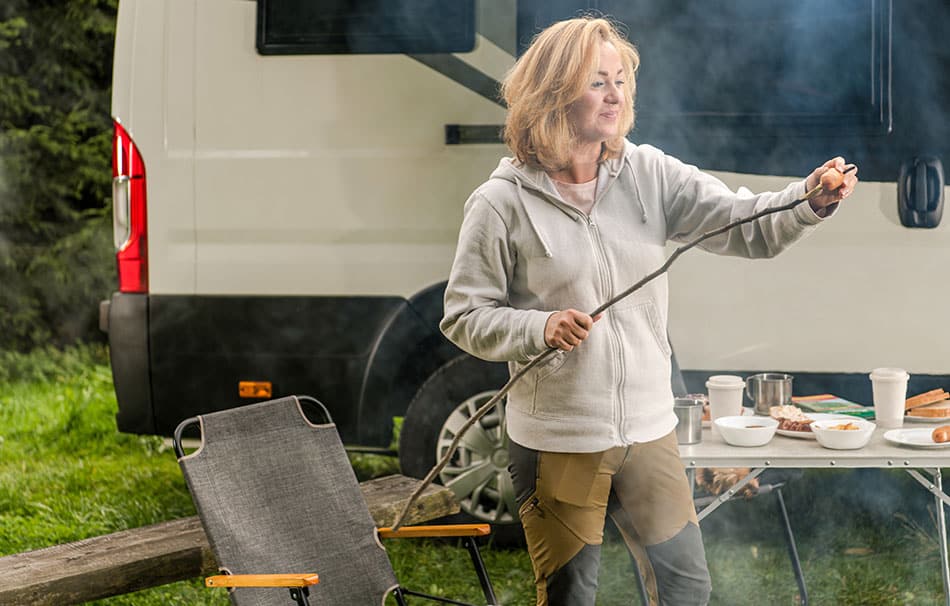
Woman enjoying cooking while camping

Camping provides an affordable fun adventure. As the cost of living continues to rise and people are looking for ways to make their money go further, camping is a good way to ensure that you can still enjoy adventures while not spending tons of money. It’s a way to get away and still be considerate of the amount of money you are spending.

A night in a campground, will be much cheaper than it will be spending it in a hotel room or other type of rental.

Of course, you still have to consider the cost of your camping equipment whether it be an RV or a primitive tent set up. There is always a cost to enjoy things but once the initial cost is out of the way, camping can be enjoyed for many years and can save money over the long run.

You don’t need a lot of gear to enjoy this type of adventure. You can trek into the backcountry with a small tent on your back and enjoy the peace and serenity of nature for almost nothing!

RVs can be rented or small units can be purchased at an affordable price. My camper van has allowed me to enjoy lots of adventures for very little cost once the initial cost of the camper van conversion was complete. I am always amazed at being able to stay out in the middle of nowhere in my camper van while having most of the amenities that I am used to at home.

There are times when I stay free at places and times when I have to pay a small fee depending on where I am parked at. Either way, it is less expensive than I would pay if I were traveling via car or airplane and then shacking up in a hotel.

Camping can certainly be enjoyed while being cautious of how much you are spending. This is especially true if you have a family and would like to go on adventures with them. Everyone can pile into an RV and stay comfortably and it will be a journey that will not easily be forgotten. The children may not like it now but they will come to appreciate it as they mature.

3. Camping is Stress-Reducing

We are stressing ourselves out nowadays and not taking the amount of time off that we should. There is more to life than just working away and stressing over things that we can’t control. Camping provides a little relief from this. When out in the wilderness or at the campground, life moves at a slower pace and it gives you time to reflect and re-center yourself.

It’s the perfect time to prioritize your values and the time spent in nature can be very healing.

Woman relaxing in a hammock while camping

A camping trip will likely be less stressful than one where you are running through airports, catching planes, driving long distances in a small car, and checking in and out of hotels. The camping experience allows you to slow it down a bit and leave the stress at home. With camping, there is nowhere to be but in nature.

You can chill in your tent or spend a nice relaxing day or night in your RV while the worries of the world just drift away.

It’s not to say that camping is always smooth sailing. There will be times when camping can become stressful as you race to check-in or out on time at campgrounds. However, in my experience, the stress relief that I get when I go on a camping trip is always amazing and I come back refreshed and wishing that it could’ve lasted longer.

If you are looking to reduce the amount of stress in your life, it’s an inside job and the time spent camping and appreciating nature allows us to go inside our minds, reflect, and go about our lives in a different way. A good camping trip is what you need if you are currently stressed out and feeling as if you need to rethink some things in your life.

4. It’s an Escape From Everyday Norms

Life can get quite boring if you just do the same thing day in and day out. While we are living with more conveniences than we ever have before, it’s still nice to break away from the norm and do something different occasionally. Sure, you could go on a beach vacation or travel to Disneyland or some other destination but that will just give you more of the same.

What’s good about camping is that it completely breaks the sameness that we experience daily. Rather than just another trip or just another vacation it’s a vacation that challenges us to think differently and live outside the box a little further.

While camping, we will experience things that we would’ve never experienced from our offices or another work environment. It forces us to think differently and appreciate things more than we would otherwise. Many of these things you don’t even think about until you are in that moment.

When I go camping, I delight in the abundance of nature around me as I dig deeper to appreciate and find gratitude in my life. Being in nature just does something for me that is a healing experience.

The normal routines of life can get boring and if you are looking for a good way to break up that boredom, camping will add some excitement and adventure and perhaps a little unknown to the mix.

5. Camping is Perfect for Social Distancing

Man camping alone beside campfire

With all the recent outbreaks of pandemics, we have become accustomed to social distancing and there is no better way to social distance while still being able to do something than camping. Camping, by nature, is a great way to get away from others and surround yourself with the quietness and stillness of nature.

Whether you are looking to social distance from others so that you can avoid getting sick or you simply want to social distance because you’re sick of people, it will happen naturally when camping.

During the covid-19 pandemic, people continued to choose camping. In fact, it was one of the busiest camping seasons that the US has seen in quite a while. This time was perfect for those who enjoy the camping lifestyle and they were able to continue enjoying trips and vacations without as many regulations or worries about getting sick.

I traveled more than usual during the pandemic and was rarely around anyone else. That’s just the nature of how it is when you are traveling in a camper van, RV, or another type of camping setup. Camping only requires that you go to your location set up your camp and then enjoy it.

You don’t have to converse or be around others if you do not choose to. Of course, this will also depend on where you go and things you do while you’re out camping but in general, camping is one of the best ways to avoid other people and enjoy time alone while you are out.

6. It Provides a Sense of Roughing It

We live in a society where modern conveniences have made everything easy for us. For as long as humans have existed, we have had to make our way through difficult times living in rough environments, working with our hands, and warding off predators and other natural enemies.

However, in today’s world, almost all of these things are only found in the history books. When camping, you may experience a small similarity to that old rough lifestyle that our ancestors had to endure.

When you are camping, you will likely get your hands dirty, sweat a lot, be stinky, encounter wild animals or bugs aplenty! You will need to fend for yourself out in the wilderness or even in the campground. While campgrounds often have running water and bathrooms, it’s still a little rougher life than you would experience in your home.

This rough experience may be just what the doctor ordered if you live a sterile lifestyle that leaves you with little worries. Sometimes it does you good to get your hands a little dirty. A week of “roughing it” will give you an appreciation for the simple convenience as we do have as humans these days.

7. Your Dog(s) Can Join You

Small white dog lying in a camping chair

Perhaps the best thing about camping is that you can bring your furry friends along with you. The camping community is a dog-friendly community and nearly any campground you visit will allow them to stay.

People who own dogs want them to come along with them on trips but can’t always make that happen. Camping is the exception and your best friend can jump in the RV with you and will enjoy the getaway just as much as you will.

With over 38% of US households owning a dog, many of them are looking for ways to include them into their travel plans. Camping fits the bill in this regard and makes a logical choice for those seeking to spend some quality together rather than leaving them behind.

Conclusion

Camping has become very popular and for many good reasons. There are just so many places to go and explore and camping is one of the best ways to implant yourself directly in the middle of nature in order to appreciate it all. Whether you travel long distances on a camping trip or stay close by, it can be a fun experience that will allow you to take a different approach than you would on other types of trips.

If you have never been a fan of camping, similar to me when I was a child, now is a great time to give it a shot. You can rent an RV or buy a cheap tent and find a great place to park it or pitch it. Places such as Hipcamp, and Harvest Hosts, or just any ole campground will allow you to get off the beaten path and add some variety into your life.

The conveniences available for campers nowadays are amazing. You can pitch a tent and have electricity and other essentials just as you would in your home.

Perhaps this is the year for you to add camping into your lifestyle if it’s not already. If you enjoy the scenic pictures that obliterate social media networks then it likely speaks to you. It speaks to a lot of people as they have given camping a try and have made it more and more popular.

Join in the fun and make the lifestyle even more popular by getting out, exploring what nature has to offer, and gaining a new sense of appreciation in the process.

11 Must-See Class B RVs Under 20 Feet

Class B RVs are the smallest class of drivable RVs that you can own. However, some of them can extend to lengths that make them less nimble than one might desire. If you are looking for a smaller Class B motorhome, it’s good to stay under 20 feet in total exterior length. Many would consider this length to be perfect for staying small enough to make traveling easy while providing plenty of living space.

In this article, we’ll look at 11 great options of Class B RVs that come in below 20 feet in total length. These include the following:

ManufacturerModelTotal Length
Pleasure-WayTofino17′ 9″
ThorRIZE17′ 11″
StoryTeller OverlandClassic MODE 4X419′ 5″
Pleasure-WayAscent TS19′ 5″
RoadtrekSS Agile19′ 5″
AirstreamInterstate 1919′ 5″
Pleasure-WayREKON 4×419′ 5″
WinnebagoRevel19′ 7″
RoadtrekSimplicity SRT19′ 7″
Pleasure-WayOntour 2.019′ 8″
ThorSanctuary19′ 8″

While all of these options are below 20 feet in total length (bumper to bumper), some of them come with a steep price tag. It’s the price you have to pay for such a convenient package that allows you to live life to the fullest. Total length is the main concern of this list and these are 11 great options currently on the market that fit the bill. Let’s look closer at each model.

Note: this is not an exhaustive list but serves to outline some of the best options you’ll find if you are in the market for an RV of this size. The list is ordered from shortest to longest in total length.

1. Pleasure-Way Tofino

Total Length: 17′ 9″

The most affordable Class B on our list is the Pleasure-Way Tofino. This RV is built on the RAM Promaster chassis and the 2022 model has an MSRP of $78,650.

This small motorhome has a pop-up roof for extra room. The overhead bunk area creates another sleeping space and gives additional height to the van allowing you to move around more comfortably within the living space. The design of the interior is simple, clean, and functional.

The Tofino is a great van for someone who wants a small RV that can travel around easily. It is not only the shortest RV on our list but also the most affordable option that you will find on the market. The van utilizes a low roof design but the pop-top gives additional height to the van once you are parked and set up.

It features all of the necessities that you would expect including a kitchen with induction stove, sofa area that converts to a queen-size bed, a lounge area via the front swivel seats, and plenty of storage.

Overall, this is a great small RV that has the uniqueness of the pop-top with an overhead bunk. You’ll have no trouble driving it anywhere you want to go.

Learn more about the Pleasure-Way Tofino

2. Thor RIZE

Total Length: 17′ 11″

The RIZE is a very small Class B motorhome that is built on the RAM Promaster chassis. At just under 18 feet in total length, you’ll have no problems maneuvering this RV around. You won’t have to worry about parking or feel intimidated when driving it. However, just because it is one of the shortest RVs on this list, doesn’t mean the living space is cramped. It is actually well designed and has a living space that won’t leave you feeling cramped.

This motorhome features a super comfy lounge/dining area and also includes two front swivel seats. The lounge area converts to a bed and is plenty roomy enough for two people. A van this size needs some creativity for it to work out and they have done a great job at setting this interior up for an enjoyable living experience.

It’s available in two floor plans with the 18M featuring a bathroom and the 18T excluding this feature. Both come standard with 190 watts of solar on the roof.

Both floor plans are very affordable with the 18T starting at $76,000 and the 18M starting at $84,375.

Visit manufacturer’s website.

3. StoryTeller Overland Classic MODE 4X4

Total Length: 19′ 5″

The Classic MODE 4×4 from StoryTeller Overland is an off-road machine that happens to have a nice living space! It comes in at just under 20 feet so the small size of the van helps it to go places that larger ones can’t.

The Classic MODE has a simple, rugged interior designed for those who choose functionality over style. The roof rack adds a nice usable area on the top of the van for extra storage or a place to sit and enjoy the views.

Like most Class B motorhomes, you’ll find all the essentials included for a comfortable stay while on the road. Perhaps the most unique feature of this RV is the indoor shower. This creative design allows you to store the shower away when not in use and then turn it into a full-sized shower when ready. You can take a shower with you wherever you go and it won’t take up any room in your living space.

The Classic MODE 4×4 has a starting MSRP of $157,747.

Visit manufacturer’s website.

4. Pleasure-Way Ascent TS

Total Length: 19′ 5″

The Ascent TS is a small van at 19 feet and 5 inches long. It’s built on the Mercedes Sprinter chassis and gives you a luxury experience in a small space. It’s small in size but contains features that you can only expect in premium RVs. It has an electric power sofa and bed configuration. This sofa converts to a queen bed electrically making it easy for you to go from sofa to bed with only the touch of a button.

Also has a hidden pull-out pantry so that storing your food will be easy. This is a nice feature in such a small RV.

It does contain a wet bath which includes a sink with a faucet and a shower. With a wet bath like this, you are forced to take a shower in the same room that the toilet is in. Some people like this but others find it difficult to manage.

However, if you are expecting these types of luxurious features in a Class B RV, it is often compromises like this that you will need to make peace with. This RV comes in at an MSRP of $155,805. It’s quite a price to pay but if you are looking to go small and have premium features with a well-thought-out layout, this is the price you will have to pay.

Visit manufacturer’s website.

5. Roadtrek SS Agile

Total Length: 19′ 5″

Coming in at a whopping $173,040 the SS Agile has a total length of 19 feet 5 inches and is built on the Mercedes sprinter chassis. This RV features 330 W of solar power to charge your batteries when you are Boondocking. It has a convertible sofa that converts to a king-size bed or it can also be converted to twin beds.

It can sleep up to three people and has an optional folding mattress that can accommodate the third person. The van features a spacious living area that is open from front to rear when the couch and dining area are set up.

It features an indoor wet shower and also an outdoor shower for those times that you need to wash off before entering the van.

This is a great option for someone who wants a premium experience in a convenient, small package. If you have the money to spend, you’ll be camping in style!

Visit manufacturer’s website.

6. Airstream Interstate 19

Total Length: 19′ 5″

https://youtu.be/lrT9KOi8YfI

Airstream is known for its high-quality campers and the Interstate Nineteen is no different. It has the same build quality you’ve come to expect from this manufacturer. This small, nimble Class B motorhome has all you need for a comfortable getaway into the great outdoors.

With 19′ 5″ of overall length, you’ll be able to drive it anywhere and park in nearly any parking space.

It’s built on the Mercedes Sprinter chassis so you can expect a high-quality, comfortable driving experience. Once you get parked, you’ll enjoy a roomy lounge area, a kitchen, a wet bath, and a nice comfortable bed. It’s a well-thought-out floor plan that maximizes space while maintaining a pleasant look.

Of course, it does come with a high price tag with an MSRP of $176,098.

Visit manufacturer’s website.

7. Pleasure-Way REKON 4×4

Total Length: 19′ 5″

https://youtu.be/adB9pSE86kA

A small Class B RV designed to take you off the grid and keep you there! This 4×4 van is for those looking to remain small and nimble while being able to traverse landscapes in the wilderness. With a 19′ 5″ Mercedes chassis, you’ll be ready to hit the road and go wherever your heart desires.

You’ll enjoy a large amount of solar capabilities with this van. With 400 Watts of solar panels on the roof that charge 400Ah of lithium batteries, you’ll have plenty of power for spending time off the grid. To go with that, you’ll have 40 gallons of fresh water at your disposal that will sustain you for long periods of time.

The van opens up when the bed is folded up so that you can store larger items or just have more space to walk through. It’s another van that has a simple and minimal layout but is functional for the adventure traveler.

The MSRP for this van is $171,600.

Visit manufacturer’s website.

8. Winnebago Revel

Total Length: 19′ 7″

The Winnebago Revel features an on-demand 4WD that can take you to places you wouldn’t be able to go with other RVs. It’s a compact Class B RV that packs a lot into its small footprint. It has all the necessities that you could expect from an RV of this size with premium features such as a power lift bed and 250 amp hours of batteries so that you can spend lots of time off the grid.

You’ll find a wet bath for keeping yourself clean while you are enjoying the outdoors. It also features a continuous water heater that will allow you to enjoy a hot shower no matter where you are.

It comes with a steep price tag with an MSRP of $193,272. If you are looking for a small RV that has it all, the Revel would be a great choice.

Visit manufacturer’s website.

9. Roadtrek Simplicity SRT

Total Length: 19′ 7″

The Roadtrek is another Class B RV built on the RAM Promaster 2500 Chassis. It uses the 159″ wheelbase model and comes in at just under 20 feet in total length. It uses the same chassis that I used for my van build and this is a great size if you want to remain nimble and fit easily into parking spots.

This RV features a fixed bed which isn’t seen as often in a small RV like this. Rather than having to convert the bed from a lounge area or vice versa, the bed is always in place and ready to use. It also comes with ample storage underneath the queen size bed.

It also has a wet bath so you can stay clean on the road. Many people don’t care for having a shower in something of this size but I wouldn’t be without mine.

Visit manufacturer’s website.

10. Pleasure-Way Ontour 2.0

Total Length: 19′ 8″

MSRP $136,305

The Ontour 2.0 is similar to the Ascent TS but it is a tiny bit longer. At 19 feet 8 inches, it adds three more inches to the total length of the Ascent TS. This RV is set up almost identical to the ascent TS but it is built on the Ford Transit chassis rather than the Mercedes Sprinter. It uses gasoline rather than diesel and comes in at a lower MSRP of $136,305.

This RV has a huge amount of headroom at 78 inches tall. This is plenty of room for those who are taller than average. It can accommodate someone comfortably that is 6 feet 5 inches. Similar to the Ascent TS, the Ontour 2.0 also has an electric sofa that converts to a queen-size bed.

It also features a wet bath, swivel seats, and all of the other essentials that you would expect in a capable class B RV. It also features rear and side screen doors to keep all of those pesky bugs out which is a great additional feature to have. I know that having the bug screen on my van has been one of my favorite upgrades. It has made the experience much more pleasurable out on the road.

Visit manufacturer’s website.

11. Thor Sanctuary

Total Length: 19′ 8″

The Thor Sanctuary is a capable 4×4 RV that has a small footprint. It is built on the Mercedes Sprinter chassis and is designed to take you off the road. There are two floor plans to choose from with the 19L having a fixed bed and the 19P having a convertible bed/lounge area.

Both floor plans include a wet bath so you’ll be able to keep clean without leaving the van. However, the bathroom is quite small so larger people will have a difficult time with it.

It comes standard with 190W of solar on top that will help keep your 400Ah of batteries charged.

The MSRP for the 19P is $148,680 and the MSRP for the 19L is $151,060.

Visit manufacturer’s website.

Conclusion

Finding a class B RV below 20 feet in total length is quite easy. With more and more people choosing to downsize and make do with smaller spaces, manufacturers are taking hold of the trend. There are plenty of them on the market if you are willing to pay the hefty price that they often demand. Of course, you can usually buy these motorhomes for less than the MSRP.

While these class B motorhomes demand a premium price, they come with so many benefits. The small size may take some getting used to but being so flexible in your travel is the main benefit. With less than 20 feet of total length, you will simply blend in with other vehicles rather than requiring additional space and driving consideration like you would a much larger RV. This benefit alone is why I like class B RVs over other types.

While other types of motorhomes will give you more space, staying under 20 feet will make it seem as though you are in a standard vehicle and make it so much easier when deciding where to go, which roads to take, and places to park for the night.

5 Reasons You Need Solar On Your RV

Having an RV provides you with a perfect opportunity to utilize solar for your electrical needs. With solar systems getting better and more affordable, it’s no wonder that so many people are choosing this type of system for their RVs. I couldn’t imagine being without solar power in my van because it provides me with 95% of my electrical needs. It allows me to go anywhere I want to go and have the conveniences that I’m used to at home.

I do occasionally plug up to shore power when available but my solar system is my primary source of electricity.

Whether or not you need solar on your RV will depend on how you travel and the locations where you camp. It will also depend on your electrical consumption.

If you intend to only camp in RV Parks and other locations where you can plug up to shore power, solar may be a waste of money for you. However, if you like to travel and park in off-grid locations, solar will allow you to maintain the lifestyle you may be used to without having to worry about where you will find electrical power.

Below, is a list of reasons that I believe RVers will benefit from having a solar system installed in their RV. Even those who feel like they don’t need solar can still benefit from having some sort of backup solar system.

Having a combination of energy sources is always a good idea when traveling in an RV.

1. Off-Grid Living

One of the fun parts of Camping is getting off the grid and away from society! If you intend to park your RV away from the city lights and out in the boonies, you will probably want some way to have electrical power. This can be done with a gas generator but why create so much noise when you can have a solar system that can power the majority of your items?

A gas generator will usually be able to provide more power (as long as you have enough gas to run it) but they are often loud and emit exhaust fumes. Besides that, many locations do not allow generators. Unless you are running air conditioning, heating, or electric cooking appliances, a good solar system will almost always be enough. Even some solar systems are quite capable of running these high-amperage appliances.

Having both options will allow you to go off the grid for extended periods of time. The good thing about a solar generator is that you won’t have to refill it with gas. Instead, the sun will do its job and the solar panels will collect that sunlight that gets converted into electrical energy to keep your battery banks charged.

Off-grid living is amazing! It’s the part I love about traveling in my van and having a capable solar system has allowed me to enjoy my living space to the fullest. It’s a rewarding feeling to be off-grid in the woods but have electricity that runs your lights, water pump, electrical outlets, TV, etc.

2. It’s Quieter Than a Gas Generator

Couple using a generator while camping in their RV

Gas generators can be quite loud and disturbing to others around. I have parked in places off the grid before or in Harvest Hosts locations and had to deal with others around me running generators for extended periods of time. Meanwhile, I was enjoying all of my electrical devices in my van in complete silence.

My solar system allows me to utilize electrical energy without bothering everyone around me. I can run it throughout the night without having to worry about a loud generator outside. This is handy when you are in a location that doesn’t allow generators or doesn’t allow them after a certain time.

Even if solar is not your primary electrical source in your RV, it helps to have the option for times like this. If you have a sufficient solar system that powers the essentials, you will be prepared no matter where you go. If you are in a location that does not allow gas generators, you will have no worries because you can live as normal with your backup solar system.

3. Environmentally Friendly

Harnessing electricity from sunlight allows you to utilize your electrical devices without having to worry about contributing to the environmental pollution often associated with the electrical power grid. Since you won’t be connecting to the grid when using solar, the electrical energy that you use will be from clean sources.

It’s well-known that burning fossil fuels to create electrical energy can have negative impacts on the environment. If you can use less electricity by relying on solar power, then at least you can do something beneficial for the environment.

Many campers are the type who are often concerned and want to do the best they can for nature and the environment as a whole. There are many ways to accomplish this and solar is just one of them. It’s an easy way to ensure that you are doing a good thing while still being able to enjoy the luxuries that you may be used to.

While it’s not perfect, it’s certainly a start and a way to be better about your environmental impact than you would be by plugging into the grid.

Of course, there is the problem with the solar panels, parts, plastics, and other things that have to be produced in factories. These factories often run using grid power so just by purchasing materials like this, you are still contributing to the overall problem. At least once the solar panels are installed on your RV, you won’t need to plug up anymore unless you want to and need to plug up occasionally to run items that require more electricity.

I often go through an entire trip without ever plugging into the grid. I have shore power on my van but only use it as needed. If it has been cloudy for days, I may need to plug up in order to charge my solar batteries if the sun has not been able to do the job. Other than this, I often feel good about my choice of having solar because I know that I am getting clean energy in an unlimited supply from the sun.

4. It’s Easy To Install

With today’s solar systems, they are easier to install than they ever have been before. You can purchase complete kits that will get you up and running in no time. If you are converting a van, planning a solar system in your build is as easy as deciding what type you want, how much you will need, and designing the space for it to fit in.

If you go with a portable unit as I have, the job is even easier. All of the hard work is already done for you and all you will need to do is connect the solar panels and any electrical devices that you want to run on the system. You can look at my post here about how I installed my electrical system using a Goal Zero portable solar generator.

Even more complex systems can be easy to install but do require careful consideration. If you have a super high-power solar system designed to run large appliances, air conditioners, etc., it’s best to have a professional install it.

5. It Gives You Complete Freedom

Boondocking in RV with solar panel

Traveling in an RV is the ultimate freedom lifestyle. You can go anywhere you want and find a place to park no matter where you are. Having a solar system adds the benefit of having one less worry. Rather than being concerned with parking somewhere where shore power is available, you will have the freedom in knowing you can set up camp anywhere.

Even if you only have a backup solar system, you will be able to enjoy electricity without being dead in the water as some might be.

Types of Solar Systems for RVs

If you are looking to install solar on your RV, there are a few different routes that you can go. Let’s look at the two most popular options below.

Permanently Installed Solar System

The first type of solar system and the most efficient and powerful is going to be a system that is customized for your needs. With this type of system, you can customize the number of solar panels and wattage, inverter size, charge controller, and battery capacity. This allows you to design your system so it meets the needs of everything that you will need to run within your RV.

If you have appliances or an induction cooktop or something that uses a lot of electrical power, you would want to design a system that is more powerful than just a standard system.

You can also customize your battery configuration. Many people choose deep cycle batteries but lithium is the clear winner when you are designing a system for maximum power. They can store more energy and take up less space. Building a solar system like this takes some planning to figure it all out. Unless you are an expert or experienced with these types of systems, you may find yourself overwhelmed when trying to piece together all the parts you need to build a safe system.

Kits are your friend if you choose to go this route. A novice can install a full-fledged solar system like the Renogy RV Solar Kit. You simply add batteries to the kit and you are up and running. these are great for people who want to maximize the power that they harnessing from the sun and have the technical skills and understanding to get the job done.

Portable Solar System

Another popular type of solar system is a portable unit. These come in all shapes and sizes and can be good for those who have minimal electrical needs but they can also work great for those who consume higher amounts of electricity. They are perfect for those who don’t want to be bothered with designing their own system from scratch.

It’s a safer alternative to doing it all yourself since portable units have already been designed and built by engineers and are capable of delivering a safe user experience. All you need to do is connect a solar panel or multiple solar panels to it and you are in business.

In the end, a portable system contains the same working parts as a permanently installed system. The difference is that the product will be in a self-contained package that contains the essential parts to make it all work. This self-contained package includes the charge controller and batteries and generally has the outlets such as 120 V AC and USB ports as well as 12 V connections.

It can be carried from place to place and used wherever you need it most. I have a portable unit in my van and it’s installed and runs all of the electronic devices throughout my van. However, I can easily take it out of my van and use it in other locations as needed. It comes in handy for when I need some additional electrical power around my house where extension cords won’t reach.

Portable units also come in handy during power outages. We have had multiple power outages at our house and our portable solar generator allowed us to keep on running the essentials for many hours.

Some of the popular brands of portable solar generators include Jackery, Goal Zero, and EcoFlow.

Summary

Not everyone is fully sold on solar power. There are some who absolutely despise it while others, such as me, love it! To each their own!

Once you have experienced a properly functioning solar system that powers all of your devices and maintains full charge most of the time on sunny days, it’s hard not to love it.

You just never have to worry about having electrical power since it is always there. Having a solar system in your RV just makes sense. It’s the perfect location for such a system and allows you to travel around while maintaining some semblance of normalcy while you are out and about.

Whether you choose to go all out and install a massive DIY solar system or stick with a portable type of system doesn’t matter. Each person’s needs will be different and you will need to determine this before you get started. If you just need to supplement your shore power usage with some type of solar power when you are not able to plug into shore power, a small solar system will get you through.

If you are set on having solar run everything that you ever need in your RV, you will need to do some planning and create a system designed to deliver the amps that all of your devices will need.

Adding USB Charging Ports To Camper Van

Having USB ports for charging cell phones and other devices is critical in this day and age and almost every small electronic device you buy charges via USB. If you are wanting convenience built into your van, having USB ports is a must! Adding USB charging ports is a pretty simple process and there are a few different ways that you can go about it.

This article will look at some of the best ways to add USB ports and provide a simple installation guide for those looking to add them to their van.

I have always had USB ports in my van but have upgraded over time as I discovered better ways of doing it or better placement. When I first installed the electrical system in my van, I used a temporary solution that initially worked well for me. However, over the years I wanted a better system than what I had originally installed.

AC plug with USB ports in van

Choosing USB Charging Outlets

My original system included pre-wired outlets with USB ports built into them. These outlets provided 120V AC plugs as well as two USB ports. However, the AC plugs were only rated for 12A rather than the typical 15A plugs that you often find in homes.

To fix this, I did a complete re-wire of my electrical system and upgraded it to include proper 15A electrical outlets. I took this time to also upgrade my system with USB outlets where needed. There are three main types of USB outlets that work well in a van. Let’s look at those below.

Electrical outlet with USB ports

Electrical Outlet / USB combo. – These are standard 120-volt electrical outlets that have integrated USB ports in them. They can be purchased at any home improvement store and can be installed just like any other electrical outlet. Once installed, you can simply plug your USB devices into the port to charge. You’ll have to have your inverter turned on for these to function.

12-Volt USB outlet on wall

12V USB charging ports. These will tie into a standard 12V system and allow you to have a charging port for your USB devices. These are handy because they are cheap, simple to install and do the job well. They are great for van conversions or other RVs because 12V is the primary electrical source. They often have covers that can be flipped down over the USB port(s) so that moisture or dirt and debris do not enter the USB receptacles. They don’t require an inverter.

Solar generator USB ports

Solar Generator USB ports. If you travel in a van, a portable solar generator is a good idea to have. Most of these have USB ports built in and are convenient to use without having to install anything. They can be moved from place to place as needed. Examples include the Goal Zero Portable Power Stations or the Jackery Portable Power Stations.

I use a combination of all of these throughout my van. All of the outlets tie into my Goal Zero Yeti 1400 when I am boondocked and they use shore power as needed when I am parked in a place that allows me to plug in. I installed these in locations where it would be handy to charge my phone, iPad, camera batteries, or even run a USB fan as needed.

Installing 12 Volt USB Charging Outlets

As with all of the 12-volt electronics in my van, I used 14-gauge primary wire. This wire is probably overkill but it’s better to be safe than sorry. In my opinion, it’s best to use a wire gauge that is bigger than what you need. It is also important that you remember to use the right fuse for the items that you are installing via 12V.

The manufacturer will sometimes include information on the proper fuse size but not always. Unfortunately, the USB charging ports I used didn’t include this information. However, it’s easy to determine this for yourself.

Since the USB charging ports I used are 4.2 Amps in total, a 5 Amp fuse is sufficient.

There are a variety of different charging ports like this that you can purchase. However, if you are like me and have white walls, you’ll have a hard time finding outlets that will match.

I have found that they are mostly available in black. The white ones I found on the market just wouldn’t work for my needs or they had tacky lights on them that shine at all times. I’m not a fan of night lights and prefer my van to be completely dark at night.

It would be great to have them in white so that they would match my walls. Many van conversions include white walls since white usually opens up the space and makes it seem larger. It would be nice to see more manufactures offer both white and black. Either way, black looks fine and does the job.

If you are set on having a white USB charging port, the Blue Sea Systems charging port may work well for you. However, if you are installing this into a shallow wall space it won’t work very well. It’s super long and sticks way out into the wall with blade connectors that make it go even further. I tried one like this in the beginning but found that I just didn’t have enough room to feel comfortable with it being inside the wall.

Blue Sea Systems USB port in van wall

As you can see from the picture above, it extends into the wall about 1 3/4 inches. However, you’ll have to add an additional amount onto this once you add spade connectors onto your wire. You’ll need a total wall space of about 2 1/2 inches for these to work. It butted up against the outside wall of my van and I had to bend the end terminals for it to work. Beyond that, these get a little warm when in use so I didn’t want this warmth to be inside my walls. I felt better with a solution that would be surface mounted rather than hidden inside the wall.

I opted for USB charging ports that are flush-mounted as you see below and these have worked great other than sticking out like a sore thumb with their black color on my white walls. They do have a blue light that shines at all times but it’s dim and can be covered up when not in use.

Black USB charging ports closeup
12 volt USB socket installed on van wall

Positioning your USB charging outlets

The best places to install your USB charging outlets are in locations where you would generally need to charge an item. Locations beside your bed are the optimal places since you will likely have your phone nearby and it can charge while you sleep. In reality, since a van is so small, you can place these nearly anywhere and be satisfied with them as everything is only an arms reach away inside a small van.

It still helps to install them in the most convenient place that you possibly can. One of my USB outlets is in my dining area on my blackboard. I built a custom phone holder/charging port that features one of the same surface-mounted USB charging ports as mentioned above and also includes a custom-built shelf where you can set your phone or tablet out of the way while it charges.

Phone charging station in camper van

I can charge my phone and have it nearby but out of the way while eating or doing work in my dining area.

I also used the same feature in the back of my van but used an electrical outlet / USB Combo rather than just a 12 V USB charging outlet. Both of these work fantastic and are in the place where I would need my phone and other charging accessories.

It may take some time for you to realize where exactly the best locations for ports like this may be. If you are converting a van, you may want to leave room in walls and plan for possible changes in the future. You’ll want to have a way to run wires to different locations and retrofit outlets like this after the fact since you may not know exactly how you will use your van and living space.

It’s always best to be flexible and have a way to move or add additional charging ports where you may need them more.

Summary

Having a few USB charging ports in your van is going to make life more convenient. Our phones, tablets, and computers need constant charging so having plenty of USB ports available will make it easier on you. Of course, you can always use the brick charger that comes with your accessories but you may not have it with you at all times or may just want the convenience of plugging straight into a USB port.

Besides that, many accessories don’t even come with a charging brick, only a USB cable. In this case, you’ll need to have a different solution.

Whatever the case, adding USB charging ports to your van is a good idea and should be considered from the beginning of any van build. Make sure you plan and position your ports where they make the most sense and will be convenient for you to plug stuff in as needed.

Is Jetboil Worth It? A Detailed Review

Jetboil makes compact camping stoves of different types and are popular choices for those requiring minimal gear while on the go. Their compact stoves provide a convenient way to boil water and they take up very little space in your backpack or camper. It’s a quick and convenient system whether you are in the campground or out on the trail in the middle of the wilderness.

Jetboil Flash is a great choice for those who have small requirements for cooking and need to pack lightly. It’s an all-in-one solution that does a great job of boiling water while maintaining a small footprint. It’s fairly lightweight for carrying over long distances.

It’s an ideal cooking system for those who want to remain light during hiking or a camping trip. They are great for small campers where space is limited. You’ll be able to stuff it into any little cubby hole to keep it out of your way. For such a small system, it packs a punch as far as its heating abilities are concerned.

I have used the Jetboil Flash for about 4 years now. Even before I traveled in my van, I used it on day hikes and overnight backpacking trips. It isn’t my go-to stove at all times when traveling in my van but for certain times when I just need something quick, the Jetboil always comes in handy.

It’s the perfect stove for warming up water for coffee or tea, soups, oatmeal, dehydrated meals, or anything else that needs boiling water.

Best Uses For The Jetboil

  • Hiking. For those who go on long-distance hikes and want to take along a small stove that will be lightweight, take up little room and allow them to cook a nice dinner once they reach their destination, it’s perfect. It is one of the preferred stoves for long-distance hikers who spend days, weeks, or even months out on the trail.
  • Camping. If you are a single camper and are looking for something to cook your meals on, the Jetboil could be the perfect solution. Van campers, car campers, and other small space campers will appreciate how little room it takes up.
  • Boiling water for use with simple meals or drinks. If you eat dehydrated meals or other types of foods that require boiling water, the Jetboil Flash may be the perfect solution for you. You can even purchase a coffee press designed to fit perfectly. It won’t be as useful for those who cook more substantials meals.

Using the Jetboil Flash

The Jetboil Flash is an all-in-one solution that contains the burner, stand, aluminum heating container, gas canister, and the plastic cup that can be used to eat out of. This makes it super handy for those who need to carry all their gear with them or store their gear in a small space like a van or other small RV.

If you are traveling, hiking, or camping alone, it’s perfect for those times when you just want to warm one item up. It takes no time to get it out and set it up. It has a push-button igniter so it’s easy to get started.

Once you have finished using it, it cools off quickly, and then you can easily put it back up in your backpack, or cupboard.

The cool thing about the Jetboil Flash system is that it has a heating indicator on the side of it that turns solid orange when the water is boiling. This makes an easy reference if you are just watching it from the side. You can easily see the color change without having to hover over the unit to watch the water. Once the color has changed, you know you have water that is almost ready. It’s such a handy feature to have.

I use it often for cooking morning oatmeal when I just want to make quick work of it. Rather than setting up the larger camping stove that I use, the Jetboil is simpler to work with. I can boil plenty of water in about 2 minutes that will satisfy my requirement for a cup of coffee and a bowl of oatmeal.

I simply boil my water. Combine the boiled water with a packet of instant oatmeal. Add in fruits, nuts, etc. Then enjoy!

Can You Use a Jetboil Inside?

Any type of camping stove or gas-burning stove should always be used in a vented area. These types of stoves are built for those on the go and are made to be used outdoors. I would not recommend using it indoors unless it’s in a well-ventilated area.

I often break it out in my camper van for use. However, I only use it when I have my side door, windows, and roof vent running. Air is being pulled through the van with all of these open so there is no chance of any poisonous gasses building up inside.

It’s the same way when I use my camping stove inside my van. I only use it when well-vented. Besides that, my carbon monoxide detector is always on when in use.

Jetboil Pros & Cons

Pros

It’s Small and Easy To Carry

It’s basically a big cup that has all the equipment you need inside of it. If you are going on a backpacking trip or day hike, you can easily toss it into your backpack. It has everything you need in one self-contained unit. The only additional thing you’ll need is silverware. I prefer the Snow Peak Titanium Spork as this utensil gives me a combination of spoon and fork in one. It’s lightweight and can easily be stored in the side pocket of the Jetboil Flash.

Jetboil in backpack

Lightweight

Besides being small and self-contained, all of these combined create a lightweight stove that won’t be much of a weight addition to a backpack.

My Jetboil Flash weighs 22 ounces (1.38 pounds or 626 grams). This includes everything you need including a full gas canister. This is where most of the weight is coming from. Without the gas canister, you are looking at less than one pound (mine is 15 oz to be exact).

The gas canister weighs the most of any one part but it gets lighter and lighter as the gas gets expended.

Simple to Set Up and Use

As mentioned earlier, setting up the Jetboil is as easy as screwing the burner onto the gas canister, attaching the large cup, and then filling it with liquid. If you are on an uneven area, you can add the stand which will help to provide more stability.

This is one of the things that makes it so attractive. I often prefer it over my camping stove since it is easy to break out, set up, cook my food, and then store it away.

Easy to Store Away

After you are done, everything stores away in one convenient little package. With the top snapped onto it, everything is secure inside. This makes for a neat way to store all of your cooking supplies in your backpack.

Ready Indicator

If you have the Flash system, you will have a handy heat indicator on the side of the cozy. This heat indicator changes color to let you know when the water is at boiling temperature. This is one of my favorite features because it allows me to step away and still keep the color change indicator within view. As I see the heat rising up the side, I can make my way back to the unit and get ready to turn it off.

Ready indicator turning orange on Jetboil

Cons

It’s Only One Burner

If you are hiking and only need one burner to boil water for meals, it’s great. However, for a van or RV setup, you won’t be able to cook a full-fledged meal with it. My typical use for it is to boil enough water in a very short time for my coffee and oatmeal in the mornings. Beyond that, I generally use my larger camping stove for more substantial meals.

Easy To Burn Yourself

Call me clumsy or just plain stupid but I can’t count the times I’ve accidentally burned myself with this system. It does have a neoprene protective cozy around it but it gets pretty hot when it has boiling water in the container. I seem to always touch it in a super hot area that burns me.

Of course, this is my fault for not being as careful as I should but it just goes to show how careful you have to be, even with a simple system like this.

Besides the risk of touching a hot area, if you try to unscrew it from the base when it has boiling water in it, it can slosh out onto your hand. You’ll learn to keep everything attached until you have used all the hot water or it has cooled down to a safe temperature.

Tip: Don’t fill it up past the max fill line. There is a reason it has this fill line and water will boil over the sides if you ignore it.

Be Careful How You Store It

I learned the hard way that storing the gas canister on the bottom in direct contact with the container is a no-no! If there is any moisture in the container, the gas canister will rust and create a rusty ring in the bottom of the container. As you can see from the picture, my gas canister has rusted from a slight amount of moisture in the container. This was a new canister that I had purchased only a few days before.

Rust on Jetboil gas canister

When storing all the parts together, make sure everything is completely dry. Furthermore, don’t allow the metal gas canister to touch the metal of the heating container. A good way to prevent this is to make sure the plastic stand sits on the bottom in contact with the metal, then pile everything else in on top of that.

Summary

The Jetboil products are made for mobility and are awesome stoves for backpackers who want an easy way to cook meals or simply boil water. However, beyond only using it for backpacking, it comes in handy in many other situations as well. Whether you are a hiker or a camper who wants a small stove, you can’t go wrong with the Jetboil.

Overall, I really like the Jetboil Flash system that I use. It comes in handy in many situations and is about as easy of a stove to use that you will find in terms of making a simple, fast meal.

Best Portable Fan For Van Life

If you have ever spent time in a van or RV during the hot summer months, you know that having a fan is essential. Not only is a roof fan needed but other ways to introduce a steady stream of air will add some extra comfort on hot days. While a fan is certainly a far cry from a proper air-conditioning system, it can make the van life experience much more pleasant.

Even when the weather is pleasant, a fan can help circulate air and make it less stuffy inside. I keep a few fans running in my van at nearly all times unless it’s wintertime. There are plenty of great fans on the market that come in handy and are small enough to be stored out of the way when not in use.

What To Look For in a Portable Fan

You may have a box fan or a pedestal fan at your house but you’ll need to consider something different for your van. There are few key areas of concern when searching for the perfect solution.

Low Power Consumption

A fan with low power consumption can be used off-grid as well as when you are plugged in. A typical solar battery bank provides plenty of power for nearly any fan but it’s always important to use as little electricity as possible when out on the road.

Being conscious of this when shopping for a fan will help you to stay cool and conserve power at the same time. USB fans are often the way to go if you are looking to use as little electricity as possible. However, finding the right balance between low power consumption and high airflow can be tricky.

Small Size

There isn’t much room inside a van and having big fans sitting around will just take up that precious room. You’ll want to keep your fan as small as possible so it doesn’t get in the way more than it helps. You won’t need such a large fan since you’ll be in much closer quarters than you might usually be in.

Flexibility in Mounting

Rather than just sitting in the corner all the time, a portable fan in your van should be flexible enough to allow you to place it anywhere you need it. You may want it on the floor, counter, in bed, or even outside.

Noise Level

I love the sound of a fan and sleep with one nearly all year round just for that noise. However, the small living space of a van can make the fan noise sound even louder so you may want to consider this in your search. You’ll probably be pretty close to the fan at all times so a super loud fan may be more annoying than it’s worth.

Roof Fan

Roof fan in camper van

Although not a portable fan, it’s worth mentioning the king of all fans for the RV lifestyle. A roof fan is the absolute best way to move air through your van. These are a must and are extra helpful when combined with windows. As an example, the Maxxair fan that I have installed in my van allows me to reverse the fan and pull air out. When the windows are open, it pulls a steady flow of air through the van and gives it a comfortable feeling, especially at night when the air is cooler.

I often use only the roof fan at night combined with an open window. Even on hot summer nights, the airflow that this creates can make me a bit chilly. When combined with other portable fans in your living space, you may find that van life can be more comfortable than you thought.

The following fans are some of the best that I have found during my searches. Rather than overwhelm you with a big list of fans to buy, I’ll only show you the best I have personally found from each of the categories below.

Best Portable Fan For Van Life

Mountable fan

After the roof fan, a mountable fan is one of the best ways to add additional airflow. These can be mounted near where you sleep and pointed directly at you while you are in bed for the night. Many people mount these underneath cabinets or directly onto the wall. With each van layout being different, the mounting location is up to you.

The Caframo Sirocco II is by far the best mountable solution that I have found on the market. While you may initially balk at the price of this fan, it has some benefits to consider. First of all, it is a 12V or 24V fan that is ideal for the mobile lifestyle. The maximum power draw on the 12V system is 0.35A (4.2 Watts) on high speed. That’s nearly nothing and won’t be a problem for any type of electrical system in a van.

Another great feature of this fan is that it can stow flat against the wall or underneath the cabinet when not in use. Rather than having it hanging all the time, you can simply fold it up out of the way when not in use.

Once you are ready to use the fan, you can unfold it back into position. Additionally, you can rotate the fan at any angle to point in any direction you need.

This is a popular fan amongst RVers and Boaters and for good reason. It’s a useful fan that delivers great airflow without using a lot of electricity. It can easily be wired into your existing 12V electrical system.

If you want a more budget-friendly option, you may opt for a different type of hanging fan or a clip-on fan that can be mounted anywhere you choose. These types of fans will provide a similar experience but won’t be quite as elegant as the Sirocco II.

Floor Fan / Air Circulator

Fan in floor of van pointing towards ceiling

If you need something that can sit on the floor or a countertop and provide airflow, you’ll want something a bit different than the mountable option above. The idea with a fan like this is to move air around the van rather than pointing it directly at you. Sitting a fan like this on the floor and then pointing it towards the ceiling will move cooler air from the ground level around your van, creating a cooler environment.

I use the Honeywell Table Air Circulator for this purpose. It moves a lot of air and works perfectly for this solution. It’s an affordable option that doesn’t take up a lot of room.

The only downside I have found with this fan is that it uses more power than I’d like. On low, it uses around 34 Watts, medium uses 38 Watts, and the high setting uses around 44 Watts. However, if you have a shore power connection, this won’t matter and I usually find myself only setting it up when I am plugged up in a campground.

USB fan

Portable fan blowing towards bed

A USB fan will solve the problem of high power consumption but you may also find yourself struggling to find one that blows enough air. Many of the USB fans are so low-powered and small that they don’t make much of a difference. However, there are a few on the market that do a decent job.

I use a 9-inch portable desk fan that is flexible with its placement. There are times when I have it sitting on the kitchen counter and times when I have it hanging on my back wall pointing at me while I sleep.

Portable fan hanging in van

The fan that I own uses very little power. On low, it uses 2 Watts and on high, it uses 3 Watts. However, it blows a decent amount of air and works great as a personal fan that can sit close by.

Portable Battery Powered Fan

If you want something that can be charged and then used anywhere you want, without cords, a battery-powered fan is what you are looking for. Like most other fan types, these come in a variety of shapes, sizes, and brands.

A portable battery-powered rechargeable standing fan is a great choice since they are useful in a variety of situations. The Elegear Fan can be charged and used for 4 – 10 hours, depending on the speed you use. This 11-inch fan provides a steady flow of air that can keep your living space cool and comfortable.

This fan also folds away easily which is great for the small environment of a van. When it’s ready to use, you can simply unfold it, place it where you need it and turn it on. If you need a breeze outdoors while grilling out and enjoying the day, you can bring it outside as well.

Summary

One would think that a fan would be easy to shop for but there are so many on the market that it can be a challenge to pick the winners from the losers. You need to consider your space and at what times you’ll need the fan most. You may find that you only need your roof fan most of the time but occasionally need some additional airflow from a personal-sized fan.

However, there may be other times that call for a strong airflow to ward off the heat. This list above should cover you no matter what you need and I have found comfort in most situations by using the combinations of fans I have recommended.

Whichever type you choose, be conscious of the energy it consumes and how it will affect your overall power supply. Home fans aren’t designed with low power consumption in mind and may not be the best choice for this lifestyle. You’ll want to stay away from these types of fans unless you have shore power available.

Screws For Van Conversion – Best Options

A van conversion requires you to mount a lot of different things during the building process. Chances are, you’ll go through many different types of screws as well as other fasteners when converting your van. It’s important that you choose the right fastener for the job and understand that just because someone else uses a certain fastener, doesn’t mean that’s the one you should use.

Van conversions are as unique as the people converting them. With umpteen different screws and fasteners to choose from, there is no one-size-fits-all. Instead, you’ll need to choose the best fastener for your specific application.

With that being said, there are a few types of screws that just make sense in a van conversion and end up being used by many van builders. I can only speak from experience of what I found useful in my van build and what I have seen other van builders use throughout my travels.

Let’s look at some of the different screws and fasteners that you may find yourself using during a van conversion.

Types of Screws To Use in a Van

Self-Drilling

Self-drilling screws and drill bit

The most usable type of screw in a van conversion is known as a self-drilling screw. These are great for drilling into metal and can be used to attach anything to the metal framing of your van. Some people use these throughout their entire build to mount furring strips, walls, ceiling material, or anything else that can be screwed directly into the metal.

These types of screws make quick work of an installation and only require a drill and a proper bit to install. These often have a hex head so they can easily be drilled in using a hex bit. You can also find them with Phillips heads but a hex head is much easier to work with, in my opinion. A flatter Phillips head may sometimes be necessary for an area where a more flush installation is required.

Self-drilling screws don’t require a separate hole to be drilled. Instead, the screw itself drills the hole since it has a short drill point on the tip of the screw. It drills the hole as the screw follows along behind tightening to the metal material.

If you are installing furring strips or anything else directly to the metal framing of your van, these are easy to use and quick to work with. They are cheap and fairly secure for most projects.

Standard Multi-purpose Construction Screws

Pile of multi-purpose screws

Standard multi-purpose screws will be needed when you are attaching furniture and other wooden parts. For this application, it’s best to use a zinc-coated or stainless screw so that you don’t run into rust or corrosion in the future.

I used many boxes of various screws like this throughout my build. I prefer SPAX screws as these are mostly corrosion-resistant, lightweight, and super strong. Most importantly, they hold tightly! They can be found at most any hardware store. If not SPAX, you can find something similar in other brands.

I used various sizes including 1-inch, 1 1/4-inch, 1 1/2-inch, and 2 1/2-inch for most of the applications in my van conversion. The ones I installed in my van conversion still look the same now as they did when I installed them, which has been a few years now.

Bolts

Pile of nuts and bolts

Beyond screws, you’ll likely require bolts along the way. Sometimes it makes sense to use the holes already in your van and utilize standard nuts and bolts to install items. As an example, I used the holes already in the van to install my bed framing to the sides of the van. I was able to use bolts and nuts to get a good secure hold that I wouldn’t have been able to achieve with only screws.

When using bolts, opt for the zinc-coated ones or stainless to ensure they last for the life of the conversion.

You may need to use bolts in many different applications as you run into odd situations and have to be creative to make it work. Sometimes bolts are the better option when you need a little more strength for holding something tightly. A strong bolt and nut are going to hold stronger and not pull out like a screw might do over time.

In situations where you want more strength but are not able to use a standard bolt and nut, you may opt for one of the next fasteners below.

Rivnuts & Plusnuts

Rivnuts and tool

These types of nuts are designed to be installed blindly and make a great option for a van conversion. When you don’t have access to the back of a piece of metal, you can drill a hole, install one of these, and then you have a threaded bolt hole in which to thread your bolt into.

While both of these are great options, Plusnuts are super strong and have a higher pull-out strength. Plusnuts are a superior product in many ways. However, I chose Rivnuts in my van conversion and have been happy with them. The key is to make sure you have the proper installation tool. If you try to cut corners and make your own contraption, you may be able to make it work but it won’t be consistent.

If you are going to go this route, make sure you purchase the correct tools for the job. Rivnuts need a tool to properly seat them. When used correctly, they provide an extremely strong hold. My entire ceiling and walls are held up using Rivnuts and they haven’t budged in the couple of years that I have been traveling. Using the proper tool makes quick work of Rivnut installation and ensures that it maintains the highest pull-out strength possible.

Plusnuts are going to be the more expensive option but will give you greater peace of mind with their superior holding strength (if you need that). A similar tool is also needed for a Plusnut but may be more forgiving to set using standard tools.

Plusnuts can be installed in thicker material so if you are trying to install a blind fastener in thicker metal, a Plusnut will be the way to go. Otherwise, both of these options are outstanding and make a great way to install items in your van by utilizing some of the holes already there.

Summary

If you are converting a van just know that there are many different options for you to use. While there are a few preferred ones amongst van builders, it comes down to your personal preference as well as the type of fastener that makes the most sense in your scenario. You’ll likely figure it out along the way and settle on a solution that works best for you.

The important thing is to make sure the fastener is going to hold tight. A moving vehicle requires a little more thought than a stationary structure. You want to make sure the screws and bolts you use won’t back out over time and create a dangerous scenario with items falling off the wall or ceiling.

The screws and bolts mentioned in the article above are the only types of screws and fasteners I used other than Velcro or magnets in certain areas. As far as the structural build of your van interior, you’ll want to use the sturdiest fastener you can possibly use to ensure that it will not come loose in the future.