Shore power can be an important part of a van conversion if you want to be able to have electricity in your van. Although many people choose solar for the primary electrical source in their van, it can be very helpful to also have a second source of electricity.
Most RVs are equipped with shore power connections. With these connections, they are able to plug-in to power poles at campgrounds and enjoy electricity throughout their RV. The same can be done in a camper van and as you convert your van, it’s a good idea to include this in your plans.
If you are like me and intend on using solar for your primary electricity source, you probably don’t need a complicated shore power set up. I chose to install a simple but effective shore power solution in my conversion van. I don’t know a whole lot about electricity and did not want to hire it out. I wanted to be able to do it myself and not make a big deal of it.
I stumbled upon a simple solution during my research and I am glad that I went with this solution in the end.
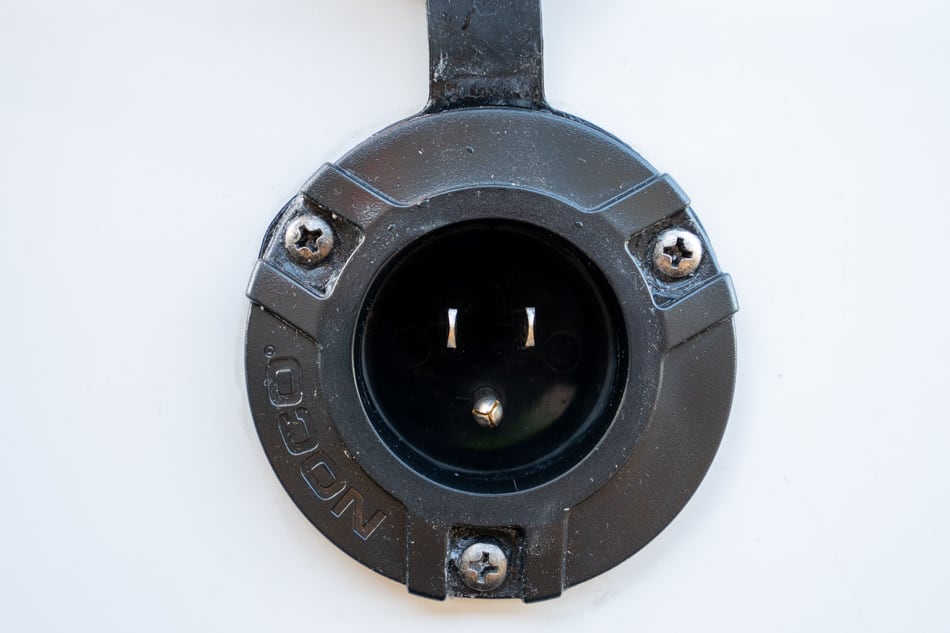
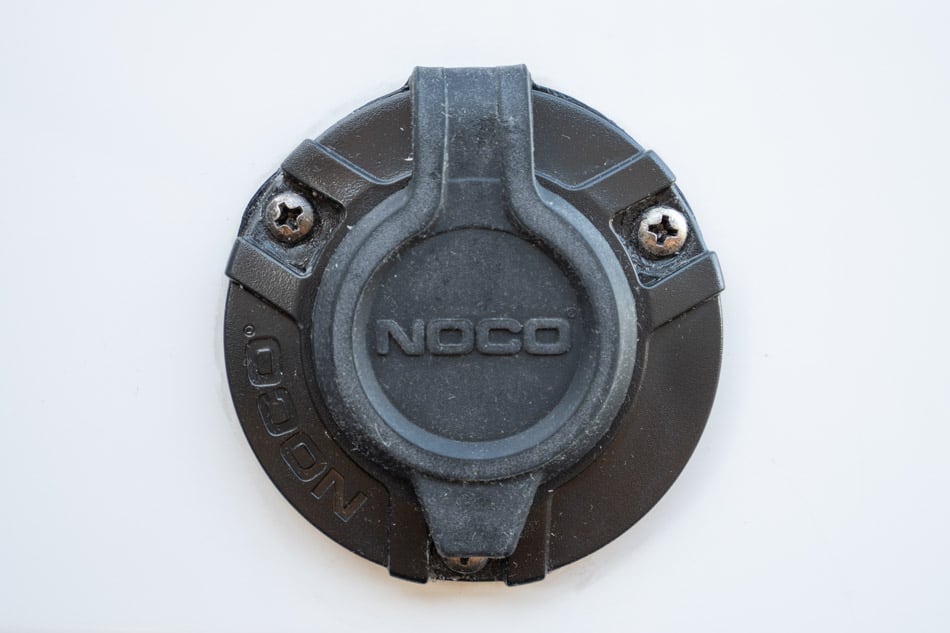
The product that I ended up installing in my van conversion is a basic 15 amp plug that has standard extension cord leads on the back of it. Essentially, this becomes a way for me to run an extension cord into my van.
By using this adapter, the extension cord doesn’t have to be brought in through an open door or cracked window. It gives me a neat way to electrify my van while I’m safely tucked inside.
This simple product works perfectly for me because I only use it occasionally and for items that don’t draw a lot of power. You can also choose to use a 30 amp plug so that you are able to run items that draw more power such as heaters, air conditioners, irons and other items that might be too much of a power draw for the solar system that you might have installed.
How To Install Shore Power In A Van – The Simple Way
Step 1 – Figure Our Where To Put It
The first step to installing this type of shore power socket in a van is to figure out exactly where you want it to be. It doesn’t matter where you put it as long as it is in a convenient location for you and it comes through to the inside of the van in a place that is free from obstructions.
At first, I wondered which side the plug should be on. After researching motorhomes, I found that most often they are located on the driver’s side of the rig.
However, for my van, I wanted it on the passenger’s side because that is the most convenient place for my particular van conversion. I decided in the end that it didn’t matter where I put it because with a 50-foot extension cord, I will be able to connect to a power pole no matter where it is located in the Campground parking spot.
Step 2 – Mark & Drill Holes
The next thing that you will need to do is mark the location and drill a hole that the power plug will fit into. For the plug that I purchased, and recommend, it required a 2-inch hole. I installed painter’s tape in the spot I would be marking and drilling so that I wouldn’t accidentally scratch the paint in the vicinity of where I was working.
I used a 2 inch hole saw to create a smooth edged hole and it cut through the thin metal of my van like butter.
Note: before drilling any holes, make sure that you are clear on the other side. You don’t want to drill into a spot that is hard to get to or that ends up in a support brace inside the van. You want to make sure that where the hole is going to come through on the inside, it is nothing but solid sheet metal. Be sure and check this and measure multiple times before making a hole.
Once the hole has been drilled, you will want to sand or file any rough edges down so that you can be sure to get a good seal.
You will then need to drill three small holes that line up with the holes on the plug. Once those have been drilled, you will now be able to install the plug by simply using those three screw holes.
You may also want to add a little paint to the bare metal. This will help to prevent rust in the future if any water were to leak into it. I chose not to add any paint because it will be sealed tightly and will hopefully not allow any water to come in.
Step 3 – Install & Seal The Plug
The power plug that I used has a built-in gasket on it and I assumed that this would be all that would be needed to keep it leak-free. However, after installing it using only the gasket that it came with, it did leak after the first rain. I had to take it back out and come up with a different plan for making it leak-free.
I had to remove it and add some silicone sealant around the holes. After doing this and re-installing the power socket, it never leaked again.
Don’t trust the included gasket to keep it from leaking. It is likely to leak and you will probably need to add something additional to keep it from doing so. I would suggest using silicone or non-leveling lap sealant around the holes in order to prevent leaks from occurring.
Step 4 – Connect The Inside
After installing the socket, the only thing that will be left to do is connect the inside leads to wherever you will be connecting them. For me, the two leads that are connected to the plug are each going to an outlet that is installed on my walls in the van.
These outlets are usually connected to my Yeti 1400 but when I am on shore power, I can easily remove them from my Yeti and connect them directly to these leads. This switches the electrical source from the Yeti to the incoming shore power.
This also makes it easy for me to plug one of the leads into the Yeti 1400 so that it can charge when there is no sun. This is handy when I am staying in RV parks and the sun has been behind the clouds.
I am able to charge my solar batteries and not have to worry about them becoming drained. Sun or no sun, I can keep my solar batteries up to the full level no matter what.
Hooking Up Van To Shore Power
Most campgrounds have parking spots that have 30 amp electrical service. I can use this 30 amp service to plug an extension cord into. The extension cord then runs to the power plug that I installed on the side of my van and plugs into it.
I have a 50-foot extension cord and I have never found a time yet when 50 feet of extension cord was not enough.
In order to convert from 30 amps to 15 amps, I have to use an adapter known as a dogbone adapter made specifically for this application. The adapter plugs into the 30 amp plug but the other end has a standard 15 amp plug where my extension cord connects.
The standard 15 amp plug is the same type of plug that you would find in your home. Since it is converted to 15 amps with this adapter, I can run my extension cord directly to my shore power plug and it will work.
The cord that I use is yellow and it has a locking feature on it that allows it to stay connected without accidentally being pulled out. This is handy but is often a hassle with the specific power plug that I chose.
It can be difficult to unlock the end to pull it out. I’m not sure I would suggest this locking feature but the cord that I use also lights up on the end when it has current running through it. This is an easy way to see if it is working or not and whether or not you have electricity going into your van.
15 Amp Vs 30 Amp
Why would I choose a 15 amp plug over a 30 amp plug? For me the answer is simple; because I only need it occasionally and 30 amps would be overkill for me.
The 15 amp plug was simple to work with and it gives me all that I need. If I was in a larger RV, I would probably rather have a 30 amp connection. This is because there is more space and I would probably use a larger space heater or a larger portable air conditioner than what I would use in my van.
In my van, the living space is so small that the space heater I use when I am plugged up to shore power only draws about 1200 watts. This is well within the limits that 15 amps can handle. With 15 amp, I can connect around 1800 watts of devices.
Even when I am plugged in and using shore power, I am still using my solar battery bank for most everything in my van. The lights, fan, water pump continue to stay connected to my 12 V system so the only thing I use the shore power for is additional items and mainly for my small space heater on a cool night.
15 amps are plenty for my situation but you will have to decide for yourself whether or not it will be enough for you. You may need more so make sure that you do the math and know what you might be connecting to your shore power connection before you decide on the one that you purchase.
Conclusion
Having a shore power connection can certainly be helpful in the right situations. It’s very nice to have an additional source of electricity to use when you don’t want to use your solar battery bank. When you are staying in an RV park, it makes sense to connect it to shore power so that you do not drain your battery.
Also being able to charge your solar battery bank with it makes it a great decision. With such a simple solution, there is no reason not to add something like this into your van conversion plans. Of course, you can always choose to install a more complex system and go for something that will handle a larger load.
However, if you are like me and only use it occasionally, the solution that I used for my van may work perfectly for you as well.
Van life can be a freeing experience. It can allow you to escape the normal way of life and enjoy a different life out on the road. A life where you are not attached to society in normal terms. You make your own way, do what you want to do and whenever you want to do it.
Many people who live the van life are not the type of people who want to fit in with the crowd. These are the type of people who go against the grain and make their own path. People like me who want to make their own path and enjoy adventures that aren’t typical of what the majority of people would want.
Having solar installed in a van, allows you to accomplish this type of lifestyle and be independent of life on the grid. With a capable solar system attached to your van, you can live and do normal things that you may be used to doing with normal household electrical outlets. Solar gives you the energy you need while allowing you to remain independent from a grid.
Many people wonder what type of solar is best for their van when they first get into van life. There are many different options to choose from and some systems can get quite expensive. There are also some cheaper options that you can use for your van and get the job done without spending a fortune.
In this article, I will discuss a few different ways that you can accomplish having solar energy in your van. Many of these ways are common and make great options because they have been tried and tested over the years. I have experience with using solar in my van because it is typically what I use 95% of the time.
Except for occasionally plugging up at an RV park, I use my solar power to accommodate my needs nearly all of the time. I am a big fan of solar because it allows you to be independent and not have to worry about where you are going to get electricity from.
It’s a nice feeling when you park somewhere and you can still get on with your life without being plugged into a grid. You can still charge your phone, run your laptop, watch TV, and do anything else that you would be used to doing.
If you are looking to install solar in your van, I hope the following recommendations will help you out on your journey.
Basic Solar System For Van Life
The first type of system that I will discuss is the basic installed solar system. This system consists of a few parts and can seem quite difficult at first. However, once you understand all of the components required, it isn’t that difficult.
Solar Panels
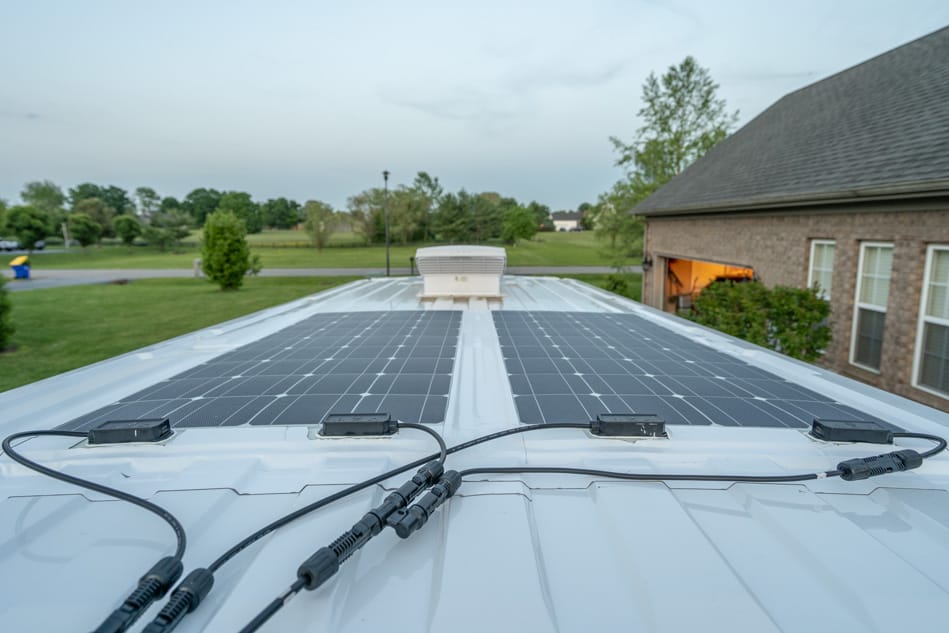
The first thing you will need is a solar panel or most likely, multiple solar panels. These come in different sizes and can be rigid or flexible. Typically, rigid panels are going to give you more bang for your buck. They are more efficient and will pull in more energy from the sun.
However, the downside of using rigid panels on a van is that they will likely need to be installed on a roof rack. You can choose to mount them directly to the roof of the van but I would recommend using a roof rack for this installation.
With flexible solar panels, you are able to work with them a little bit easier. They will fit the contours of a van roof and can be easily stuck to a roof securely.
I have flexible solar panels on my van but I am sure that rigid panels would be more efficient and provide me with more energy. However, the convenience of flexible solar panels is a big selling point. The flexible solar panels that I have on my van are very light and were easy to install using Everbond tape.
I’ve driven thousands of miles on my van and they have never moved and the tape holds them down very securely, no roof rack needed.
These tried and true solar panels are a great option for van lifers. The cost is low but the performance is on par with some of the more expensive panels on the market. You’ll be sure to have efficient solar panels when you choose these rigid panels.
If you want flexibility, these flexible solar panels from Renogy provide a great solution. I have these installed on my van and can say for sure that these are great panels. They are not as efficient as the rigid panels above but the flexibility of them makes it worth it.
Batteries
Solar energy is only as good as the battery bank that you have available. The amount of energy that you have will depend upon the size and capacity of the batteries that you choose. This is an important part of the system because this is where your electrical energy is stored.
The sun shines down on the solar panels and the energy from the sun is then used to charge these batteries. The charge within those batteries is what you will use to be able to power your devices.
Currently, AGM and Lithium batteries are the best battery technologies on the market. AGM batteries are considerably cheaper but are not as efficient as lithium batteries. You will have to determine whether the extra cost of lithium is worth it for your situation. If you are more interested in saving money, AGM will be your best bet.
Renogy also makes great batteries and are among the more affordable option that you will find. AGM batteries are heavy but they are the most affordable option you will find for your solar system.
Lithium batteries are more efficient and lighter in weight. They are much more expensive though. Renogy also makes lithium batteries that can be used with their solar systems.
Charge controller
Once you have the solar panels and the batteries, you will need a way to manage the charging that is done. The charge controller controls how much voltage is going into the batteries as well as preventing the battery from becoming discharged when the sun is not shining.
The charge controller is what connects the solar panels and the batteries together and allows you to have a fully functioning solar system capable of delivering useable electrical energy.
An MPPT charge controller is going to give you the best performance with your solar system. This MPPT charge controller from Renogy keeps your system running smoothly and also allows you to connect to it and monitor it with your phone.
AC Power Inverter
The three items listed above will allow you to have a fully functioning 12 V system. If you want to also be able to connect 120 V AC devices, you will need an inverter. An inverter takes the direct current and inverts it to make it alternating current.
This alternating current is what you will typically find in a standard house. In the United States, the standard household plug is 120 V alternating current. If you intend to use your solar system to be able to plug-in normal household items, an inverter is a necessity.
Without it, you will only be able to use 12 V items. This is probably not good enough and you will most likely want to have an inverter added to your system.
Run all of your AC powered devices with this 2000 watt inverter. 2000 watts is a good size for those with a solar system in a van. It will give you enough wattage to run most any device that you would be likely to use.
Cables & Connectors
There are a variety of cables that you will need to connect everything in a solar system. The panels will need to be connected to the charge controller and the charge controller will need to be connected to the batteries. If you use an inverter, it will also need to be connected to the battery.
All of these cables that are needed can get a bit confusing. It isn’t always a case of knowing exactly what you’ll need. Depending on your installation and positioning of components, you may have some trial and error on different lengths of cables.
For the most part, you can expect to need the following:
Branch connectors (if you have more than one solar panel)
Cables to connect solar panels to charge controller
Cables to connect the charge controller to battery or batteries
There may be more cables necessary but each configuration may be different so you’ll have to play it by ear depending on your specific setup.
One way to make the whole process easier is through the use of a kit. Let’s look at how these may be the best solution for your van.
Solar System Kits
If you were going to create a DIY solar system for your van, you might have a hard time deciding on what to buy. It can be a confusing process, especially considering that the system can get quite expensive. In this case, many companies have kits that you can buy that include most of the necessary parts to create a fully-functioning system.
These kits are excellent for beginners or for anyone who doesn’t want to take the time to piece together their own system. With a kit, you won’t second guess your choices since the kit already contains most of the parts needed and have been put together from the company that sells them. They have been put together to work flawlessly and can make the entire process easier for you.
An example of a great solar system kit for a van would be the following.
These items will complete the kit and allow you to have a fully-functioning system. The only thing left to do is install it.
Portable Solar Generators
If the DIY route is not for you, there are portable solar generators that are packaged as one whole system. These portable systems save you time by having everything done for you. The only thing that you need to do with a portable solar system is to connect a solar panel to charge the batteries contained within the unit.
This makes it very simple to install a solar system wherever you want. For a van, these types of systems are ideal because they can serve multiple purposes beyond being the main electrical hub for your van.
You can also remove them easily from your van and use them in other places. You could take the unit to the beach with you so that you can power devices. You could use the unit for other purposes rather than just sitting in the van waiting to power your life in the living space.
The downside of a portable system is the overall cost. You would be able to piece something together yourself for a cheaper price. However, if convenience is your goal, a portable system will work well.
The three options listed below are popular models that van lifers use. There are more options for solar generators but the ones I have listed below will get you up and running with minimal work and minimal money.
Goal Zero
One of the most popular portable options is one of the Goal Zero Yeti units. These units provide solar energy in a small portable package and unlike traditional solar systems that are installed, these can be moved from place to place. Goal Zero has options for different power needs. Whether you need 400 W of power or 3000 W of power, Goal Zero has you covered.
For most van lifers, Goal Zero provides options that are more than sufficient for providing energy.
If you are looking for something that will provide a little energy to supplement your needs when you aren’t plugged in, the Yeti 400 may be a good choice for you. However, if you are looking for something that will power your van the majority of the time, the Yeti 1400 (1400 watt-hours) or the Yeti 3000 (3000 watt-hours) will work better.
The Inergy is another portable solar generator that you can purchase. This brand is also capable of delivering a large amount of power for your van life needs. It is 1100 watt-hours so it is not quite as powerful as the Yeti 1400 listed above.
It’s a convenient system that only weighs 25 pounds and has a carrying handle on the top of it, making it a truly portable unit. The unit can be tucked away nicely into an area inside your van and be used permanently or removed as needed.
As with the Goal Zero units, it has everything that you need already built into it including the AC power inverter. It comes with six standard 120 V plugs so that you can easily plug your AC devices into it.
Jackery
Jackery makes portable solar systems that are smaller capacity than what you would find from the other two companies listed above. These make great units as a backup or if you are just needing a small portable system to add to an existing system. If you only use small items or want to charge your phones or other devices, one of the Jackery units will serve you well.
With the smallest unit being 240 watt-hours and the largest unit being 1000 watt-hours, there is something for a wide variety of needs in their product lineup. These are a great solution for van life and can come in very handy for those with smaller needs. These are more affordable units since they are smaller.
Solar Panels For A Portable Solar Generator
No matter what type of solar system you use, solar panels are a vital part of the system. You need panels in order to harness the energy from the sun. There are different types of solar panels that you can use and this will depend upon your situation.
If you are going to be using a system that is permanently installed in your van, you will probably want to mount solar panels to your roof. On the other hand, if a portable solar generator is what you will use, you may decide to use portable solar panels as well.
However, just because you have a portable solar generator that you use, it doesn’t mean that you must use portable solar panels. In my van, I have used permanent solar panels that are installed on my roof but they connect to my portable Yeti 1400 solar generator.
I could just as easily have gone with portable solar panels but I wanted the convenience of my solar panels always being connected and charging.
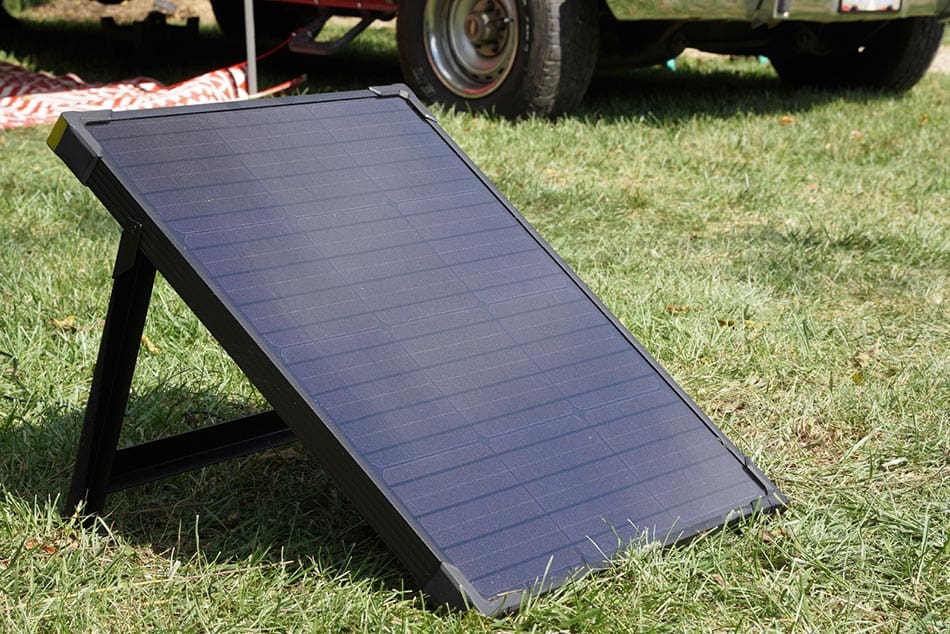
Using portable solar panels has advantages though and may allow you to get more out of your solar system because you can move them around and aim them directly at the sun.
If you have solar panels installed flat on your van’s roof, there are times during the day when the sun is not aimed directly at the panels so you are not drawing as much energy as you could be if the solar panels were facing directly towards the sun.
The portable units that I have listed above all have their own brand of portable solar panels. These fit well with their units and are designed to easily connect and disconnect with a minimal amount of work. The only problem with this set up in a van or an RV is that you have to get out of your van and set them up.
With this, you run the risk of someone coming by and stealing them while you are in your van. It’s probably unlikely but something to think about if you decide to use this type of panel.
It isn’t as convenient as having them mounted on your roof permanently because when they are mounted in this way, they are always on the job. No one is going to climb on your roof and try to steal your mounted solar panels.
The foldable solar panels from Goal Zero are great for van life because they allow you to use them when needed and then easily store the panels away when you are not using them. These take up a minimal amount of space and anyone who lives in a van knows that space comes at a premium.
How Many Solar Panels Do I Need For A Van?
How many solar panels you need depends upon how much energy you will be consuming as well as other factors. If you will be installing solar panels, space is limited on a van roof so you will have to work with the small area that you have.
I have 200 watts of solar panels on my roof. I have two 100 watt panels mounted side by side and still have enough room to add a third one if I see fit. I haven’t found that I need it yet though. The 200 watts I have keeps my solar generator charged just fine and allows me to live comfortably in my van without feeling like I am having to save energy.
Some of the portable solar generators only allow a certain amount of incoming wattage so you’ll have to take note of that amount if you are using one.
For example, the Goal Zero Yeti 1400 only allows 360 watts to be connected. The Inergy Apex allows 500 watts to be connected and the Jackery 1000 only allows 200 watts.
In most cases, you shouldn’t need more than 200 – 300 watts of solar panels on your van roof or in a portable configuration. Many people have more than this, sometimes in the thousands of watts.
However, this is overkill in most cases and is usually only for those who consume a lot or use high energy items such as an induction cooktop, microwave, water heaters and other items that have a high power draw.
Bottom Line
No doubt installing a solar system in your van can be a costly undertaking. Depending on the size and complexity of the system you choose, the price can vary but will likely be one of the largest costs of your van build.
I’m a big proponent of the portable solar generators only because they can easily be used in situations other than your van. A permanently installed solar system is cheaper and is what most people choose to go with. Solar companies have made it easier than ever for anyone to install a system even though electrical considerations can be a complex subject.
Some people don’t consider the cost of solar to be worth it. For me, I wouldn’t want to be without it because it’s how I get most of my power. Whether you decide on solar or not, it’s a great way to power your life while on the road in a van.
Even if you only use a small portable unit, it will give you a little peace of mind knowing that you always have a backup power supply, as long as the sun is shining enough to keep it charged.
The great state of Kentucky provides plenty of opportunities to see and experience great attractions and get close to nature. Being from the Bluegrass State myself and living here for over 35 years, I can say that Kentucky has something to enjoy for people of all ages.
If you travel in an RV or are interested in camping and spending time in the great outdoors, Kentucky has lots to offer for you. Whether you are into outdoor adventures or sightseeing tours, there is a rich history here and it has a reputation for being an outdoor lover’s paradise.
I have been fortunate enough to be able to travel to many different parts of the state throughout my life and have enjoyed my experiences. I am the type who likes to get away from the hustle and bustle of the city and escape to the untouched natural world. Kentucky has plenty of wilderness and outdoor camping locations that RVers will fall in love with.
If you are interested in heading to Kentucky for an RV adventure, you will not want to miss out on some of the places listed below. These are places that I have personally visited and determined that they are worth the trip for anyone who has the time and wherewithal to take them.
Some of them you may already know about but living in the state for 35 years has allowed me to find some hidden gems along the way that you may be unaware of. The first ten places I’ll discuss are among some of the popular attractions throughout the state. However, the last ten are places that may be a little more obscure, especially to those from out of state.
I hope this article will help you to see how great Kentucky is and what it has to offer. It’s more than just bourbon and horses in Kentucky, it’s a world for nature lovers and city dwellers alike.
1) Mammoth Cave National Park
Mammoth Cave is among the many great National Parks in the United States. These parks are the best America has to offer and Mammoth Cave is one of the few National Parks located in the eastern United States.
As the name implies, Mammoth Cave is a cave system and visitors can take underground tours of some fascinating caves. It is said to be the longest cave system in the world. Growing up in Kentucky, this was a standard field trip location for us kids and it is every bit as fascinating now as it was then.
Besides the caves that you can tour, there are plenty of hiking and biking trails. More adventurous people will enjoy the 84 miles of backcountry trails that take you far away from the crowds.
Mammoth cave is great for RVers as there are many different campgrounds and RV parks located in the area.
Red River Gorge is a rock climbers paradise! This large canyon lies within the Daniel Boone National Forest and offers endless fun for outdoor lovers.
Red River Gorge is home to over 60 miles of hiking trails. You will find some of the most iconic natural arches in the state including the Sky Bridge.
This area may take multiple days to explore but it is one of the most beautiful locations in the state. There are several nearby campgrounds where you will be able to stay.
The Bourbon Trail is a route that travelers can take that allows them to get close and personal with some of the world’s best bourbon. Kentucky is known for its bourbon and the Bourbon Trail allows one to visit various distilleries that produce some of Kentucky’s finest Bourbons.
It’s one of the top things to do in Kentucky and provides an educational but fun way to experience Kentucky culture and history. For adults, the Bourbon Trail is a great way to taste bourbons that have been distilled and aged right here in the Bluegrass state.
Some of the well-known distilleries along the way that you can visit include the following:
Cumberland Falls is known as Little Niagara and is the largest waterfall by volume in the Eastern United States and south of Niagara Falls. This iconic waterfall is a popular tourist attraction in Kentucky and is great for those traveling in an RV.
With campgrounds located nearby, it is easy to plan your trip and stay overnight and enjoy all that this park has to offer.
Besides the beautiful waterfall that is front and center, there are hiking trails as well as not-so-popular waterfalls that are also worth exploring in the area. I prefer to hike on the trails within the park to some of these other waterfalls. You can enjoy nature, get away from the crowds and see other waterfalls that many tourists never experience.
Among these waterfalls are Eagle Falls and Dog Slaughter Falls. These both require a bit of strenuous hiking to reach but are both worth the trip.
If you are lucky enough to be here at certain times of the year, you can experience a moonbow. Cumberland Falls is the only place in the Western Hemisphere that you can experience such a phenomenon on a regular basis.
Located in Eastern Kentucky, the Cumberland Gap is a pass-through within the Appalachian Mountains. This passageway played a large part in American history and allowed pioneers to explore new frontiers.
The beauty of this place is spectacular and in the early morning, the fog can be seen like a blanket covering the distant mountains. It’s a sight to behold and among one of the most unforgettable views in Kentucky.
The trip to Cumberland Gap is worth the trip for photographers or those who love to see the beauty of nature.
Many great memories of childhood come to mind when I think about the Land Between The Lakes. Located in Western Kentucky, this piece of land lies between two lakes; Lake Barkley and Kentucky Lake. There’s nothing like spending the day on the lake whether it’s out in a boat or on the banks.
You’ll find a variety of activities to do including all kinds of watersports, hiking, fishing and more. There are also OHV trails for those who like to take their vehicle or ATV off-roading.
With plenty of places to park your RV, you won’t have to search very far to enjoy all that this area has to offer.
Bowling Green Kentucky is known for the Corvette factory as well as the National Corvette Museum. This is the only place where Corvettes are manufactured and are an important part of Bowling Green’s economy. Whether you are into cars or not, the Corvette Museum and factory are worth adding to your list of places to visit on your tour of Kentucky.
You will be able to see the history of the Corvette as well as watch an entire Corvette being made in the factory. This is an exciting and educational experience that you have to see to believe.
The Corvette Museum and factory are both located in North Bowling Green and both offer tours. There are plenty of RV parks in the area for you to stay.
If you are looking to walk amongst giants, Bernheim Forest will be a treat for you. This arboretum offers 15,625 acres of forest and nature to explore. It is also home to forest giants that have been built along a trail that makes for a fun hike.
It is a great place for kids and adults alike and offers a great way to get outdoors. Hikes are easy and you can be rewarded with scenic views and friendly people.
It is also along the Bourbon trail so you may be able to do both of these during your travels.
Be sure to visit My Old Kentucky Home while in the area. This is a 1300 acre plantation with a mansion that was built in 1818. There is an excellent campground on the premises that will allow you to enjoy the home and is only about 16 miles from Bernheim Forest.
Perhaps one of the best-known tourist attractions in Kentucky, Churchill Downs is home to the Kentucky Derby and is a popular place for visiting. Located in Louisville, you will not want to miss a stop at this famous race track.
Whether you are a horse racing fan or not, the history of this track is undeniable and something to see.
History buffs will love visiting the birthplace of the 16th President of the United States; Abraham Lincoln. Located in Hodgenville, this is a must-stop if you are on your way through Kentucky.
You will be able to see a replica cabin that Abe was born and grew up in. Visit the Sinking Spring farm where Mr. Lincoln spent his childhood. You can also meander through the memorial building and see various artifacts from the president and his family.
The next 10 locations are places that you may not have heard of unless you live in the Bluegrass State. These are interesting places that will make for a great stop along your way through Kentucky.
11) Lost River Cave
Located in Bowling Green, Kentucky, Lost River Cave is a hidden gem (literally). This is cave country and this seven-mile cave has a river that runs through it. You’ll be able to take a guided boat tour that travels along Lost River through the cave while learning some history of the cave.
Local legend claims the cave was a hiding spot for famed outlaw Jesse James. Whether it’s true or not, it’s a story you’ll want to hear and imagine as you are making your way through the cave.
There are many other activities to do including hiking among the two miles of trails, seeing remains from old stone buildings and also a butterfly pavilion. Lost River cave provides activities for the whole family to enjoy.
Spend some time at the lake or play golf at this state resort park. Barren River Lake is a 10,000-acre lake located in Lucas, Kentucky. Besides living the lake life, you can also hike on the many trails or spend time on the beach in the summer months. If you are a golfer, you’ll enjoy the 18 hole golf course located in the resort.
There is an excellent 2.5-mile paved trail that is great for walking dogs, jogging or just enjoying an easy walk for yourself. I have walked this trail many times with my dog and it has always been a favorite of ours.
Stay the night at the campground located in the park for a quiet night in nature. This well-dispersed campground features 99 sites and is a great place to stay the night.
Best RV park near Barren River Lake State Resort Park
If you are looking for a great hike and some great views, the pinnacles at Berea will give you all that you want. Located in Berea, KY, it is a great place to get outdoors and experience the beauty of the Bluegrass state. With multiple trails to choose from, anyone can enjoy the day while getting a little exercise in and a whole lot of fresh air.
Enjoy the views of the rolling hills as you look from the pinnacles above.
Pets are welcomed so RVers who travel with dogs can enjoy a nice hike with them. Whether you choose an easy or a difficult trail, you are sure to come away recharged.
Located on the Western side of Kentucky in Smithland, the Mantle Rock Preserve is another place to enjoy nature at its finest. The preserve features a large natural sandstone bridge and you can enjoy hiking an easy loop trail that will get you up close and personal with this historical area.
Enjoy the wildflowers in the spring but don’t expect to do any biking, climbing or camping here. For the protection of the preserve, these activities are prohibited but that’s a good thing. It means that you can visit an untouched place that will allow you to enjoy nature as it should be.
If you want to experience Kentucky horse culture, Kentucky Horse Park is a great stop on your way through the state. This park is an educational horse farm where you can learn everything you want to know about horses. Walk around the park and enjoy the sights or take pictures with some of the sculptures around the park.
Kentucky is known for bourbon and horses and this place gives you the opportunity to learn all about horses while traveling through in your RV. The park is pet-friendly so you’ll be able to walk your dog through the park with you.
There is an excellent RV park located on the premises and can be accessed conveniently across the road from the main Horse Park.
Located in Danville, KY, the Great American Dollhouse Museum houses a large collection of miniature dollhouses, cities, and other community structures. It’s a great place for children to enjoy as well as adults. It’s a fun, family-friendly stop along your way through Kentucky.
You’ll be fascinated as you meander through the museum’s timeline of history. It’s a unique place to visit and not something that you might consider but once you go inside, you’ll be glad you decided to stop.
If you are looking for a place to stay while visiting, this location is a member of Harvest Hosts. You can stay the night in your RV on their property and then visit the museum while you are there.
If you are not a member of Harvest Hosts, you can receive 15% off your membership by using the link below.
Daniel Boone was an American Pioneer who led the exploration of Kentucky. Boone is recognized as a folk hero around Kentucky and is a household name that anyone in the state is likely to know about. You may see the name as you travel throughout the state and through the Daniel Boone National Forest.
Daniel Boone died in 1820 and his remains are located in the Frankfort Cemetery in a location that overlooks the Kentucky River. It’s a beautiful location and the state capitol building can be seen in the distance.
If you ever find yourself in the Frankfort area, you will want to stop by this historic site and pay respect to a true pioneer who paved the way for settlements in the Bluegrass State.
Are you a baseball fan? If so, you probably are familiar with the Louisville Slugger name and you might already know that these bats are made in the factory in Louisville. This iconic baseball bat is the choice of players in the Major Leagues.
Take a tour of the museum and see some memorabilia from the past and present. Whether you are a baseball fan or not, you’ll enjoy the experience of just how important Louisville Slugger has been to the game of baseball over the years.
After the museum tour, take a walk through the factory and learn how bats are made. You’ll see them start as trees in the forest and then be turned into a fine tool that is ready for hitting a ball out of the park.
You’ll get up close and personal with the creation of baseball bats. You’ll smell the wood and see master crafters creating the world’s greatest baseball bats.
North Louisville is lacking in good quality RV parks or campgrounds. If you are going to stay in the area, I would suggest using Harvest Hosts. There are a few locations in the area that will give you a better experience. However, if you choose to stay in an RV park, I would suggest the following.
Best RV park near Louisville Slugger Museum & Factory
Step back in time in Shaker Village as you take a tour of the way life was in a Shaker religious community. Located southwest of Lexington, Shaker Village is a unique place to visit and explore. You can explore the farm and historic center to learn more about the Shaker way of life.
There are hiking trails, dining, shopping and more to do and it makes a great place for a family outing. Shaker Village is a great way to explore a part of history that has been well preserved for future generations to learn about.
Not only was Abraham Lincoln born in Kentucky, but the Confederate President was also born in Kentucky and the Jefferson Davis monument honors his birthplace. Located in Fairview Kentucky, this monument is similar but a smaller version of the Washington monument and rises to a height of 351 feet tall.
There is an elevator inside that allows you to go to the top where you will be able to see views of the surrounding area.
There is a park included and many families use this park for family events and reunions. This park was a regular place that I would visit as a child and being able to ride an elevator to the top of the monument was a real treat.
There is a quiet campground located just up the road.
No matter what you are looking for, you are bound to find it in Kentucky. The state provides something for all types of people and those of all ages. You can enjoy the great outdoors or you can be a tourist and enjoy the attractions throughout the state.
If you find yourself fortunate enough to be traveling through Kentucky, hopefully, the list above will give you a few ideas of places to go. As an RVer who travels in a camper van, I have driven to many places throughout the state and am always amazed at what I find. There is a rich history and lots of fun activities to take part in.
When you travel through Kentucky, you’ll want to slow down a little bit and take it all in. Enjoy the sights of the rolling hills and fertile farmlands and take the time to get to know the friendly people along the way.
If you are interested in camping or getting out into the great outdoors, a tent is usually a good place to start for shelter. However, a camper van is also a popular solution to use as a shelter when camping. These have a few similarities since they are both small but they are vastly different in many ways.
With the obvious difference being that one is a motorhome and the other is not. With a camper van, you can drive to your location which makes it very convenient. However, many people do not consider this camping since it resembles living in a home.
This is subjective and depends upon your way of thinking. I consider traveling and staying in a camper van to be camping just as much as tent camping is. When I drive my camper van out into an off-grid location, I am living a lifestyle that would be similar to what I would be living by popping a tent.
I have stayed in tents as well as motorhomes and I regularly stay in my camper van. The lifestyle is similar and you must simplify and live a more primitive lifestyle in both cases.
Which one may be better for you depends upon your situation and preference. It can also be said that there are different times and places to do each type of camping. Just because I own a camper van doesn’t mean that I can’t also enjoy camping in a tent.
I often sleep in a tent rather than my camper van, especially on nice nights in scenic locations. There’s just something special about sleeping in a tent that makes you feel more at one with nature.
If you are wondering which type of camping may be best for you, I have come up with some reasons that one or the other may be better. When comparing one to the other, there will always be things that are good and things that are not so good for each. Consider the experience that you want to have when you go camping and which one will fit your lifestyle the best.
One way doesn’t always work for everybody. We all enjoy doing things differently and we will all disagree on this subject as well. I hope the following reasons will help you narrow down the style of camping that you may be interested in.
6 Reasons A Camper Van Is Better Than A Tent
1) More protection from the elements
When staying in a camper van versus a tent, you are more protected from the elements. This could be very important during a torrential downpour or a stormy, windy night. Sleeping in a tent during bad weather situations can be dangerous and sometimes scary.
Sleeping in a camper van or any type of RV during a time like this will not be so bad. You are well protected by the hard, outer shell of the van and probably won’t have to worry about the dangers like you would if you were staying in a tent.
Lightning storms, bear attacks and other events that may happen out in nature become less of an issue when you have the protection of a camper van.
2) More convenient
With a camper van, you pull up to your location, park and then you are all set up. Comparing this to a tent, which takes a little while to set up camp, it’s much more convenient. Setting up a tent can be a fun part of the process and an important part of the experience. However, if you are looking for convenience and don’t want to have to fool with the set up of the campsite, a van will be your best bet.
Depending on the tent you have, some can be challenging and time-consuming to set up. When it’s time to leave, they can be just as time-consuming to tear down.
3) More like home
Staying in a van is more like staying at home. This is true with my van since I set it up to be similar to a house. Most van conversions or class B manufactured vans are well thought out and include all of the essentials and necessary components that you would expect and can be compared to a tiny house.
They are often complete with the essentials as well as comforting decor that can make your stay feel like you are staying at your home. It may not even require that you change anything from your normal routine of life.
Compare this to a tent in which you must change nearly everything that you do. A tent doesn’t give you running water or convenient lighting or ventilation that you would have in a van.
4) Easier to do normal tasks
Just doing normal tasks can be much easier in a van. Cooking meals, washing dishes are two that come to mind. Everything is usually set up in a camper van to make it easy for you to work with. Whether you have a stove built-in or you use a camping stove, it’s easy to set these things up and use them in the comfort of your van.
In a tent situation, you may be cooking with your grill on the ground and washing your hands by using a water jug. Although doable, it’s much different than the experience you would have with these things built into the living space of a van.
5) More comfortable
Have you ever tried to sleep on the ground? In a tent, you are often sleeping in an uncomfortable position. If you don’t have an air mattress of some type, you may end up with a rock, pinecone or something else on the forest floor poking into your back. Although you can try to eliminate this before putting your tent up, it doesn’t always work out.
In contrast, sleeping in a camper van is like sleeping in luxury compared to what a tent has to offer. My memory foam mattress in my camper van is nearly as comfortable as the one I have in my home. I am always in comfort when I am out on the road in my camper van.
On top of that, I have fans and other ways of staying cool in my van whereas this may not be available in tents.
6) Safety
With a camper van, not only do you have protection from inclement weather, but you are also safer from other problems that may arise. If anyone were to try and harm you, it would be more difficult for them to get into your van without you driving off.
As long as you are parked in a position where you can easily leave the scene, staying in a camper van gives you a safer feeling in sketchy situations.
If you were in a tent, you may not be able to leave very quickly as you would need to tear down camp before you could move. A tent isn’t safe from someone coming inside it so if there is an issue and the situation gets sketchy, you may be less safe in your tent.
6 Reasons A Tent Is Better Than A Camper Van
1) It’s cheaper
A tent is obviously going to be cheaper than a camper van would. You can purchase a tent for less than $100 and take off on your camping adventure without spending much more than that. Only a few items are needed and all of them can be purchased for much less than what you would spend on a camper van.
A tent is great for someone who doesn’t want to spend much money on camping but still wants a good experience. Staying in a tent is a great way to enjoy the outdoors without sinking a bunch of money into it.
You also do not have to worry about paying insurance or yearly registration fees on a tent. With a camper van, you are obligated to pay various yearly fees just as you would on a passenger car.
Once you purchase your tent, you are done. You can simply enjoy it without having to be held hostage to additional taxes and fees.
2) You can set up camp in more remote locations
With a tent, you can pack it into your backpack and head out into the wilderness. You are able to stay in remote locations that you could only get to on foot. Camper vans are great for getting you to drivable places but to go any further, you’ll have to find other methods.
When you head off into the wilderness on foot, a tent gives you a great little home to stay in. In this way, a tent would be a better option for those looking to camp in locations that are in the middle of nowhere with no access via drivable roads.
3) A tent gets you closer to nature
There is no better way to get acquainted with nature than camping in a tent. When you camp in a tent, you are bedding down right on the Earth’s surface. There are no comforts of home when you are in a tent.
Beyond a camping mattress and a cooking stove, there isn’t much more to enjoy the comforts of life when you are staying in a tent. In this way, you are forced to be at one with nature. When you stay in a van, you are still living in nature but you also have the comforts of home with you.
At least in my van, I am comfortable in my memory foam mattress rather than laying on the ground in a tent. It’s a much different experience than it would be in a tent. Some people may argue that there is no other way to camp than with a tent. Tent camping is the ultimate experience for purists and those who want to be as close to nature as possible.
4) A tent is better for the environment
If you are concerned with your impact on the environment, a tent is going to be less than what a camper van will be. Driving a camper van around has an impact since it uses fuel and you are likely to drive the van more.
Even using a tent will have an impact since you will need to drive to a location using a vehicle. However, someone camping in a tent usually sets up camp and stays for a few days. Compare this to a person staying in a camper van. This person may stay the night and then drive somewhere else the next day or use their van to go places and then come back.
It’s all about doing the least amount of harm that you can and in this situation, a tent is a minimal way of camping so it has a smaller footprint and does less damage to the environment in the long run.
5) A tent stores easily when not in use
When you aren’t using your tent, you don’t have to worry about it sitting in your driveway. Instead, you can easily pack it up and store it in your closet in your house. A tent packs away into a very small space so even people that live in small areas can store a tent out of the way.
When it is time to hit the trail and enjoy nature in your tent, you can simply grab it and go. It’s as easy to set up as it is to tear down so there isn’t much fussing and inconvenience.
If you had a camper van, you would need to have a place to be able to park it. Although a small van doesn’t take up a lot of space, people don’t often have a lot of extra parking space at their residence. This is something to consider if you would like to have a van but have a very limited area in which to park it.
6) It’s a challenging adventure
Staying in a tent out in the wilderness is much more of an adventure than staying in a cozy and comfortable camper van. It takes more work to set up camp when you have a tent and it also is more of a challenge to do even the simplest of tasks.
With a tent, you may be digging holes in the woods to relieve yourself rather than using the portable toilet installed in your van. Your van may even be equipped with a shower, making it convenient to stay clean. Chances are, you won’t be able to take a shower when tent camping unless you are staying in a campground that has shower facilities or you have a mobile shower solution.
It can be a challenge but a fun one when you decide to camp in a tent. It’s the adventure that makes it fun. Everyone needs an occasional adventure in their lives and tent camping is a great choice for making it happen.
Final Thoughts
Whether you choose a camper van or a tent, you can never go wrong when you choose to venture out into the great outdoors. Camping is a great way to get away from the burdens of life and relax. Some people will prefer the cozy and safe shelter of the van while others want to be up close and personal with nature.
Some people believe that only a tent can give you the proper camping experience. However, I believe that camping can be done however you want it to be done. You should go camping the way that you can afford and the way that excites you the most. Whether you sleep in an RV or a tent, it doesn’t matter as long as you enjoy the experience.
I prefer to have both options available because sometimes I want the comforts of my van and other times I want the experience that tent camping provides.
Springtime can be an exciting month for those who are living the van life or who own a camper van that they use periodically. The same can be said for any type of camper as we enter the prime months for this type of living.
It can be exciting looking forward to getting out into nature after a long winter of being indoors.
The warm months of spring allow us to finally break out of our caves and get back into the world. Feeling sunshine on our face and getting out and going to new places is something that van lifers and RVers look forward to.
The bad part about this is that the springtime ends and we move into the hot summer months of summer. This can make for a more difficult time if you live in or travel in a camper van.
Staying cool when the temperatures are soaring can be quite a challenge for those who want to be out in nature but comfortable at the same time.
We often don’t have this problem in our homes since we are fortunate to have air-conditioning that cools us off when the weather is at its hottest.
Vans, on the other hand, do not offer an easy way for people to stay cool and many are not equipped with air conditioners. I know from personal experience that it can be challenging when the temperature and humidity are high. It makes for some very uncomfortable nights as you try to sleep in a puddle of sweat.
There has to be a better way, right?
There has to be a way to stay cool and make the lifestyle more bearable when the weather is not cooperating. On one hand, it’s nice to have warm weather but on the other hand, the warmth can make for miserable living conditions.
Fortunately, there are some options for you to use to be able to stay cool in a van. A lot of professionally manufactured class B motorhomes already have built-in air-conditioning units that can be powered when using shore power. However, for many converted vans, this feature is left out.
Let’s look at a few options that are available to be able to condition the air in a camper van.
Roof Air Conditioner
The most common type of air conditioner unit in vans and other RVs is the roof type. These air conditioner units are mounted onto the roof and direct air-conditioned air down into the van from the ceiling.
These can work quite well in RVs since they circulate air down through the van allowing the cold air to sink.
One downside to this type of air conditioning unit is the amount of electricity that it requires to run. You will only be able to use an air conditioner like this if you are plugged into shore power. There may be some vans with strong enough solar systems to power a unit like this but the majority of camper vans cannot sustain this type of air conditioner on solar power alone.
These can also be difficult to install and are quite heavy. Some of them can be over 100 pounds so it is a substantial amount of weight sitting on top of your roof at all times. Two people are usually needed for the installation of one of these.
The Dometic Penguin II is a great option and a popular model that people often install in camper vans.
Once installed, these work quite well and give you a high-quality air-conditioning unit that can easily cool down the small space of a camper van. If you know that you will be staying in RV Parks the majority of the time, installing an air conditioner unit like this on the top of your van is a good idea.
Window Air Conditioner
The old fashioned window air conditioner doesn’t have to be limited to non-mobile structures. These can also be installed in a van if the layout is designed to allow for it.
Many people have installed these and they can also work quite well since most of them are powerful units that provide max cooling. A small area like a van is no match for a window unit and it would have no trouble keeping the area nice and cool.
The problem with this type of unit is that they are not specifically designed to be used in an application like this. It will require a unique layout and you will probably have to design your entire layout around it.
Some van conversions enclose an area in which to install the air conditioner. Sometimes in the rear or sometimes in other places in the van. The following video shows a window air conditioner installed in the front of the van directing cold air towards the living space.
I have also seen van conversions that have window units like this exposed out of the side or rear of the van. This is unsightly and although it probably works to keep the van cool, it isn’t going to win any awards for looking good.
If you are desperate for air conditioning and want an installed option, a window unit may do the trick for you. You will just need to make sure you have a layout that allows for a large portion of space to be used for it.
Portable Air Conditioner
A portable air conditioner is a great option if you know that you are only going to need it occasionally. These can be stored when not in use and then set up when you need to condition the air inside the van.
Some of these units are quite large and take up a lot of space but there are smaller units on the market that would serve a camper van well. It doesn’t take a large unit to cool a small area so you could get by with an 8000 BTU unit.
There are different types of portable air conditioners that I would like to discuss.
1. Household Portable Air Conditioners
These are the kind that you will find at nearly any home goods store or various places online. They are designed to be used in the house. They must be vented outside and they usually include a kit that allows you to vent them out of a standard window.
These are not often easy to install in a van situation and you might have to be creative to make it work. You will need a way to vent it to the outside. This is possible by installing a permanent vent out the side of your van that the air conditioner can attach to or be removed from.
You might also be able to vent it out one of the front windows although you’ll probably have to create a DIY solution for doing it this way.
Zero Breeze makes a portable air conditioner that is designed for the camping and outdoor lifestyle. These portable air conditioners are very small, lightweight, and can be operated using a battery.
These small air conditioners can be effective in cooling a very small area such as what a camper van has. Zero Breeze markets its product to be used in outdoor situations such as camping in a tent or spending the day on your back patio.
Anywhere that cool air needed, a portable air conditioner unit like Zero Breeze is easy to set up and use for hours with the included battery.
I have not tested one of these in a van environment so I cannot say for certain if these are effective in cooling down an entire van interior. However, they do look promising and if they work well, they provide a very good choice for van lifers who are looking to cool down their living space in the hot summer.
The Zero Breeze also requires that it be vented but it is perhaps easier to vent then the larger type of exhaust that you have with a standard portable air conditioner.
Portable air conditioners make a great solution for those who are only seeking such a solution on the hottest of days. Otherwise, there may be other ways to cool down your van without having to break out the portable units.
Cooler Air Conditioner
Although not technically an air conditioner, the cooler solution is a popular way to get some relief from the hot weather. There are many companies on the market that build them and you can also create your own if you are handy.
These use a standard cooler that is filled with water and ice. The ice cools down the internal ductwork and then a fan blows air through the duct system, cooling it down as it passes. This is a multi-use solution since it allows you to have a cooler of ice to keep food and drinks cold while also cooling the air to give you a more comfortable living experience.
One problem with doing this might be having damp air blowing into your van. This would be a problem and could be a cause of mold or mildew. You want to make sure that the air coming out of the cooler is dry so it will not result in problems like this.
The ICY Breeze provides a product that blows out dry, cold air and makes a great, affordable alternative to an air conditioner. This type of system can make a huge difference on a hot day and could be the difference between you enjoying your trip or being miserable.
You would spend less money building one yourself but be sure you build it to where it blows dry air instead of damp, humid air.
Other Options For Staying Cool In A Camper Van
If you are not interested in using the options discussed so far, there are other ways to keep your van cool. Just because you are used to air-conditioned spaces, doesn’t mean that you can’t get along without it. The following solutions could be used to create a more comfortable environment for your van.
Roof Fan
Air-conditioning is nice but you probably aren’t going to always be able to have it. This will be a fact of life if you intend to spend time in a camper van. You will have to come up with other solutions to keep cool.
One of the most obvious ways is installing a roof fan onto the top of your van. This is very common amongst van conversions and RVs and provides a great amount of ventilation for the living area.
The Maxxair 5100K is a great affordable option and is what I chose to install in my van.
With a fan like this, you can pull air in so that you can always have moving air throughout your van. You can also pull air out and this works great in conjunction with an open window or door. Having both of them allows you to create airflow and cools the van down quite nicely.
I use my fan nearly all of the time in the summer months or at any time when it is warm. In combination with my sliding rear window, I am able to create a nice cool draft that blows through my van keeping me cool even when it is super hot outside.
If you are converting a van, you will definitely want to install a fan in your roof. It’s one of the simplest things to do and it will be one of the things that you use the most in your van.
Even if you have an air conditioner, you won’t always be able to use it and you will need other ways. A fan like this provides you with a great solution and it uses very little energy. It can run for long periods using a solar battery bank.
Another simple solution for getting some airflow into your van is by using a window that opens. These types of van windows are usually either sliding or have a crank on them or vents that push out. They have screens so that bugs cannot come in but airflow is allowed to pass through and create a nice draft within your van.
Between a fan and a window, these two items are commonly used on conversion vans to create a more comfortable living environment. Both are important in the process and they work very well with each other.
When designing a conversion van layout, it’s a good idea to consider the airflow when you are looking to install a fan and a window. Install them in locations that create a draft throughout the van in an effective way.
For example, my roof fan is near the front of the van and my vented window is near the rear. When I have my fan on pulling air out of the van, it’s pulling air into the van through the rear window so it creates a draft that I can feel almost anywhere in my van.
I would suggest installing at least one small window in a van and this will allow you to keep the living space cooler.
I purchased mine from Van Windows Direct and was very pleased with their service and the product.
Standard Fans
Perhaps the easiest way to stay cool in your van is to use a standard fan. Similar to using a standard ceiling fan or a standing oscillating fan at your home, this can be just as effective in your van.
Small clip-on fans work great since you have a limited area to work with. These types of fans can be clipped onto wherever needed so that you can enjoy a nice breeze anywhere in the van.
Many of these types of fans use USB power which doesn’t need much electricity. These work well with solar battery banks and can keep you cool without using lots of electricity. Having a small clip-on fan pointed at you while you are trying to sleep at night can go along way in keeping your cool.
If you are looking for a more permanent solution that ties into your 12-volt electrical system, the Caframo Sirocco fan is a great choice. Although quite expensive for what it is, it installs easily and uses minimal power while maintaining a low profile and not taking up much space.
If you want to go cheaper, you can always opt for a simple clip-on fan that you would likely find in an office cubicle. Although not as effective as a roof fan combined with a vented window, this solution can work well in your overall plan to stay cool in the hot summer months.
Seeking Shade
Perhaps the most basic way that you can ensure that you are doing all you can to keep cool is to always seek out shaded areas to park. Parking your camper van in the shade is probably an obvious way to keep cool but it’s important to mention it anyway.
This is not always possible and you might not always be able to seek out shade if you are depending on the sun for charging your solar panels. However, if you will seek out shaded areas to park your van in when you are not in need of charging your solar battery bank, you will be better off.
Parking in direct sunlight makes it difficult to cool your van on a hot day. No matter how well you have insulated your van, the heat will find its way in and it will be more difficult to cool it down.
Traveling Where There Is Cooler Weather
If all else has failed and you are still burning up in the summer heat, you can always head to a location where the weather is not so harsh.
In the United States, you could head north in the summer months instead of braving the hot and humid south. This will allow you to escape the heat and not have to worry about the extremely hot temperatures during the day.
Although almost all places have their share of hot temperatures, the climate is much more bearable in the northern states.
This is the beauty of having a mobile living space that can be driven anywhere you wish. You can choose where to go based on what you want to do and the weather that you want to experience.
How NOT To Stay Cool In A Van
As I mentioned earlier in the article, It’s important to make sure you are always blowing dry air into your van. Whatever choice you use, it will need to be something that doesn’t produce humid air.
An example would be the Arctic Air. This misting fan may be a great solution for keeping you cool in some situations but I wouldn’t suggest it for a camper van. It uses water to cool and humidify an area which wouldn’t be a good idea for a van interior.
The same can be said for the common “swamp coolers” that you often see people using for their vans or RVs. Most of these also produce air that is humid and will not be a good choice for using inside a van.
I would suggest only seeking out those options that are going to produce dry, cool air. These are going to be the best solutions for the small space of a camper van.
To summarize, I would NOT suggest doing the following.
Using mist fans. Mist fans will cool you down but at the expense of moist, damp air. This should be avoided in a small camper van. They would be great for a tent camping situation but I would keep them out of my van.
Using swamp coolers. The same can be said about these. They produce moist air and aren’t the best solution for keeping cool in a van. Choose options that only produce dry air.
Starting and running your vehicle to use the air conditioning. Besides polluting the air and disturbing others who may be staying nearby, running your vehicle could have deadly consequences. Carbon monoxide could enter the vehicle while you are parked or asleep. It could also be damaging to the engine of your vehicle and cause it to overheat in the summer.
Conclusion
Air-conditioning in a camper van sounds like a great idea and there are many solutions available on the market. However, van lifers usually don’t stay in areas where they are constantly hooked up to electricity so other solutions are needed.
The other solutions will help to keep you cool in your van in the hottest of months. Although it will never be the conditioned air that you might be used to in your home, portable air conditioners, as well as vents and windows, can go along way towards helping you cope with hot weather.
If you don’t have an air conditioner installed in your van, don’t worry, try one of the options mentioned above and see how it works for you. I have been able to stay comfortably on hot days and nights in my van without an air conditioner.
I rely on my window and fan to create a draft of cool air that helps me feel more comfortable.
If you have watched the van life popularity rise on social media, you might be anxious to go out and start converting a van so that you can go on your own adventure.
After all, it seems like such a great lifestyle. Imagine waking up every day in a beautiful place, opening the back doors of your van to a beautiful beach or mountain scene and taking a picture of you and your significant other laying on the bed looking out.
Or maybe your dog can be laying beside you as the two of you look out as if there are no worries in the world.
Van life truly is the ultimate experience OR is it?
Is it really this great and do people really enjoy it this much?
When you watch videos or see people sharing their adventures on social media, you would think the whole experience is absolutely fantastic and there could be nothing bad about it. It just seems like one adventure after another and it seems that anyone can just quit their job, hop in a van and go have these same experiences.
Unfortunately, it doesn’t work like this. This is not a reality. What you have to understand is that almost all of the pictures and videos are staged and although you probably realize this, some of these bloggers and other content creators do a great job of hiding the fact that life is not always rosy in a van.
While it can be a wonderful experience, too many people have made it seem like it is always amazing. It kind of sucked me in in the beginning. After watching video after video of people living their dreams in a van, I was intrigued and wanted to do it myself.
I’m a goal-oriented person. When I see something that I would like to do, I make a plan and set a goal to go do it. I don’t wait around for permission.
After seeing videos of other people doing this, I thought this exactly what I want to do.
Amongst all the noise, there are some people out there who do share the bad parts of van life and as van life becomes more and more popular, more people will know that it isn’t always as perfect as others make it seem.
If you’ve seen people enjoying the lifestyle and you’ve looked into it yourself and are considering buying a van and making it happen, the question may come to your mind…
Is it worth it and will I actually use it?
To answer this question, you have to understand what you want out of it and what your expectations are of the whole experience. If you expect to ride around in La La Land all the time while avoiding life responsibilities, then you probably won’t use it because it’s not going to be like that and you will be disappointed.
You probably won’t like it as much as you thought you would. On the other hand, if you understand that there will be good and bad things about it, you might be able to make it work for you.
It also depends on how you are going to use your van. If you are planning on living in the van full-time, it can certainly make for a different experience than someone who is just using it as a weekend getaway vehicle, like I am.
When I started, I never intended to live in my van. I intended to build something that I could use to get away without having to worry about where I’m going to stay. My goal was to get away for the weekend or a week or two and travel with my dog to national parks or other places that I wouldn’t be able to get to otherwise.
I wanted to be able to drive and be able to stay in RV Parks or Harvest Hosts locations along the way.
Living in a van full-time never really appealed to me so when I bought my van, I understood that I was going to convert it and then use it occasionally when I wanted. Since I live in a home, I treat my van just as any I would a class B motorhome or any type of camper.
It sits in my driveway ready to go at any time and when I am ready, I can take off and go on my adventure.
Most of my journeys have been amazing. It has been everything that I expected. My expectation was to be able to get in the van, go on a trip and enjoy peace and quiet in a location and then come back home and get on with my life. That’s exactly what it’s been for me.
If you are not the adventurous type or the kind of person who doesn’t mind “roughing it,” you might have a more difficult time adjusting and getting use out of the van like this.
To help you decide whether or not you should purchase and van and whether or not you will use it, I have come up with some reasons to buy or not to buy a camper van. Keep reading to find out if a camper van is right for you.
5 Reasons To Buy A Camper Van
1. Fun Adventures
If you are looking for a fun adventure, a camper van is a great way to achieve it. Having a vehicle like this allows you to get out and explore places that you might not otherwise. You can use it to travel further distances and to provide yourself with a place to stay no matter where you are.
Even day trips are more fun with a camper van because it can serve a purpose. Not only can it serve as a vehicle that takes you place, but it can also serve as your basecamp no matter where you are.
I often travel with mine on day trips and it gives me a place to eat lunch and even take a nap. It also gives me a place to just sit down and relax while I enjoy whatever it is that is around me.
I often find myself in a place where it is quiet and relaxing, providing me with a restful refuge from my adventure.
2. Go more places than you could with a larger RV
If you are looking to go on adventures, you can probably go further and more easily in a camper van than you could by using other methods. Of course, you won’t have the space that you do with a larger RV but this is the advantage of a camper van.
The small size allows you to travel to places and see sites that you might avoid if you were in a larger motorhome. A camper van can park nearly anywhere and maneuver itself into most any parking lot so you’ll never have to look too far when you are seeking out places to park.
Although the size of a larger RV is nice, the benefit of having a small home on wheels takes the cake in my opinion.
3. Less hassle
One of my favorite benefits of my camper van is how little of a hassle it is to get it out and use it. It sits in my driveway and is ready to go at a moment’s notice whenever I get the urge to take a trip.
There is no fussing around with large cumbersome motorhomes or hooking it up to a car to be towed. I simply get in and set my GPS to where I want to go and then I take off. The fuel mileage is excellent and I can drive it just as I do my regular passenger vehicle.
With something that is very little hassle like a camper van, you are more prone to use it than you would something that takes more work to use. If you are someone who just wants to get out and go instead of having to fool with the hassle of a cumbersome RV, a camper van will suit you well.
4. It will probably be more affordable
A camper van is likely going to be more affordable if you choose to convert your own. It might also be a more affordable option if you choose to purchase one that has been converted by another user.
To clarify, I am only referring to van conversions that you have converted yourself or another amateur has converted.
If you choose to purchase a professionally built class B motorhome (camper van), you may end up paying more. Converting a van for yourself into a camper van can be one of the most cost-effective ways to enjoy owning a motorhome that you can use for traveling or camping.
However, purchasing a professional class B camper van that has been manufactured by a licensed upfitter isn’t always a cheaper option. It’s surprising how expensive some small camper vans can sell for.
I wrote about why Class B motorhomes are so expensive. Learn more here.
5. You want to minimize your life and spend time off-grid
A camper van is a perfect way to get acquainted with a simpler way of living. With the limited space that a van provides, you don’t have an option to maintain a cluttered life while in it.
When you travel or camp in a camper van, you can take time to enjoy nature or the peace and quiet that comes from unplugging. Those who live the van life often enjoy boondocking and can be found hanging out in places that don’t offer convenient hookups to electricity or water.
If you are the type that wants to escape from our overly stimulating world, a camper van proved you with a vehicle to get away from it all.
5 Reasons NOT To Buy A Camper Van
1. You have a large family
Those who have large families or even more than two people will be cramped in a small camper van. Vans like this are great for single people or couples but can get pretty tight once you begin piling people inside.
Couples that have children might want to consider a larger solution than what a camper van can provide. Another concern would be that a camper van might not be equipped with more than two seats that have seatbelts.
Although there are many different floor plans and custom designs that do offer more than two seats, many custom converted vans do not have this.
My camper van only has the two front seats that have seatbelts. If someone else needed to ride in my van, they would have to do so without being able to buckle up.
I built mine to be this way but if I had small children that were traveling with me, I would have designed my van differently. The beauty of a custom van is that you can build it any way you want and put any feature that you want inside of it.
The problem that you will find with small camper vans though is that they are often set up for a single person or a couple of people max.
2. You’ve never tried camping or living in small spaces
If you are used to having a lot of space and being spoiled with modern amenities, a camper van might be a bad idea. It takes an adjustment to live or camp in such a small area. When you are talking less than 80 square feet, space can get very cramped and not allow for the normal style of living that you may be used to.
Even walking around becomes a challenge if you have more than one person in the van. Cooking can also cause a problem with your normal workflow. Living in a van requires you to shuffle and shimmy around so that you do not bump into other people or other accessories.
I spent a good amount of time bumping my head on cabinets when I first began using my custom-built van. Although this was more because of my clumsiness than the van itself, it still says something about the small area that will take some getting used to.
3. You’re super tall
Tall people may want to look elsewhere for a camping solution unless you are willing to hunker down a bit. The average height of a high roof camper van is around 6’3″. You can learn more about the average height of campers in this post that I created where I looked at examples of 17 different models on the market.
If you are over 6′ 3″, you may have an issue walking around comfortably. Class C and Class A motorhomes provide much more ceiling height than a camper van does. You will also get more headroom out of a travel trailer or fifth wheel if you are interested in going that route.
Camper vans are great for those of average height or just a bit more than average. At 5’10”, I have no issues in my van I can move around easily without the fear of bumping my head on the ceiling.
4. You’re claustrophobic
If you do not like to stay in small spaces, you may feel claustrophobic if you have to spend time in a small camper van. This is especially true if your van is not equipped with windows or is in a darker color that makes you feel more enclosed.
You often see camper vans in brighter colors and also with windows so that the area is brightened up, making it feel larger than it is. This is to help a person adjust to the small living area and be able to enjoy it as they would a larger space.
I haven’t felt claustrophobic in my van but I consider mine to be quite roomy and bright. The white walls and minimal design of my van have helped me to feel as if there is more room than there actually is.
5. You expect van life to be a free ride or even a cheap way of life
You might think that van life is a good way to hit the road and save money while you are doing it. You may have dreams of parking your van for free in locations all over the place and then coming and going as you please.
Although this can sometimes be the case, it isn’t reality the majority of the time.
Van life still requires money for you to be able to enjoy the lifestyle. You will have to pay for fuel, places to park for the night as well as auto insurance and other necessities that our society has become accustomed to.
Don’t believe the hype that you might see on the Internet that sells you on the belief that van life is a great way to save money. If you choose to live in your van full-time, it can be a way to save money over traditional housing but the costs still add up and you may be surprised in the end at how much the lifestyle actually does cost.
Don’t buy a van without first researching and creating a plan for yourself about exactly how much you will be spending each month. It’s also good to overestimate this amount as a way to prepare yourself for unexpected costs that may arise.
5 Reasons Why I Believe A Camper Van Is Worth Buying
1. You only live once
As far as we know, we only get one life to live. If there is something that you want to do in your life, you had better make it happen. You have probably heard the saying that life is not a dress rehearsal. We aren’t preparing to live, we are living now and we only get one chance to give it all that we’ve got.
A camper van is a great way for you to begin living your life to the fullest. Instead of just sitting around saying someday, you can begin a journey that you will remember for the rest of your life.
You will look back knowing that you made it happen and you did something adventurous. Traveling and seeing the world and discovering new places is something nearly all of us wish to do. Unfortunately, for many people, this remains a wish throughout their lives and they never actually get busy doing it.
You get ONE chance to enjoy all this world has to offer so why not do it right and if you are the type that wants an adventure and feels that a camper van will provide that for you, you should go for it.
2. Life is short
As I mentioned above, we only live once and during that one life that we have, the time flies by so quickly. One day you’re a kid and before you know it, life has flashed by and you’re a middle-aged adult wondering why you never did the things that you wished to do when you were younger.
Life is too short to sit around wondering how things would be or could have been. Purchasing and owning a camper van gives you the freedom to get busy with your life. You can make the hours count that you live by doing the things that you want to do instead of wishing for someday.
Someday never comes so you have to create it now if you want it. This has always been a motivator for me and is one of the main reasons I decided to purchase a van and use it to travel. I want to make memories and get out and explore what this world has to offer during the short existence that I have on this planet.
3. You can always sell it
If you purchase a camper van and then realize that it is not for you, it’s probably going to be easy for you to sell it. As long as you didn’t buy a junker or converted one and did a horrible job with it, you will likely be able to sell it without losing money and possibly even earning money.
Van life is popular and people are looking to purchase vans already converted instead of having to go through the trouble of doing it themselves.
Converting a van is not an easy task so if you have done the work, someone else will gladly take it off of your hands as long as it is done a high-quality job with it.
4. It gets you away from the boredom of a mundane life
I have spent a lot of my life sitting in front of a computer as a web developer for many years. I have worked in Internet marketing and other digital content creation jobs on the computer throughout my career so I know how mundane and boring a normal life can be during a workweek.
We get so involved in our work that we forget that there is a life beyond the 9 to 5 to be lived. Earning a paycheck is important but the day to day grind can be exhausting and we all need a way to get away from it. We need a way to escape reality and to get us into a place that can help us to recharge our batteries from time to time.
A van allows you to get away from normal life routines and opens up a new world of exciting adventures.
5. They are fun to own and use!
You need a camper van because they are fun to use!
This might be a simple reason but it goes with the other four reasons that I have listed above. It’s important to have fun in your life and having a camper van has certainly added a lot more fun to my life. I love to go and travel to new places and stay in my van.
There is something about driving your home around and then having it to eat, sleep and live in wherever you want to park it. It is a freeing experience and it is just so darn fun.
I used to sit at home and watch movies on the weekend, and now I generally travel in my camper van on the weekends and the world and the great outdoors become the movie that I am watching.
If you ask me, I would rather watch nature any day over a boring movie. I have much more fun when I am out on the road and experiencing life. Rather than watching other people experience life on TV, I am out there doing it myself and it provides me with a lot of enjoyment.
Bottom Line
A camper van is not for everyone. I have had many people tell me that they could never stay in a van that is such a small size. Most people are not used to the small space that a van provides but to me that is the benefit.
A camper van is very much worth having if you want more out of life. If you are the type that seeks new adventures and wants to enjoy living while you are on this earth, then you will probably use a camper van if you are to purchase or convert one yourself.
I mulled around over this decision for a long time and finally pulled the trigger and bought a van, then converted it. I’m so glad I did as it has given me more enjoyment out of life and allowed me to experience something beyond the ordinary.
If you are interested in purchasing an RV, you may be wondering how much it will weigh. This can be especially true of trailers that need to be towed. You need to make sure that you have a vehicle capable of towing the weight of the trailer.
In the case of a Class B RV, there are a few reasons that someone might be concerned with the weight.
First of all, it’s important to know the gross vehicle weight rating of the RV. This is the maximum weight that the RV can weigh when you include the weight of the van itself along with everything that is going in it, including the people.
This will include all cargo items such as personal items, clothing, cooking supplies, freshwater, and gray water.
In some locations, the weight of a vehicle matters in determining the class of license that you need to drive it. In the United States, this is often seen only in large motorhomes that weigh over 26,000 pounds.
Class B RVs are not affected by this and can be driven in most locations with a standard driver’s license.
A Class B RV weighs between 6,000 and 11,000 pounds fully loaded on average. Most of the Class B motorhomes being produced nowadays are built using the same van chassis and are similar in weight. The weight will differ based on the van size and options included.
If you own an RV or are considering purchasing one, you will need to make sure you adhere to the GVWR recommendations from the manufacturer. This will help you to avoid potential problems that could arise from overloading a vehicle.
Overloading a vehicle can cause mechanical damage to the vehicle and may cause a tire blowout or other issues. It will also make it more difficult to climb hills. It may also be a safety concern as you will need a longer distance to brake and may be more susceptible to accidents.
In the case of an accident, if your vehicle is overloaded, you could be responsible and your insurance may not even pay for damages. To avoid this, you’ll want to weigh your RV to make sure you are within the maximum limit set forth by the manufacturer.
10 Examples of Class B RV Weight
I have included the weights that the manufacturer suggests for each of the Class B motorhomes below along with some details about the RV.
The weights that I have included are the GVWR for each motorhome. This weight includes the RV along with all cargo that will be inside the RV. It’s the maximum weight that the RV should weigh at any given time when fully loaded.
1) 2020 Pleasure-Way Tofino
Gross Vehicle Weight Rating (GVWR) – 8550 lbs
The Pleasure-Way Tofino is built on the RAM Promaster 1500 chassis and is one of the lowest weighing Class B RVs on the market. It is also among the most affordable Class B motorhomes that you can purchase.
Although the van is a low roof, it offers a pop-top that provides additional walking space and headroom inside the van. This makes for a very roomy layout.
This van has a freshwater capacity of 16 gallons and a gray holding tank capacity of 8 gallons.
The Roadtrek SS agile comes in at a very low weight considering all that it has to offer. Although it is a very expensive model with an MSRP starting at 142,000+.
It offers a roomy layout with a large kitchen area and a living and dining area that converts to a bed in the rear.
The Solis is a new motorhome for 2020 and is built using the RAM Promaster chassis. It is built on a high roof and also has a pop-top for additional headroom.
This van offers a lot of room for those looking to have a camping space that allows plenty of room to move around.
The pop-top allows for an additional sleeping area besides the Murphy bed located in the main living area of the van.
This motorhome is an excellent new addition to Winnebagos line of motorhomes and comes in at a GVWR of 8900 pounds.
The Interstate Nineteen is a small 19-foot RV that offers luxurious amenities for those who want it. The starting MSRP is $161,099 so it is quite a lot to spend. It has a well thought out floor plan that allows for maximum living, including a living area that converts into a sleeping area.
The RV is built on the Mercedes sprinter chassis and is still quite light for an RV at 9050 pounds maximum weight.
Dry weight – 7,426 lbs without cargo, passengers and all water tanks empty.
Cargo capacity – 1663 lbs. This amount is the amount of cargo you can expect to add to the dry weight and includes all supplies, people and freshwater tanks.
Learn more by visiting the company’s website here.
5) Storyteller Overland Mode 4×4
Gross Vehicle Weight Rating (GVWR) – 9050 lbs
This RV is popular among those who would like to get off the road and go to places that a normal RV might not go. The four-wheel-drive on this van allows one to drive on terrain that might be less than desired.
The company advertises the van as being a four-season, rugged RV that is ready for adventure. It offers decent living space but the key feature with this Class B RV is the ability to go off-the-grid.
It contains a powerful solar system and all of the amenities that you would expect in an RV of this size.
Similar to the Mode 4×4 mentioned above, the Revel is a four-wheel-drive adventure RV that is great for those who want to go off the road. Built on the Mercedes Sprinter chassis, it comes in a small package but packs a punch in terms of features.
It’s a small van at 19′ 7″ in total length so the total weight is low at 9050 lbs.
The Revel is a lightweight RV that appeals to those who want to go on off-road, off-grid adventures.
Learn more about the Revel by visiting the company’s website here.
7) 2020 Winnebago Travato
Gross Vehicle Weight Rating (GVWR) – 9350 lbs
The Travato is one of the most popular Class B RVs on the road in North America. It’s a roomy van at 21′ in length and uses the RAM Promaster 159″ chassis. This is the same van that my custom van conversion is built on.
It’s a small amount heavier than some of the others we’ve looked at above but still similar in weight and size.
It has a clean and spacious layout and contains all of the amenities you’ve come to expect from a professionally upfitted Class B.
The Zion weighs the same as the Travato listed above and uses the same Ram Promaster chassis.
Similarly, it offers a spacious layout and also includes a wet bath. Another great feature is the amount of storage it offers. The Zion is one of the more affordable options when it comes to motorhomes of this size.
Although not cheap, at a starting MSRP of $101,681, it is more affordable than most of the other options on this list.
Dry weight – 9,300 lbs for the 2WD version / 9,575 for the 4WD version.
Cargo capacity – 1,730 lbs for the 2WD version / 1,455 for the 4WD version.
This luxury Class B motorhome has substantially more weight than the others we have looked at so far. It has a length of 24′ and offers a very roomy interior for families.
This one is for those who want to be spoiled while out on the road and need the comforts of home with them at all times.
Airstream is known for its high-quality RVs and this one is certainly no different in that regard. Starting with a Mercedes-Benz van and creating a luxury coach on top of it, this one is for those who want quality and comfort above all else.
The Galleria is another high-quality coach with a hefty weight. Weighing in at the same amount as the Airstream Interstate Lounge EXT, it’s among the heavier models that we will discuss. It also uses the same Mercedes chassis in a 24′ length.
It offers a nice, clean layout that provides tons of storage. It’s an expensive RV that offers luxury to those who place the quality of living at the top of their priorities.
It has everything you could need to enjoy a comfortable RVing experience whether you are comping for the weekend of living in it full-time.
In most states in the United States, there is no special license required for most classes of motorhomes. The only exception to the US is driving something over 26,000 pounds which does not include any class B motorhome.
There isn’t a class B motorhome that weighs this much as you’ve seen from the list above. The typical range of weight that you can expect from a class B motorhome is in the 6,000 to the 11,000-pound range.
If you are driving an RV that weighs more than 26,000 pounds, various states have different rules concerning the type of license required. An RV of this size will likely be a Class A so if you are only concerned with Class B motorhomes, you will not have to worry about this.
Summary
A Class B RV can weigh anywhere from 6000 to over 11,000 pounds when you include freshwater and cargo. This is the smallest and lightest type of motorhome on the market.
In comparison, a class C RV could weigh between 10,000 and 15,000 pounds on average and a class A might be in the 12,000 to 30,000-pound weight range. This is quite a difference over the weight that a Class B would be.
The majority of professionally manufactured Class B RVs being sold today are similar in weight since most of them are built on the same few chassis. There are some variances depending on the size and features of the van.
The list above will give you an idea of what to expect when considering the weight of a Class B RV.
If you are converting a camper van, you probably already have some sort of ventilation solution on your list of things to do. Installing a vent of some kind is one of the top priorities for those creating a custom camper van.
Ventilation has many benefits and is one of the necessary steps in a van conversion if you expect to have a comfortable livable space. Adding ventilation can make your stays much more pleasurable than they would be without it.
If you have ever looked at RVs, some type of fans or window vents are always present. These serve a purpose and are an important part of the overall comfort of the van.
Do I Need A Vent In My Camper Van?
This might be a question you would have if you are deciding whether or not to install one in your van. It can be tempting to leave it off the list because it is often a dreaded part of the process.
This often involves cutting a hole in your van to install a roof fan or a vent. It could also mean cutting a large hole in the side of your van so that you can install a vented window.
Either way, it is a scary thought to have to cut into a perfectly leak-free van in this way. There is no room for error when you begin to cut large holes in the metal of your van.
You only get one shot to cut a hole in your roof so you’d better get it right.
Do you really need a vent in your camper van?
I consider a vent of some type to be absolutely necessary if you’re converting or living in an RV. After my experience of living and traveling in my camper van, I can say that ventilation is one of the most important parts of the process.
I am glad that I went through the process of installing my roof fan and my vented window. These items allow me to have sufficient airflow throughout my van and make it much more comfortable to stay in, even on the hottest of nights.
Ventilation can make all of the difference when you consider hot summer nights and the need to have some sort of airflow. Without it, your van will become stuffy and it will be miserable to stay in when the weather gets hot at night or during the day.
If you are converting a van, do yourself a huge favor and not skip this part. It is a vital part of the conversion and will give you a much better experience once you begin living in it.
Since you are already going through the process of converting a van, why would you leave this out?
Yes, it might be scary to cut a hole in your van or RV To install a vent of some kind but trust me, you will be glad you did when you get out on the road and use the van.
Stealth Camper Van Ventilation
What about a stealth camper van? If you are designing your van conversion to be stealthy and you don’t want to be noticed, you may have a dilemma with installing a noticeable vent on your van.
Even a window can set off an alarm to others that there may be someone living inside the vehicle.
I initially had this dilemma and did not want to install things on my van that would allow me to stick out. However, I also could not see myself living or sleeping in a van that was stuffy and hot.
I live and travel mostly in the southern states of the United States and the summertime can be very hot and humid.
Ventilation was not an option for me, it was a necessity.
My main form of ventilation would be a Maxxair fan that I installed on the roof. These are fairly low profile and do not stick out too much. Although they do stick out some and can be seen by others, this was a risk I was willing to take to enjoy the fresh air.
If you are struggling over the same issue, I would suggest putting a ventilation solution ahead of stealthiness. Stealthiness is somewhat overrated and most people already know that someone is staying in a parked van.
Even with my fan installed on top of my van, I still consider it to be fairly stealthy. I don’t feel that it sticks out too much and I don’t have any other large objects installed on my van.
I do have a small window in the rear that opens up with a screen installed and allows air to move through the van. This probably also ruins some of the stealthiness but again, I would rather be comfortable and able to sleep instead of miserable and sweaty because there is no air movement and no way to cool me at night.
Stealthy or not, I want my ventilation and it comes first for me.
Types Of Ventilation
There are a few popular types of ventilation options that most people use when they convert a van to a camper. You may choose a combination of items or you may just have one source.
This is up to you but the options are available for those who want to add a good amount of ventilation to a van.
Roof Fan
The most popular item is the roof fan. These come in different shapes and sizes as well as different models made by different companies. They typically have an opening with a fan that either pulls air out of the van or sucks air into the van.
They are also typically weatherproof and do not allow water to come into the van, even when it is raining outside.
This is an important part because you want to make sure that you can have airflow even when the weather is bad. If you do not have a way to vent your van in the hot summer when it is raining, the miserable circumstances are exacerbated.
Let’s look at two of the most popular models of RV roof fans that are on the market.
Maxxair Roof Fan
The Maxxair fan is my favorite and the one that I chose for a couple of different reasons. The main reason is that it is weatherproof without the need for additional parts.
The design of the max air fan allows it to be opened while the rain is coming down and you don’t have to fear for rain coming through your fan and into your living space.
This fan has multiple settings and can be set on low or high and many places in between.
I chose a simple version of the fan but other models are more advanced and allow you to control the fan with remote control.
My version does not have the remote control but I have found that I do not need it since everything is so close inside my van anyways.
This fan has been great and does not use a lot of electrical power so my solar generator is plenty to make it work regularly.
This roof vent is another great option and one of the most popular. It also has a fan that pulls air out of your van or sucks it in, depending on the setting you have it on.
The only reason I did not choose this product is that it is not as weatherproof as the Maxxair fan is. It has a sensor on it that detects when the rain begins and then closes so that rain does not come in.
However, the fan cannot be used to pull in the outside air while it is closed. This made the fantastic fan a no-go for me.
This fan also has the option to add a vent cover. The vent cover allows the fan to be used when it’s raining but this is an additional item and it sticks way up off for your roof.
I am not particularly keen on this design and would rather have weatherproofing already built into the fan like the Maxxair has.
Roof Vent
A roof vent is similar to a fan as mentioned above with the difference being, there is no fan. The vent is simply a hole in your roof that opens and closes to allow air to flow.
These are nice because they do not use any electrical power and provide a basic open and close ventilation system. The downside is that there is no air movement so you must depend on the weather to pull air into your van rather than an electrical fan.
This is a simple solution and might work well in some instances. I would consider this to be a good solution if used in combination with a roof fan. Having both installed would allow you to pull air through your van in a more efficient way.
If you had the fan pulling air out of the van, the suction would pull air into the van through the vent, creating airflow.
An example of this type of vent is the following would be THIS PRODUCT
Vented Windows
Vented windows are a great way to add extra ventilation to your van. These also work well in combination with a roof fan. For the same reason, you can utilize the fan in the window together to create an airflow throughout your van.
This is exactly what I do when I park and want to have airflow. I turn my roof fan on to blow air out of the van and as it’s doing so, it’s pulling air in through the window.
This creates a great amount of air movement and keeps me cool on warm nights. My window is installed right over my bed where I lay my head so the airflow keeps me nice and cool.
These types of windows come in different sizes and can be installed in different areas of your van. Some of these are sliding windows with a screen, such as the one I have.
Others are called T-vents and open up in a way that allows you to have them open even when it’s raining.
The sliding type of window that I have cannot be left open while it’s raining unless it is under an awning.
CR Laurence makes popular windows that are used in a lot of van conversions.
Skylight
A skylight is similar to a roof vent except it is a window that is installed on your roof. These types of products usually open up and allow you to let air flow in.
These are awesome for allowing more light into your van and may be a great option if you are trying to remain stealthy.
Even if you don’t have windows anywhere else in your van, A skylight allows you to have light flowing in that can also be a way to allow air to enter your van as well.
A skylight, similar to a roof vent, works well in combination with a fan that can move air in and out. On its own, it might not be as effective at removing stale air from your living space or providing you with fresh, cool air to keep you comfortable.
5 Important reasons to add ventilation to your van
1. Help remove condensation & steam
Condensation and moisture is a real threat to a small living space. If not allowed to escape, it could cause mold and mildew to grow and also cause issues with rot over a long term.
If you have a shower in your van, this is important because the moisture will need a way to escape and a roof fan can allow it to be pulled out.
My fan is just outside my shower and it allows the moisture to be pulled out when I have the water on.
2. Temperature control
Many vans are not equipped with air conditioners so you will need to consider an alternative if you want to have a more comfortable living experience.
If you want to enjoy a comfortable night of sleep, having ventilation allows you to have a flow of air that can keep you cool even when the nights are hot.
3. Odor control
Ventilation allows odors to escape and this can be very important for a small living space. There are lots of odors that can build up, especially if multiple people are staying in the van at one time.
This is especially important if you have a portable toilet in your van and need a way to keep the living space smelling fresh. Even without a toilet, other odors such as food can linger if not allowed to escape.
4. Ventilation for stove
A propane stove is great but should be used in a well-ventilated area. Having your van ventilated with a good amount of airflow allows you to stay safe when using a propane stove.
Many people use a portable camping stove inside their vans and these should always be vented when used. This allows any dangerous gases such as carbon monoxide to escape without harming you.
5. Airflow
When you provide ventilation for your van, you allow a space where fresh air can continually penetrate. This keeps stale air from building up inside the van and keeps your living space full of fresh oxygen to breathe.
This can be especially important when you lay down to sleep at night. Without ventilation, the enclosed area would be filled with your breath and there could also be condensation that forms from moisture.
6. Allows you to get closer to nature
One of my favorite benefits of having my van ventilated is that it allows me to open my living space up to the sounds of nature.
I am often parked in a location off the beaten path and in an area where I can hear the sounds of nature. Distant wild animals or a cascading creek are some of the sounds I generally like to hear when I am parked.
This makes me feel like I am part of nature and allows me to enjoy the full experience of outdoor living.
Final Thoughts
I consider Ventilation to be a very important part of a van conversion. If you are mulling over whether you should include this in your van, I would suggest that you make it a high priority.
From experience, I can say that my fan and window are two of the best things I did during my conversion. If I had not installed those, there would be nights when I would not be able to sleep or even enjoy the evening.
It can get really hot in the summer and being in a camper van when you aren’t using air-conditioning calls for other solutions. Having a fan that gives you airflow can be very welcoming.
Whether you choose a fan, a simple vent or a window, having some way for air to come and go is very important. It can be scary installing a vent or window in your van but in the end, you will be glad that you chose to do it.
If you’ve been looking around on social media and watching videos of other people converting vans to campers, you are not alone. It intrigued me as well and I became obsessed with the notion of converting a van.
Converting a van is very popular right now as many people have adopted this lifestyle and have made van life a trend. A converted camper van allows you to create a small living space that can be moved around from place to place, anywhere you would like to go.
It’s the ultimate travel vehicle and can take you to places you couldn’t normally go. When you are traveling in a van, you have it all at your disposal and you can live a somewhat normal and comfortable life even while traveling around the country.
When I was looking to convert my van, I considered many different options and finally settled on the van that I have today.
It has been an exciting adventure for sure and it has allowed me to travel in style and enjoy my journey. I feel as though when I travel, I have my little home with me and it has been designed and created just as I want it.
It’s a cool feeling looking behind you as you are driving and seeing a nice living space that has been designed and created just the way you want it.
It makes me want to stay in my van and go places where I can experience the joy that comes from staying for almost free in a world that isn’t always affordable.
Although I love the van that I created, there are many things that I wish I knew before I started converting it.
You can watch videos and dream about converting your own van but some may not mention some of the critical parts of this endeavor. I would like to shed light on a few things that you should consider before you decide to convert a van.
Why A Conversion Van?
First, let’s look at why anyone would want to purchase an empty van and then convert it when there are already great camping solutions on the market.
I asked this myself many times as I thumbed through image after image of van conversions on the Internet. I wasn’t sure why all the popularity of something that seemed like just a passing trend.
I am no stranger to RVs or the camping lifestyle so I know that there are nice livable options that can be purchased already done for you.
I concluded that there are a few reasons that people choose to take on the challenge of a van conversion.
After all of my research, I realized why I was taken in with the idea and understood why other people also wanted to be involved in this lifestyle.
1. It’s trendy
It’s very trendy to convert a van nowadays. With all of the DIY shows on TV, converting a van gives people something of a DIY nature in a smaller package.
It’s a very trendy thing to convert a van and then show off your work on popular social media sites. The #vanlife hashtag has become a major part of social media feeds and people have gotten an eyeful of this type of lifestyle.
It is trending on almost all social media platforms and people have taken notice. Any time something is trending like this, it’s common to want to be a part of it and do it yourself.
2. It’s cheaper than buying a ready-made RV
You could go out and buy an RV that is already done for you, but where is the fun in that?
An RV offers a great way to travel and live but a converted van offers the same with a cheaper price tag. You will probably pay less for your van and conversion then you will for a motorhome that offers similar living conditions.
3. The fun of creating your own custom space
At first glance, creating the living area of your dreams in a van seems fun. While it is fun if you are the DIY type, it is also a challenge.
Some people like challenges like this and want to take them on and then show off what they have done. It’s fun and satisfying to see the finished product after you are fully finished with a project of this size.
4. It’s the epitome of adventure
Getting into a van and driving across the country on an epic adventure is what van life is all about. When you have converted a van, you have complete freedom to go anywhere and do anything that you want.
The world is yours and all you need is a tank of gas and some other essentials and you can be on your way to discovering adventure that you have always wanted.
Van life rewards those who have worked hard and converted a van into a living space. They now have a mobile home that can be taken and set up anywhere. The natural world becomes your back porch, and your front porch as well.
10 Things To Know Before Converting A Van
I am not a negative person, quite the opposite actually. However, there is some advice I wish I had been given before I decided to convert my van. I feel compelled to share that advice with others who are moving towards the same journey.
I want others to know some of the realities of converting a van that they may not have thought of. Only someone who has gone through the grind of converting a van can give this kind of advice.
When you are just getting started or are excited about the possibilities, there are some things that you don’t even know that you don’t know.
If I were to write a list of 10 things that someone should consider before deciding to convert a van, this is what the list would look like.
1) It’s not as easy as you think
Converting my van was like trying to put a puzzle together except none of the pieces fit.
When I first purchased my van, I thought it was going to be an easy process to start converting it. I have experience in building construction projects and doing small woodworking projects around the house.
I assumed that it would be a fun project for me to purchase a van and then fix it up exactly as I wanted it. I was inspired as I sat and dreamed of exactly what I wanted the inside layout to look like.
However, once I began the project, I realized that it was not going to be easy at all. To begin with, nothing in the van is straight or squared so the initial difficulty is first experienced when you begin to see how challenging it is to work with.
You must utilize all of the ingenuity you can muster up to complete the project. Just know going into it that it is not an easy task and you should not expect it to be a walk in the park.
It can be quite overwhelming when you think of the van as an overall project. The key to a successful conversion is to take one section at a time and do not stress yourself by thinking about the entire project.
If you are a beginner and have never worked with projects like this, you may be in for a challenge. Although, I believe that anyone can make it happen, don’t expect this to go as smooth as you might imagine it will from scrolling through social media posts.
2) It’s not as cheap as you think
Like many people, I started my van conversion with a budget in mind and for a while, I was right on target. I had a nice spreadsheet with everything filled in all nice and neat.
Everything was running along just fine and I thought the entire process would be just like that.
The problem is, you don’t know what you are getting into with a van conversion and there are all types of small costs that add up that you never planned for in the beginning.
There is always a specialized bolt to buy or an odd-shaped bracket or something to spend money on that adds up throughout the entire build.
These little costs don’t seem like much at the time but over the course of the entire build they can add up to hundreds or even thousands of extra dollars that you didn’t plan for in the beginning.
My initial budget was set to $6000 for the entire build.
When all was said and done and the conversion was 100% complete, I had spent around $11,000.
Some of the added costs came from me wanting to improve on my original plans or add things I didn’t plan for in the beginning.
However, know that going into it, you are going to spend a lot of money on the van conversion. You can get by much cheaper than I did but in the end, you may end up spending more than you thought you would.
Plan ahead and make sure you budget for an additional amount beyond what you think it will cost.
3) Additional costs add up
Besides the cost of converting the van, there will be additional costs that you may not think of in the beginning. The excitement of purchasing the van and getting started with the conversion can sometimes make you forget about other costs.
Your van will need to have insurance on it at all times and you will have to pay yearly registration fees and taxes on the van. If you live in a place where vehicle inspections are required, you’ll need that too.
If this is a weekend type of vehicle for you, these costs can be an unwelcome addition to vehicle expenses you may already have.
There are also maintenance costs that you will have to consider in your budget such as regular oil changes, tire rotations, tire replacements and other preventive maintenance measures that you will need to stay up on.
This is similar to any vehicle and you would have to do this no matter what type of vehicle you have. However, if you are converting a van and it will be an additional vehicle that you own, it will be an additional cost to what you are already paying for vehicles.
If this will be your only vehicle and you plan on living in it, this may not be such a big deal for you.
4) It will take a LOT of time
Converting a van is a very time-consuming process. If you think that you are going to purchase a van and then convert it in a few weeks and then be on your way, you may be in for a big surprise.
It could probably happen this way if you spend all of your working hours on it and you know what you are doing. However, the reality is that it generally takes longer than you expect to take.
My van took me over a year to get to the point to where I could say that it was completely finished. I initially thought that the process would take me six months. This timeframe was with me working on it nearly every weekday for 3 to 4 hours and then spending the majority of the weekend working on it.
I could have probably done it quicker if I had chosen a simpler layout but a simpler layout is not what I wanted.
You will need to dedicate a lot of time for a build like this. The work involved is difficult and it’s a learning process along the way. The time you spend working on something may have to be undone after you realize you’ve done it the wrong way.
This happened to me a few times and it always added additional time that I would have to spend figuring out a new way and then making the new way work.
Time is valuable so if you do not have a lot of it to spare, the van build may take you a very long time to complete.
5) Cargo vans are used and abused
If you are planning on purchasing a used cargo van, you should know most of these are owned by companies and used as work vans. These companies have many different employees that use and abuse these vehicles.
I know because I used to work for a company that owned a fleet of vans like this. There were many different employees and they each pushed the vans to their limits. Since the van was not theirs, they abused it more than they would their own personal vehicle.
You can also expect this if you know that your van has been used by a rental company. People do not treat rental cars very nice since they do not own the vehicles.
Be sure and do your research and make sure you have a mechanic look at any van that you are considering purchasing. You will be glad that you had an expert look at it for you in the long run.
6) A camper might be a better choice
With all of the talk of camper vans and #vanlife, people have forgotten about the good old-fashioned campers. A camper is already done for you and you can make it work just as you would a van.
If you have a vehicle capable of towing a camper trailer, a small trailer might be a better option.
For one reason, the camper is already done for you and you can purchase it and then start your journey of enjoying it. There will be no stress of having to convert one unless you want to improve it or you have purchased a used one that needs remodeling.
Another reason is that a used camper trailer will probably cost you less money and require less yearly costs and maintenance.
If you do not mind towing a vehicle and are not looking for a stealthy van set up, I would consider looking at other options before you make your final decision on purchasing a van.
Although trailers may not be as trendy as converted vans are, they are every bit as useful and livable as a van will be.
7) You will probably lose sleep at night
I had many sleepless nights during my van conversion. Being the perfectionist that I am, I would think of how I was going to do things throughout the night.
I would be lying in bed with my heart racing, trying to figure out the best way to make something work.
I would often get out of bed and write something down or sketch something out on paper in an attempt to ease my mind.
I wanted to make sure everything was done right and it was cutting into my rest time at night. This became a problem later on in my build as I began to lose more and more sleep thinking about how to do everything.
It was a stressful time for me and was hard to lay down at night without thinking about something related to the conversion.
8) You will live in constant frustration
I was frustrated more often than not during my van build. I cannot count the times that I thought I was done with it. I wanted to list it for sale so that someone else could take over the project and free me from it.
There were so many things that were frustrating along the way and piecing together different parts of the project was sometimes overwhelming.
I was the only one working on my van so it became a struggle as I juggled ideas around in my small brain. It may not be as frustrating for you if you have others that you can bounce ideas off of and have as a helping hand.
Don’t let the frustration get the best of you because you can finish the project. I finished my project and I kept going even when I was frustrated but there were times along the way when I was close to giving up on the whole project.
9) Your local home improvement store will know you by name
I was a regular at my local Home Depot for the entire year that it took me to convert my van. Just when I thought I had everything I needed, I would run across an area that needed a special bolt or something I didn’t have or had run out of.
I was always searching the aisles, looking for that perfect part that I needed. Oftentimes, I didn’t even know what part I needed. I was hoping that it would reach out to me as I walked down aisles.
I was at Home Depot at least a couple of times per week during the year that I spent converting my van.
10) It’s not going to be as glamorous as you might think
It’s a glamorous lifestyle until you begin to live it. After spending a little time in a small van, you’ll see that it isn’t all it’s cracked up to be. It looks great on camera but the things you don’t see on the camera are the things that might make the lifestyle a little less appealing to you.
You have to experience the sweaty, hot summer nights or the cold, freezing winter nights to understand this.
How about using a portable toilet in your van or taking a cold shower? The times when you are out on the road looking for a place to park and sleep for the night or looking for a place to fill your water tanks or dump your portable cassette toilet.
These are just a handful of non-glamorous activities that are involved in living in a van. I tell you this because if you are expecting a dream world once you get out on the road with your van, you may be surprised.
Should I Buy A Conversion Van?
What if you do not have the skillset required to complete a van conversion? After all, converting a van is not for the faint of heart and is a challenging undertaking.
Buying a van that has already been converted by someone else might be a wiser decision.
Whether you purchase one that was self-converted by someone or you purchase one that was professionally converted by a conversion company, the idea might be appealing to those who don’t want to go through the trouble of doing it themselves.
Not everyone has the ability or even has the place to do the work that is required for a van conversion. You may be forced to work out on the street if you live in the city or you may not even have a space in which to work.
A word of caution, if you are planning on purchasing a van that someone else has converted, you run the risk of purchasing something that was not done properly.
There may have been subpar work done on it since most people who convert vans for personal use are not experts in doing so.
Buying a converted van is a risk and there may be fixes associated with doing it. It could become more of a headache in the end than just starting from scratch and doing it yourself.
One good thing about having done it yourself is that you know everything about the van. You understand the systems that you’ve built and you know where to look when something goes wrong.
You develop a mental picture of everything installed in the van as you go so when troubleshooting is needed, you will find it much easier on something that you have personally built.
What my van conversion taught me about life
Despite the long conversion time and some frustration along the way, the final product I ended up with was well worth the struggle. For me, it was a learning experience that I will take with me into other parts of my life.
I’m no stranger to adversity or life experience but this van undertaking helped me to put some things into perspective.
The most important lesson I learned throughout my conversion was the importance of chunking large goals down into manageable tasks.
I have tried to live by this principle for most of my life but this venture helped me solidify it. With a project this large, you can’t think of the whole project or it will overwhelm you.
As the saying goes, “How do you eat an elephant? One bite at a time.”
How do you convert a van? One small task at a time.
The other thing I learned was to believe in my abilities and trust the process. There were so many times when I was close to giving up on the project. Instead, I kept going as I focused on how it would feel once the project was complete.
I believed that I could make it happen and I created small tasks and slowly accomplished them. In the end, I had created something to be proud of and it feels great to hit the road in something I created with my own two hands.
So if you are looking to purchase a van and convert it, just remember that you can do it but it might not be easy. Just stick with it and chunk it into small steps that allow you to see constant progress.
In the end, you’ll be glad that you stuck with it and accomplished something to be proud of.
I currently drive a Class B motorhome but during my search for an RV, a Class C was on my list and was one of the first types of RVs that I was interested in.
The Class C offers a few advantages over the class B but in the end, I chose a class B for a few simple reasons.
Deciding on a class of RV to purchase can be a difficult decision. Many of them offer benefits over the other. With the Class B and the Class C being the smallest types of motorhomes, these two compare well to each other in many ways.
What Is A Class B RV?
A Class B RV is the smallest of all types of drivable motorhomes. Essentially, it is a van that has been converted into a camper and has all of the amenities that you would normally expect from a camper.
Although small, a Class B RV can provide you with an excellent living space for camping and traveling. Some people even live full-time in a van (down by the river, of course).
The beauty of this type of RV is the places that you can go to and the ease of which you can go with it. These are small but they are very nimble and can be driven on almost any road and can be parked in nearly any location.
Unlike larger RVs, you do not have to worry about the rig being so large that you can’t pull into the parking spot that you want.
These types of RVs come in different sizes but most range from 19 feet to 25 feet long in total length. Most of them have high roofs that allow you to walk around inside just as you would any other living space.
Even those who may be a bit taller can enjoy a Class B since the headroom in these is sufficient for most people of average or slightly above average height.
What Is A Class C RV?
A Class C RV is larger than a Class B but not quite as large as a Class A. Although, some large Class C motorhomes can be larger than the smaller Class A motorhomes.
A Class C is usually made up of a van front end with a custom living area built onto the rear.
The cab opens up to a living area that is much larger than what a van could provide. This space is often increased by the use of slide outs which allow even more room to be gained when the RV is parked.
A Class C RV can still be quite easy to drive around although not quite as convenient as the Class B. These are often much taller than a van would be so driving them might take some extra care versus what you would have when driving a van.
The class C is perfect for a family that needs more living as well as more room for sleeping areas.
They can provide adequate living space for 3 to 4 people or more depending on the size of RV that you have. One of the benefits of a Class C is that it contains multiple sleeping areas and usually has a nice sleeping area over the front cab of the vehicle.
This area makes a great sleeping space for children and can provide a family with a spacious camper that can allow the whole family to enjoy the trip and comfort.
Class C RV’s range in lengths from about 26 feet up to 35 feet for the longest ones.
Are Class C Motorhomes Hard To Drive?
Since these types of RVs are larger than vans, it would make sense that they are probably a little more difficult to drive.
The front end of the RV is the same as you would find in a standard van. They utilize the same cockpits as most popular Class B RVs do.
The difference is that with a Class C, the back end of the vehicle is much larger. This can make it more difficult to park and maneuver around in small spaces.
Even though they are larger, they are still fairly easy to drive around. As with anything large like this on the road, you must be careful and alert because it’s much different from driving a small passenger car.
These RVs have all of the comforts of driving that you would expect from a modern-day vehicle and are often equipped with cameras to allow you to maneuver more easily and help to reduce blind spots.
With back up cameras and other fields of view cameras, Class C RV’s can become very easy to drive.
Are Class C Motorhomes Safe?
Class C RV’s provide you with a safe and fun way to travel and camp while giving you a maximum amount of space. They provide all of the safety features that you would expect and can be safer than other types of motorhomes specifically the Class A.
Most modern Class C motorhomes have airbags and other safety features that give you peace of mind when out on the road.
How Much Do Class C Motorhomes Cost?
On average, you can find a brand new Class C motorhome in the $50,000-$100,000 price range. However, some models exceed this amount such as the 2020 Winnebago Navion, which is a small, 25 foot long RV.
This is a significant amount of money to spend on an RV but it is the cheapest option on the market if you choose to have a drivable coach such as this.
Besides the super expensive ones, most are offered at a reasonable price considering what you are getting.
Compare this to a camper van where you would pay anywhere from $70,000-$150,000 on average for a brand new one. These numbers are for the MSRP and can usually be purchased for less than this on sale from a dealer.
Advantages Of Owning A Class B Motorhome
Easier to park
A camper van is going to be easier to park then a larger motorhome would be. This makes it very convenient when you are pulling into RV parks or campgrounds that have limited space.
It also makes it easy when you are parking in standard parking lots. With a Class B, you will generally fit into a standard spot but a Class C will likely not fit and will take up multiple spaces.
A van can be easily parked or even parallel parked in city locations that have limited room for maneuvering.
Small and easy to drive
Since a Class B is so small, it is very easy to drive around. It is similar to driving a passenger vehicle and can make the experience much more pleasant if you are not used to driving large vehicles.
When I drive my camper van, it feels similar to driving my pick-up truck and never makes me feel like I am driving something large.
Better fuel economy
Class B RVs are among the best in fuel economy of all of the motorhomes. These RVs get around 18 to 22 miles per gallon. My camper van typically gets about 20 miles to the gallon depending on where I am traveling and how much weight my van is carrying.
With a Class C RV, you can expect to get anywhere between 12 and 18 miles per gallon. This is still better than the largest Class A motorhomes but not quite as efficient as a van.
More Stealthy
Try taking a class C motorhome into a parking lot and parking without being noticed. It likely will not happen because of the size and look of the RV. On the other hand, a van parks nicely nearly anywhere and can blend into the environment without being noticed.
A Class B doesn’t usually have the RV look to it. Although some have designs and brand names on them, they are a bit more subtle than Class C’s.
Some of them do not even look like an RV and if you choose to convert a van yourself, you can make it completely stealthy. This means that you will be able to park in more places and sleep for the night without being noticed.
When the time comes to store your RV for the winter or during downtimes, a large RV is going to be more difficult to store. Since it is larger, it will be a larger eyesore sitting in your driveway and if you intend on covering the RV with a cover, it will be more difficult to put on and then remove when it is time to use again.
In my research, I have learned that Class B RVs depreciate less than other types. These van conversions are typically higher quality and there is less supply than are the other classes of RVs.
Higher quality
Camper vans are usually outfitted by skilled workers and more time goes into creating one than RVs that are built on an assembly line. You can see this quality if you go and look at different models.
Some of the Class C motorhomes that I have looked at have been terrible in quality. I would hate to pay the price that was asked for some of the quality that I have seen done on some of the ones that I have looked at.
I am not saying that all of them are like this because they certainly are not. I have seen some very high-quality ones and some brands that maintain a very high quality of work throughout.
I am just noting that out of the two classes of RVs that I have looked at, the Class B gives you a more quality product.
No need for a towed vehicle
When you drive a van, it becomes your everything vehicle. Besides being your home on wheels, it is also your vehicle for getting you from point A to point B. Other RV types require that you tow a vehicle so that you can use that vehicle as your personal get around car.
The van is small enough to serve this purpose and there is no need to tow anything when you travel or camp. You will have all you need in one small package.
Advantages Of Owning A Class C Motorhome
Roomier
If you are looking for more room in an RV, a class C has you covered. There is substantially more room in one of these types of RVs than you will find in a class B. This can be great for those who need more room and don’t mind having the larger vehicle to drive around.
These feel more like being at home than a van does. The space included inside is enough for multiple people to move around comfortably without bumping into each other. These are great for spending time in and can be a nice home away from home that you can live in comfortably while out on the road.
Family-Friendly
Since they are larger than a van, they are more family-friendly. They can typically hold 3 to 4 people with no problem and there is plenty of seating and bedding.
Although it could be done, a van is very small to haul a family of more than two people. It would get pretty tight inside and moving around would be a chore. The space of a larger RV such as the Class C makes for a much more pleasant experience when the family is involved.
More Interior Height
If you are tall, you will appreciate the ceiling height in a Class C. They are typically much taller than a van ceiling would be. It is common to find ceiling heights of around 7 feet tall.
This allows people of above-average height to move around comfortably.
More sleeping area
One of the main features of a Class C is the additional sleeping area over the cab. This makes for a great place for children to sleep or anyone else who needs their own personal sleeping area.
Besides this, there is typically a queen size bed and other areas such as sofas that pull out into beds that can be slept on. This makes it much easier to accommodate multiple People and larger families so that each one can sleep comfortably in their own space.
Easy entrance
Sometimes one of the most annoying things about my camper van is the sliding side door. It often becomes a problem when I’m parked in a campground. It can be a bit loud slamming the sliding door and can often cause more noise than I would like to.
I feel like I am bothering my neighbors every time I have to close the door so I sometimes avoid opening and closing it.
With a Class C, you will typically have a side door that opens just like a standard door so that there is no noise involved. Unlike the sliding door that I have, this door closes and locks with a latch rather than having to be slammed shut by sliding it.
Some sliding doors aren’t as bad as the one I have but the RAM Promaster that I built my conversion van on, has a stubborn sliding door that often becomes a problem.
More Affordable
Class C motorhomes are more readily accessible than camper vans are. This is mainly because they are more popular since they offer more space for people to live in.
Since they are more accessible, supply is higher so the cost is going to be less for an RV like this. You can purchase one of these for between $50,000 and $100,000 brand new and much less than this if you consider purchasing a used one.
These types of motorhomes are the cheapest types of drivable motor homes on the market and provide a great option for those looking to get into the RV life.
A used Class C RV can be a great value since many people buy these and realize that they don’t want them any longer and seek to sell them.
Larger capacities for longer stays
If you expect to stay longer in boondocking situations, you will need to make sure that you have large storage capacities for freshwater and gas. You will also want larger grey and black water holding tanks.
The larger RV provides a greater capacity for the storage of these types of necessities. Since vans are smaller, they cannot carry the number of supplies that a larger RV can.
These typically have water holding tanks for fresh water in the 30-60 gallon range and can provide you with clean water for longer than a camper van can.
This may be important if you stay off the grid and have a family that uses more water. Also, the gray water and black water holding tanks are generally larger so they can go for longer periods without being dumped.
Final Thoughts
Both classes of motorhomes mentioned in this article make fantastic options for those looking to have a drivable RV. They are convenient and can take you on adventurous trips that will allow you to get out and explore the great outdoors.
In the end, it comes down to how much space you need. For those who would like to have more space or have a family that they travel with, a Class C will be a better choice.
Those who are single or are traveling as a couple can easily make do with a Class B camper van. These will provide enough space to travel comfortably in and then have a place to do all your essential activities such as cooking and sleeping.
Both of these are expensive options when purchased brand new. If you are interested in one of these types, I would suggest looking at used options first. A used one can be purchased at a much lower cost than a new one can.
Whichever you choose, either one will make a great RV that will give you many years of enjoyment.
If you are considering a Class B motorhome, you might be concerned with the interior height of the vehicle. Since these RVs are the smallest type, you might think that they are too small inside for you to move around in comfortably.
However, many of them offer a lot of headroom for even those who are above average in height. There are many different options for Class B RVs and some of them are taller than others.
The average interior height of a Class B motorhome is around 6‘ 3“. These are generally tall enough to accommodate people with average or a little above average height. The Class B RV with the highest interior height is the Regency RV National Traveler with a height of 7′ 4″.
This was a concern of mine when I was looking for a camper van even though I am not a tall person. I am around 5′ 10″ but I wanted to make sure that I had plenty of room to move around comfortably.
I did not want the inconvenience of having to hunker down in order to move around without bumping my head on the ceiling.
I did a lot of research into how tall the interiors are of different models of camper vans. I chose to look at 17 popular models to determine the average height that I could expect from one.
I have maintained this research and it is listed below for your convenience.
Class B RV Model
Interior Height
1
My Custom Converted Camper Van
6′ 1.5″
2
Coachhouse ARRIVA V24
6′ 2″
3
Leisure Travel Free Spirit
6′ 3″
4
2020 Pleasure-Way Ontour 2.0
6′ 6″
5
2020 Pleasure-Way Ascent TS
6′ 3″
6
Roadtrek Zion
6′ 2″
7
Roadtrek SS Agile
6′ 3″
8
Roadtrek E-Trek
6′ 3″
9
Thor Sequence 20L
6′ 3″
10
Winnebago Solis
6′ 2″
11
Winnebago Travato
6′ 3″
12
2018 Chinook Bayside
6′ 3″
13
2018 Chinook Eagle
6′ 3″
14
2018 Chinook Countryside
6′ 3″
15
2020 Airstream Interstate Nineteen
6′ 2″
16
2020 Airstream Interstate Grand Tour EXT
6′ 2.25″
17
Gala RV Montecarlo 2100LX
6′ 3″
According to the research of the 17 RVs I looked at, the average height is approximately 6′ 3″
Conversion Van Interior Height
My custom camper van is built using the RAM Promaster high roof version. This vehicle has an interior height of 6′ 4″ when empty but after converting the van, the height in mine is 6′ 1.5″ from front to rear, not including the bed area.
This is plenty of headroom for me and I can walk around just fine without bumping my head on anything. I can stand up straight with a few inches left to spare as you can see in the picture of me below standing in my van.
Me, at 5′ 10″ standing up straight with 3.5 inches to spare
I tried to limit the amount of space I lost by putting a minimal amount of material on my ceiling and my floor. Overall, I lost about 2 inches which I consider minimal for the ceiling and flooring that I was able to install.
If you are taller than 6′ 1″, I would suggest a different van than the RAM Promaster. If you are converting a van, the Mercedes Sprinter has the most headroom of any cargo van currently on the market.
The 2019 Sprinter has an interior height of 79.1 inches which equates to around 6′ 7″ tall. You’ll lose some of this height when you add flooring and ceiling but you’ll still have plenty of headroom.
The Ford Transit high roof is another tall model. The interior height of this van reaches 6‘5“. Ford claims that it will accommodate people up to 6′ 4″, allowing them to easily and comfortably walk around. Again though, this is for an empty van and some of this interior height will be lost when you convert the empty van to a camper.
Any of these vans will provide a comfortable living area for most people. With a person of my average height (5′ 10″), all of these options would be perfect for a van conversion. I went with the van with the least amount of headroom and it is still a comfortable height for me.
For those who are looking for a professionally built Class B motorhome, let’s look at some of the best options available on the market in terms of interior height.
Class B RV With The Most Headroom
If you want a fixed roof van that can provide a lot of headroom for those who are tall, you will want to check out the Regency RV National Travelerwhich has an interior height of 7′ 4″ in the Tour and Explore option. This is a huge amount of space and can accommodate even the tallest of people.
Even people who are over 7 feet tall can move around comfortably in this van without having to bend over. This model can be purchased for around $90,000 which is not a bad price, considering the height that you get in this van.
This RV is built on the RAM Promaster chassis and has an additional raised roof that adds the most amount of headroom that you will find in a Class B RV.
With this additional height, you also get additional overhead storage that comes in handy for those who have a lot to storage requirements.
The National Traveler is a full-featured RV that allows you to camp in style and has all the amenities you need to enjoy your trip. No worries for tall people as they can move around easily and comfortably.
If you are a tall person over 6′ 6″ and would like to have a Class B RV, the National Traveler is the best one currently on the market.
Other Class B RV Options For A Tall Person
Another great option for a Class B RV that can accommodate a tall person is one with a pop-top on it. A pop-top can be opened up and then it opens up space to a much taller area then you would get from a standard Class B RV with a fixed roof.
One popular model on the market is the ModVans CV1. This low roof van has a pop-top that opens up and provides a huge amount of headroom. This type of space is great for those who are tall and can provide a comfortable space in which to move around.
Tall people will appreciate the extra room and space that the pop-up provides. This extra area also allows for more space and additional bedding areas.
The ModVans CV1 is priced at around $85,000 and is an option for those who want a camper that provides a great deal of headroom.
The disadvantage of this one is that it’s a low roof so the headroom is not always there. Only when the roof is popped up, will you be able to enjoy the vertical space that it provides.
Otherwise, you’ll be dealing with a low roof structure that you’ll have to bend over in so that you can move around.
This is not ideal for those looking to be stealthy. You wouldn’t be able to use a pop-up in a parking lot if you didn’t want others to know you were living inside of it.
One other model worth mentioning is the Sportsmobile Classic 4×4. This is the van for the adventurer and it provides a pop-top that adds additional headroom.
Again though, you have the same issue with the van being a low roof model so you have limited headroom unless the top is raised.
If you prefer to have a standard fixed roof van, the 2020 Pleasure-Way Ontour 2.0 was the van with the highest interior room that I personally looked at. This one is 6’6” tall.
However, this one will require that you shell out $125,000 of your hard-earned money. It’s not cheap but it’s a great option for tall people or anyone who wants more headroom to stretch out.
One like this provides ample room for the majority of people but the price is high so you would have to determine if the extra height is worth the money. Personally, I would prefer the National Traveler if I was tall and seeking a van that would be comfortable for me.
Low Roof Van Conversion
One would think that a low roof van would be out of the question for a tall person but it’s worth mentioning. Similar to the low-roof vans mentioned earlier in the article, a pop-up top can be added, making the van taller with more interior headroom.
A low roof cargo van can be purchased and then you can have one of these pop-tops added to it. A company like Sportsmobile can add a pop-top to nearly any common van model.
When opened up, these tops allow for additional headroom and are great for tall people who need the space.
Of course, these aren’t just for low roof vans but can also be added to high roof vans for additional height.
Final Thoughts
Class B motorhomes are generally not the choice for those who need the space or are looking for a tall RV. Although there are options available for those who want a Class B, another class of RV might be a better choice if headroom is an important requirement.
A Class A or Class C motorhome will usually offer more interior height but then you have to deal with an overall larger RV. One benefit of the Class B is the small size so you have to know whether or not the headroom is an absolute requirement or not.
For the person of average height, a Class B motorhome is sufficient and offers plenty of interior room to move around comfortably.
If you are looking to acquire some type of camper, you have probably looked at different options. There are many different types of camping solutions that one could purchase and discovering the one that is the best for you can be a difficult choice.
I went back-and-forth on this difficult decision many times as I searched for the perfect camper for my needs. I wanted something that I could use for weekend getaways and the occasional trip that spans longer than a weekend.
I also did not want to spend a ton of money on it. Some campers can get very expensive, especially if you buy them new. I was not looking to purchase a new model and I knew I wanted to keep my costs low.
I liked the idea of owning a camper van because of the size. A motorhome the size of a van is easy to drive around and take wherever I want to take it.
On the other hand, however, converting a van takes a lot of work and can be very time-consuming. I wasn’t sure that I wanted to go through this process when it would be easier to simply purchase a camper that had already been done for me.
Purchasing a new class B RV was out of the question for me. These are simply too expensive for what they offer. I looked at many different models and realized that if I was going to own a camper van, it would have to be a self-converted one utilizing a used van.
If you are going back-and-forth on this decision, I hope the following article will help you discover which type is best for you and help you to narrow down your search.
This decision comes down to a few questions that you should consider asking.
How much are you willing to spend? The price will decide the type of camping solution that most people will choose. Some of the larger RVs are quite expensive as well as professionally built class B motorhomes. A converted camper van will be considerably less then you would probably pay for a large camper.
How much space do you need? Vans are small and if you are already considering converting a van, you already know this. Some campers may be just as small as a van but some are much larger and make a better choice if you prefer more space or have a family that would like to camp with you.
Do you have a towing vehicle? If you already have a vehicle that is capable of towing a travel trailer, this may be your best option. A travel trailer is a great value because you can have all you need in a nice package and the smaller ones are easy to tow. These are affordable and can be cheaper then a converted camper van if you find a good used one.
The Realities Of Converting A Camper Van
My empty cargo van before I converted it to a camper
If you think that converting a camper van will be the easy choice, think again. Converting a camper van takes a lot of work and it helps to have experience and skill with construction projects.
Depending on how advanced you want your conversion to be, you may experience a lot of frustration during your build. How do I know this?
Because I went through it. I have a lot of experience with construction projects and have been woodworking for most of my life.
However, converting a camper van is something beyond my skill level and I tried my best to make it work out. In the end, I ended up with a result that I am proud of.
The conversion came at the price of a lot of frustration along the way. There were quite a few tools thrown and four-letter words said along the way. If you think that something like this would be fun then this may be the project for you. 🙂
I thought the project would be fun as well but what I discovered once I began the conversion was that the difficulty took the fun out of the project.
What kept me going along the way was my dream of having the perfect conversion van for my travels. There were many times along the way that I considered stopping and then selling the van as it is because I felt like I was in over my head.
However, I stuck with it and ended up with a converted camper van and I spent considerably less money on it then I would have if I had purchased a professionally built camper van.
You might think by watching videos online that converting a van is an easy task but it is not.
Before you make your decision on what you want to purchase, just know that converting a van in this way will take a lot of work. My van took me over a year to complete and I am still fixing and improving parts of it a year and a half later.
Looking back, I probably would not decide to build another van. Even if I decided that it would be the right choice, I would probably buy a conversion kit and use that instead.
Don’t let me discourage you but you should know the realities of doing this and what it will take to make it happen.
How Much Does It Cost To Convert A Camper Van?
The cost to convert a camper van can vary depending on the type of van you choose and the complexity of your layout. The finishes that you choose will also determine how much the final bill will be.
I purchased my van and converted it into a camper for around $33,000. This was for a van that was almost brand new and a conversion that was very high quality.
I compare my van to what I would spend if I would have chosen a professionally built Class B motorhome. In the end, I spent much less then I would have if I had chosen to buy one already done for me.
Many people convert vans for much less than what I spent on mine. Many spend much more than I did.
You could probably find a used, reliable van for less than $10,000 and spend only a few thousand dollars converting it if you wanted to stay within a more affordable range.
The problem with determining costs on converting a van is that it’s very difficult to stay within a budget. This is mainly because there is not a one-size-fits-all solution and each layout is a guessing game that will require tweaks and changes throughout the conversion to arrive at a converted van that you are happy with.
It is easy to break the budget on a conversion van if you are not careful.
An exception would be to purchase a van conversion kit. These kits are designed for specific van models and install much easier than a DIY approach.
Let’s look at an example price for converting a van using a conversion kit.
If you were to purchase a used Ram Promaster High Roof 2500 159″ wheelbase, you could find a used van that is a few years old with 60,000 miles or less on it for around $21,000.
You could choose to purchase a van conversion kit from a company like Wayfarer Vans for the current price of $11,394 for this specific van. This would bring your total costs to $32,394 for the total van conversion.
The Case For Buying A Camper
Although campers are not as trendy as conversion vans are, they offer a lot of benefits. A fully finished camper can save you a LOT of time. Time is the most valuable thing we have in life so there is something to be said for this.
Unless you are the DIY type and are good at creating things and you enjoy doing it, a camper that is already finished and ready to hit the road is likely to be the better choice.
There have been many times that I wished I had chosen a finished camper so that I could just get going with enjoying the camping lifestyle. Instead, I spent countless hours going over details and trying to finish the van.
If you are seeking a camper over a van, a small travel trailer is a great option. Teardrop trailers are very small but can be purchased in larger models and the floorplans are often similar to the space you would find in a converted van.
You can walk around in them and there is plenty of headroom. On top of that, they usually have a shower facility and a bathroom inside if that is important to you.
I built these into my van but the shower was one of the most difficult parts of my conversion. Many people do not care about having a shower or a bathroom so this might not be an important consideration for you.
If you would like a motorhome that can be driven around instead of a trailer that has to be towed, a class C motorhome might make a great option as well. These can often be purchased used for a more affordable price then you would pay for a fully converted van.
With a class C, you have more living space but you also have a larger motorhome to drive around. This might not be attractive to the person who is looking for something as small as a camper van.
Driving a Class C around will limit the places that you can go to.
If I were going to do it over, and I decided I didn’t want to convert a van this time, I would likely choose to purchase a larger teardrop trailer such as the NuCamp Tab 400.
I already own a truck that can pull a trailer like this so it would make sense to me since the cost of this trailer is less than I spent on my camper van conversion. Yes, it is more hassle to have to pull the trailer along behind my truck but it offers amenities that my van does not.
Besides that, the trailer is already done for me. Instead of wasting time building the van, I can focus my energy on planning my camping trips.
The other good thing about having a trailer like this is that the insurance is much less. With the van, I have to pay yearly registration fees and maintain insurance on it at all times.
I do not use my van for full-time living and it is only my weekend getaway vehicle so this can be an extra cost to consider.
The Case For Buying A Van
After all of the long nights and the difficulties of converting my van, there are reasons that I still think it was the best choice.
Sure, the conversion was very difficult and time-consuming but what I ended up with is a work of art, in my eyes, and something that I am glad to go camping or traveling in.
There is one simple reason that I believe a conversion van will win out over other types of campers.
Convenience
The convenience of a van is the biggest selling point for me. When compared to a trailer or other type of camper, the van is just so easy to pack up and head out on an adventure with.
Despite the difficulties of converting the van, the convenience of having it to use after the conversion is the best part. I could have probably purchased a travel trailer for cheaper and it would’ve been ready to use immediately but it would likely sit in my driveway for longer periods since it requires more work to move and take places.
I have used my van enough times now to know that it was a good choice because it is actually getting used. I am sure that if I had chosen a different type of RV, such as a teardrop trailer, it would have been a great idea initially but would probably get old after a few times of hooking it up to my vehicle and heading off to use it.
If you like the idea of being able to climb in your vehicle and drive it away just as you would your car, it is hard to beat a camper van.
Having your living space combined with your driving space makes it so convenient that you will be more likely to use it than you would something that takes more work to use.
Final Thoughts
It can be difficult deciding between a camper or converting a van but there are a few things you can do to help you along in the process.
I would suggest going to look at the types of vehicles that you are interested in buying and see what your intuition tells you. Tour a few campers that you would consider purchasing and see how you feel once you are actually inside them.
Does it have enough room for you and your family? Is it something that you could see yourself using regularly?
Go look at different vans that you are considering converting. If you are interested in the RAM Promaster, go check one out at your local dealer.
Likewise, if the Ford transit is of interest to you, go look at one and test drive it. Walk around inside of these vans and get a feel for how large they are.
Better yet, rent a class B RV for a weekend and use it so that you can decide whether it will be usable for you.
RVs are available to rent and can be found in your local area from other RV owners. You can visit outdoorsy.com to see options that are available in your area.
This is something that I wished I had done before I made my choice. I would have taken a camper van camping and I would’ve also rented a small travel trailer so that I could compare the two.
You have the opportunity to do this and if you are still in the phase of deciding which one to go with, I would suggest spending time with each type and making a decision after you have experience with both.