What Is An Off-Grid Camper?

Have you ever dreamed of getting away from it all? Has society driven you mad and you just want to drive away and stay off the grid for a while and not have to deal with the normalness of life?

I often have this problem myself and want to escape the world as we know it. I decided I would remedy this problem by creating an off-grid camper of my own to use whenever I feel the need to get away.

I don’t live in mine full-time but it does give me an option to get away as needed for when I have had enough.

If this sounds good to you, the first question you may be asking is, “what is an off-grid camper?”

An off-grid camper is a camper designed to allow for sustainable living without being connected to the electrical grid. It can also allow someone to manage without being connected to water or sewer by using a portable water management system and a composting or other portable toilet solution.

Although any camper can be used in an off-grid setting, some campers do not have systems, such as solar or a generator, that will allow the convenience of electrical energy while camping.

Portable versions of these conveniences can be used but some campers are already built with the off-grid lifestyle in mind and include built-in systems.

While living off the grid has its benefits, there may also be some disadvantages to this lifestyle. Our society is not accustomed to this type of living in the modern age that we are in.

It can be a wonderful experience for short-term living but those who want to live off-grid long-term will need to put a lot of thought into it before taking the plunge.

What Is Off-Grid Camping?

In order to understand an off-grid camper, let’s look at one of the basic forms of camping.

Off-grid camping is the type of camping that you may think of when you think of staying in a tent and living on a minimal amount of supplies. In this type of setting, you are not connected to any kind of electrical source or any type of water, gas or sewage.

Off-grid camping in a tent

In this primitive camping set up, you will normally pack in your water and use it from a jug that contains freshwater. There is no need for sewage since this type of camping calls for using the bathroom that nature provides.

In this case, the sewage may be a hole in the ground that you use to do your business.

This is a very simple style of camping and allows you to disconnect from the normal way of life that we are used to living. This can be a great break from the normal routine and many people make this a yearly fun event that the whole family can enjoy.

It can also be done in a camper which is a step up from tent camping.

An off-grid camper will allow you to live with more of the comforts that you might be used to while still maintaining the off-grid lifestyle that you would when tent camping.

Your camper may not have electrical hookups, gas, water or sewage that is connected. You will need to provide these for yourself in a way that is limited and not in constant supply as it would be if you were connected to a grid.

Typical Camper Set Up

In a typical scenario for a camper, you will be parked in a location where the grid is accessible for the camper. Most RVs or campers have connections for electrical service, water, gas, sewage and other amenities such as cable television.

Camper van connected to shore power

Most RV parks have hookups that you can connect to and these services are provided to you in a similar way that you are used to in a normal house.

This makes camping much more sophisticated than the basic tent style camping we talked about above. This on-grid way of camping allows you to enjoy the peace and quiet of nature while conveniently being connected.

This makes even the most worldly urbanite feel more comfortable in the wild.

Some would argue that this is not camping and in order to have a proper camping experience, you must experience it completely off of the grid.

This is all subjective and different people prefer different things so each style of camping is fine. The best way to camp is the way that you prefer and that works best for you and your family.

Boondocking

Off-grid camping is also known as boondocking and has become a popular term in recent years as more and more people explore this alternative lifestyle. Boondocking allows you to park in certain areas that are off the beaten path and not connected in any way to the rest of the world.

These Boondocking places can be anywhere and are often discovered on public lands as well as private land with permission.

The Bureau of Land Management provides a map of public lands that you can use for the boondocking experience. However, these locations are mostly in the Western United States and you’ll need a different way to discover locations on the east coast.

Boondockers Welcome and Hip Camp are great places to discover places that you can enjoy an off-grid experience.

I have boondocked on farms of people that I know who have allowed me to stay in my camper van. I have also used Hipcamp to pay for private locations on other people’s property that have made for a great boondocking experience.

This type of camping is amazing and allows you to enjoy camping at its finest.

What Does An Off-Grid Camper Look Like?

An off-grid camper looks just like any other camper and, in fact, any camper can be used to go off the grid.

Just because a camper has connections to be used with the grid doesn’t mean that they have to be used. You can park in the camper and utilize the grid or you can stay off the grid and enjoy camping as you would if you had no access to any modern conveniences.

You might just enjoy your time with some sort of portable electrical power and a jug of fresh water. Bathroom and shower facilities are also easy to manage in an off-grid setting.

What Is The Best RV For Boondocking?

As mentioned above, any RV can be used for Boondocking but some may be set up better than others for this type of living.

One of the main features that the best RV will have is a portable way to use electrical energy. This may be in the form of solar or it could be a portable gas generator.

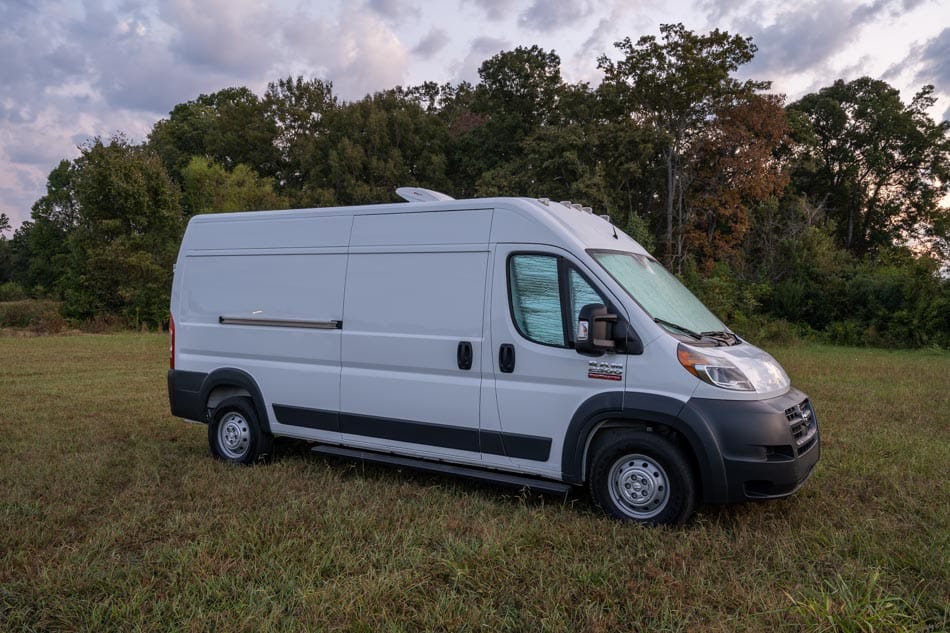
Smaller RVs such as Class B motorhomes (camper vans) are great for boondocking. These types of small RVs contain a minimal amount of living space and generally have the systems you would need to make for a pleasant off-grid experience.

Since these RVs are smaller, they are easier to drive into locations that may be off the road and in a more obscure area. Driving a large motorhome into a boondocking location off the beaten path may prove to be difficult.

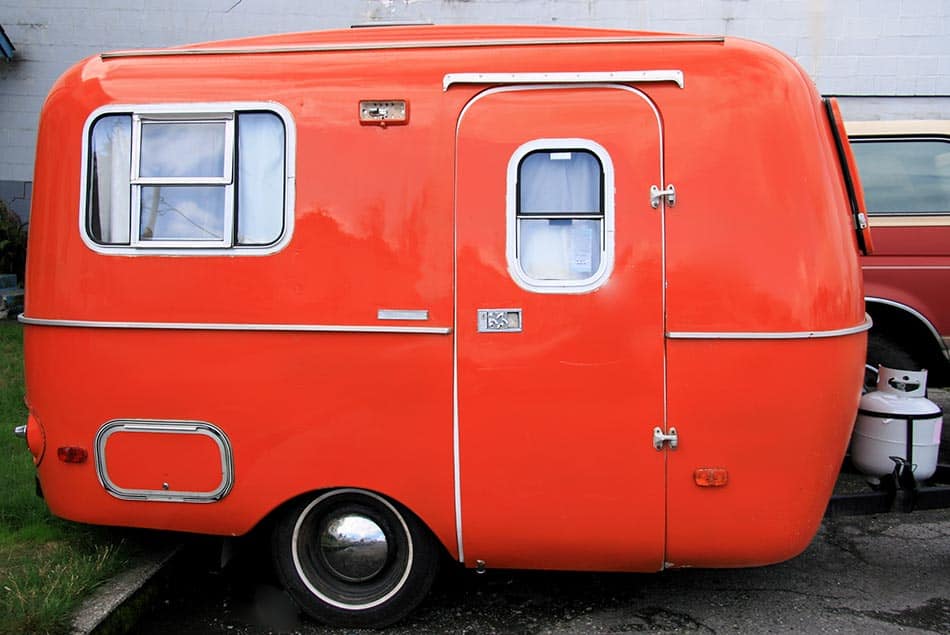
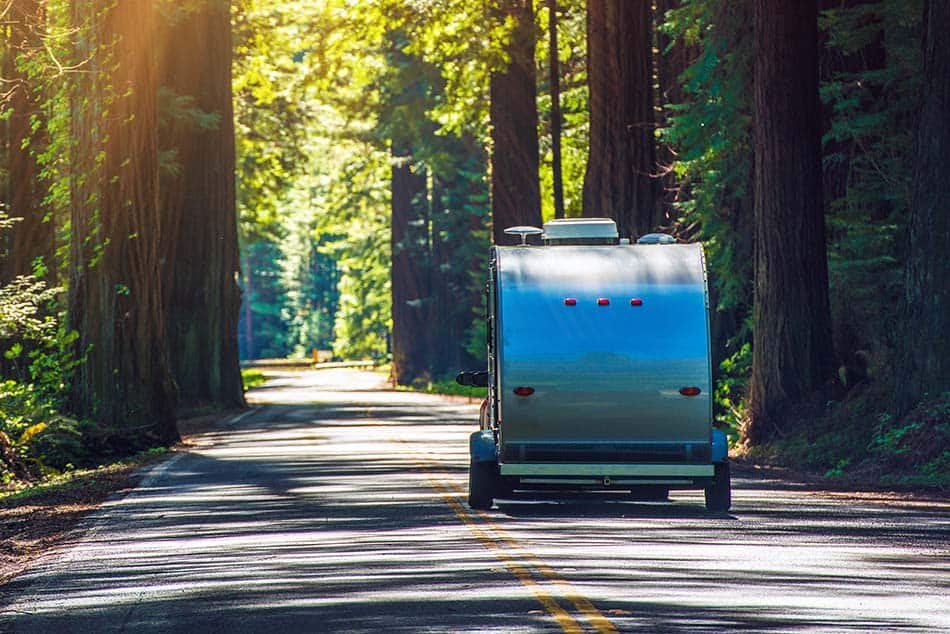
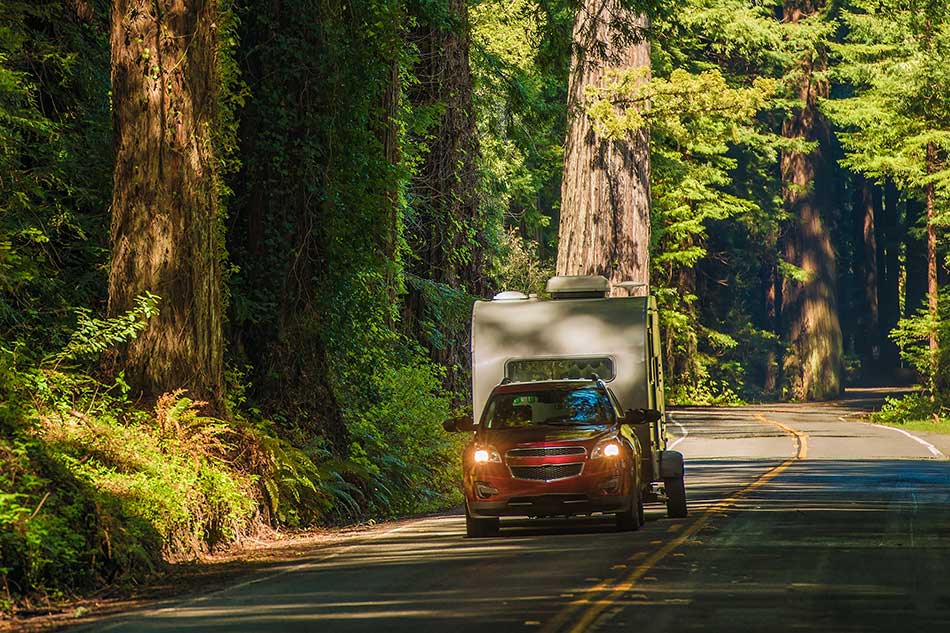
Travel trailers make great boondocking campers because they provide you with a comfortable place to live but allow you to do it disconnected from a grid.

Travel trailer in camping location

One of the great benefits of travel trailers is that you can set your travel trailer up in an off-grid location and then use your towing vehicle to wander off into town to enjoy the night out or to restock on supplies.

What Do I Need For Off-Grid Camping?

This type of camping can be very simple or you may choose to have systems in place that allow you to live a more “normal” existence.

Let’s look at a few of the systems that campers might have in place.

Off-Grid Electrical Power

The typical off-grid electrical power set up is usually comprised of a solar system. These systems use solar panels to harness the energy from the sun to charge a bank of batteries that can then be used as electrical power for your devices.

Whether it is a portable solar system or one that is installed permanently in a camper, a solar system is usually enough to power most of your needs.

An example of an off-grid electrical power system is the solar system that I have in my camper van.

This system allows me to power all of my devices and anything that I run on a typical basis. It allows me to power my lights, refrigerator, fans, water pump, TV and other devices that need regular charging.

It provides me with plenty of energy to live as I normally would without being connected to the grid.

When I am in my camper van, my electrical power does not come in from wires from a utility company. Instead, all the power that I need comes directly from the sun and it is mine to use as I need it.

It is free energy that the sun provides. The only cost is the initial system that has to be in place so that you can turn that energy into a useable form.

Another popular way that people receive energy off the grid is by using a gas-powered generator. Although these are not is convenient or quiet as solar-type, they can be very effective in powering everything that you would need during an off-grid excursion.

Off-Grid Water Supply

The water supply system in an off-grid situation is really simple. It usually involves having a freshwater holding tank that must be filled from a source and then used from the holding tank.

In a way, this isn’t off-grid water since the water comes from a utility source. The only way one would be able to collect water off of the grid would be to gather it from rain or a spring source or other natural water source.

Most people do not do this and water is typically retrieved from a source that brings in water from a municipal utility service.

However, in this situation, the water must be managed as you are not connected to the utility and cannot use an unlimited amount of it. You must ration your water in a way that allows it to last for the entirety of your camping trip.

My water supply in my camper van consists of a 16-gallon freshwater tank that gets filled from whatever water source I can find.

Once it is filled, I can use it throughout the van until it runs out and then I must find another source for filling the freshwater tank again.

Off-Grid Bathroom And Shower

When you are boondocking in an off-grid location, nature becomes your bathroom. In this situation, you are asked to be more primitive and use the bathroom in the way people did before household plumbing existed.

For some people, this isn’t an option and they prefer to use a more sophisticated system. In off-grid campers, one of the main features is sometimes a composting toilet.

These are a popular option for those who choose to live off-grid for longer periods.

These types of toilets give you some type of dignity when you are ready to relieve yourself. Rather than squatting in the woods, you can sit on a normal toilet that allows you to do your business as you would in a modern home.

In this way, living off-grid becomes much more manageable for those who do not want to wander off into the wild to do the most basic of tasks.

The only problem with this is that you will need to dump the composting toilet and clean it out from time to time. The same can be said with a portable cassette toilet or other systems.

This can often be a messy and gross job so there is no escaping the reality of how unpleasant bodily waste can be.

For showering, there are many options that one might use. I have a full-featured shower in my van that uses water from my freshwater tank to allow me to take normal showers.

Another popular way that people shower is by using an outdoor camp shower that hangs onto something and uses gravity to pour water out onto you similar to the way a normal shower would.

These types of showers are often heated by the sun so you get to experience a warm shower even when you do not have an electrical or gas water heater.

There are also temporary structures that can be utilized for privacy and these can make for a pleasurable shower or bathroom experience when out in the wild camping.

Off-Grid Heating & Cooking

On cooler nights, you may need some source of heat. When you are not connected to the electrical grid or a natural gas source, you are on your own to provide a solution.

Many people turn to propane heaters that can either be run by a larger, dedicated propane tank or one that uses disposable one-pound tanks.

Mr. Heater provides some popular models that are used in campers and tents and can heat a small area quite well. These can allow you to stay warm on those cold nights while out in the middle of nowhere.

When it’s time to cook meals, a portable camping stove that uses one-pound propane tanks is the go-to solution for most.

My favorite is the Eureka Ignite stove. I have been using this stove for a while in my van and it does a great job.

These are easy to use and do not take up much space in a camper. They can be used when needed and then stored away easily when not in use.

When off-grid, a campfire makes a great cooking stove as well and can be a great way to have a delicious meal and keep warm at the same time.

Conclusion

Living off-grid can be a very rewarding experience for those who are tired of the systems that society has put into place. Making things work on your own and not being dependent on a grid can be a satisfying feeling.

This type of living can be enjoyed in nearly any type of camper. An off-grid camper doesn’t have to be anything special but for best results should have a minimum of an electrical source, water source and a way to shower or use the bathroom.

A way to cook is also needed but this can be accomplished with a portable camping stove or even a campfire.

This lifestyle is becoming more and more popular as more people challenge the status quo and seek to live a more adventurous existence.

Living off of the grid provides you with a way to go back into time and enjoy living the way more primitive generations lived.

I suggest trying it out for yourself. No matter what camper you have, portable systems can be put into place and will allow you to take your camper off of the beaten path and enjoy an off-grid living experience.

Shiplap Walls In Van Conversion – Installation Guide

Shiplap is a popular wall covering for conversion vans mainly because it looks so darn good. In my opinion, it’s one of the best-looking wall coverings that you can have in a van.

It looks awesome in a house and I find it especially appealing in a converted van or a remodeled RV.

There are three main reasons that I chose shiplap for my van conversion.

  1. I LOVE the way it looks. It gives more character to the living space than what you would have if you just had a plain wall.
  2. It’s easy to install. It was especially easy for me to install in my van layout since I didn’t have to do the entire walls, only sections.
  3. It’s lightweight. The 1/2″ shiplap that I chose was very light. Although it does add up the more you use, It didn’t add a lot of extra weight to the end result.

When I was first planning my walls, I wasn’t sure what else I would use because I didn’t just want a solid plywood wall. I wanted to create a space that I would be happy to spend time in and shiplap made the most sense to me.

It was an affordable option since I didn’t need a lot of it for my van. Since I have cabinets and full shower and other areas that take up wall space, I only needed small amounts of it in sections where the wall was exposed.

The wall covering was one of the final projects after all the other structures were finished and everything that needed to be behind the walls was in place.

Parts I used

1/2 Inch Shiplap Planks

I purchased these at my local Home Depot. It’s made from pine wood, it’s already primed and it’s lightweight so it doesn’t add a lot of additional weight to my van.

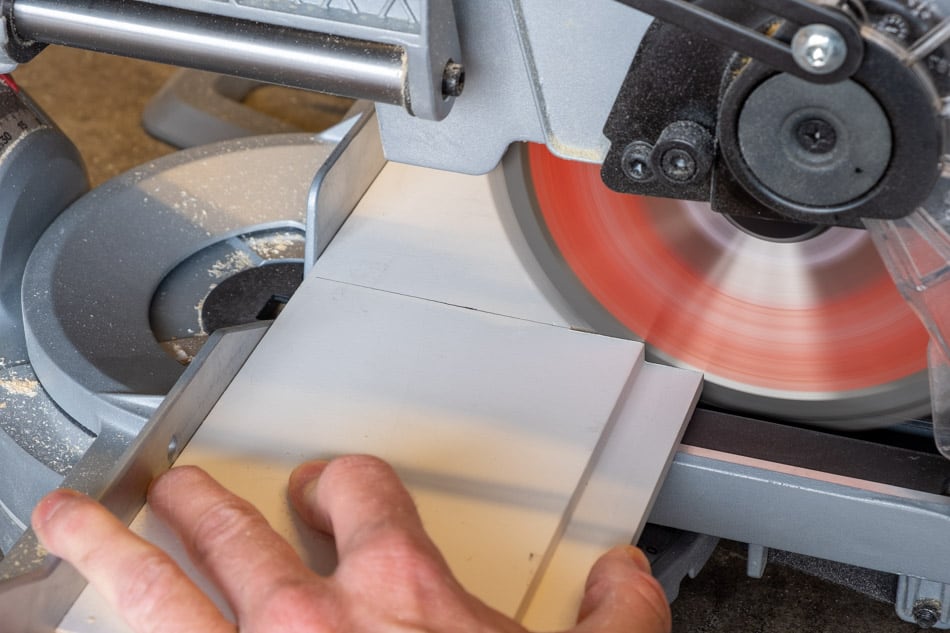
It’s really easy to install and butts up against each other, creating a consistent spacing throughout. It’s easy to cut with a miter saw and work with.

Miter Saw

I chose a miter saw because you can get straight cuts on the ends. I never used a full-length plank on any of my walls so I never had to butt any ends up against each other.

However, I still wanted the end pieces to look completely straight. If you are installing full-length planks throughout your van, you will need to make sure each cut is straight so that it will butt up against the next plank without any crooked gaps.

A miter saw is a great way to achieve this.

Be sure to use a fine tooth blade with your miter saw.

  • Jigsaw. You may need a jigsaw to cut around odd areas in the van or places where electrical outlets or switches will go.
  • Drill & Impact Driver. You’ll need a drill to install these if you choose to use screws. Without drilling first, you risk splitting the wood. It also makes it easier and quicker to drive in screws.
  • Drill Bits. I used a 1/8 inch bit for the screw size that I used. I used a 1/2 inch bit as a starting hole in some of the areas that needed jigsawing.
  • Countersink bit
  • SPAX, #8 1 1/4 Inch Screws. These are sufficient for holding in the planks but you’ll need to choose a length that works for your project.
  • Tape Measure
  • Speed Square
  • Spackling
  • Paint. I used whisper white, satin finish that I purchased from Home Depot.

How To Install Shiplap In A Conversion Van

The first thing that I did on my walls was to make sure I had something to screw the shiplap panels to. I used furring strips for this purpose. These allowed the shiplap planks to sit evenly on the walls and be held securely.

One reason that you should use furring strips is so that you will have a consistent place to screw or nail the shiplap boards into.

That way, when you are done with it, all of your screws are in line with each other down the wall. Of course, if you are going to cover up the holes with spackling or wood filler and then paint over it, this part might not matter.

After the furring strips are in place, you can begin the process of installing the planks.

I would suggest screwing the boards to the wall because you don’t want them coming loose, similar to the cedar ceiling that I installed.

However, I chose to use a combination of screws and nails for my shiplap install. Since I installed mine by myself, a nail gun made it easy to initially hang the planks so I wouldn’t have to fumble around with a drill and screws. I then went back and added screws at each location where a nail had been.

When using only nails, there is a chance that they will back themselves out over time. This is especially something that could happen in a vehicle that’s subjected to road vibrations regularly.

Screws could come out over time as well but it’s less likely.

Installing shiplap a real simple process, perhaps one of the simplest but most rewarding parts of my van build. Below, I have listed the exact steps I used and I have included pictures of the process.

Step 1 – Measure The Length You Need

Once you have furring strips and you are clear on where you want to shiplap to hang, you will just need to take some measurements.

You are going to want to start either at the top or the bottom and then work your way towards the opposite direction. I started at the top and worked my way down since the last shiplap is probably going to require some kind of cutting.

Measuring and marking shiplap

I wanted a full-width board where the eyes are going to see.

In my case, I started at the top and then I measured horizontally to find out the plank lengths.

Step 2 – Cut To Length

I cut my planks one at a time and then installed each one before I continued onto the next one. Once you install one, you’ll want to re-measure to make sure the next one fits perfectly.

Cutting shiplap with miter saw

Once you have the plank cut to length, it’s time to screw it to the furring strips.

Step 3 – Screw Plank To Wall Using Furring Strips

Shiplap on van wall

With your fresh cut plank, you’ll need to hold it to the wall and attach it using whatever method you choose. I used nails initially to get the planks held in place and then I used screws once it was in place.

I used a 1/8 drill bit to drill through the plank and into the furring strip just a little bit (not too far).

I would suggest using a drill or impact driver to drive the screw in. You can use a screwdriver if that’s all you have but it’s so much easier with a drill.

You’ll need to use the proper length screws for this. The screws I used were 1 1/4 inch long. Make sure to measure and use a long enough screw that it will hold tightly. You don’t want to use a short screw that barely bites into the furring strips.

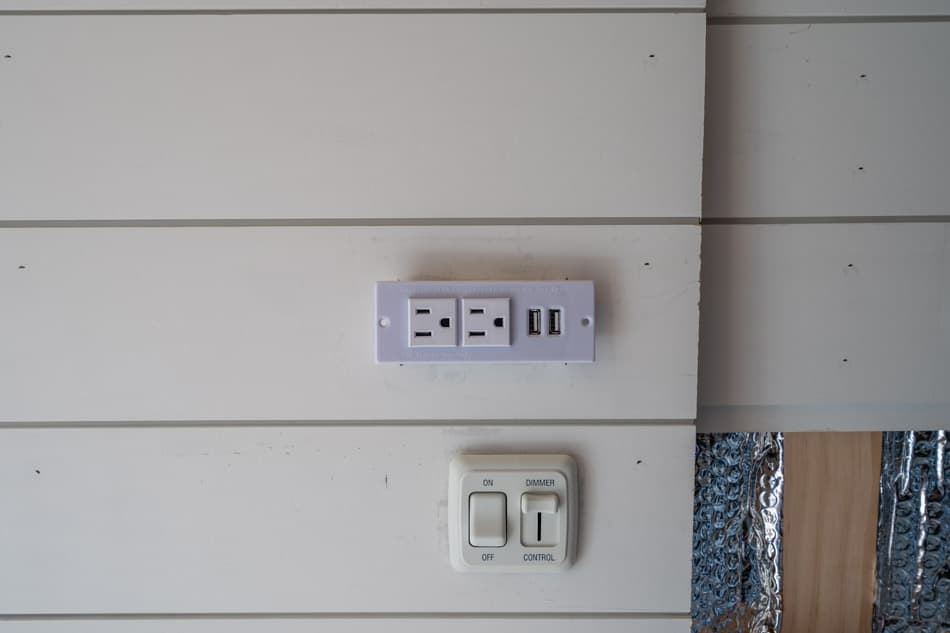
Some of the tricky areas were around corners or in areas where outlets need to be. I had to cut around these to create a hole for the outlets to be installed into.

Shiplap electrical outlets

I used the same process as I did on my ceiling since it is a similar type of install. I would drill a 1/8 inch hole through the shiplap and then I would round out the top of the hole with a countersink bit.

This allowed the screw head to sit into the plank a little bit, creating an area for me to cover up the hole with sparkling.

Continue with steps 1 – 3 until the shiplap wall is finished for the section of wall you are working on.

Step 4 – Patch Holes

After a full wall was done and I had made it from top to bottom, I patched up my holes using spackling. You can wait and do this after the installation is finished throughout the whole van if you choose.

Shiplap spackling

I preferred doing one wall at a time just to split up the work but you may prefer a different way.

After the spackling had dried, I sanded each spot until it was smooth and prepared for painting.

Step 5 – Paint

You’ll probably want to paint your shiplap to give it that finished look. The painting was my least favorite part but it had to be done. I used Whisper White that I had blended at The Home Depot in a satin finish.

I used a combination of foam brushes and foam rollers to get the smoothest finish I could.

That’s it!

There isn’t much to it. It’s a pretty simple project to do and the end result is worth the time and effort that it takes to install it.

I’m very happy with the way mine turned out and it helped me create a bright space in my small van that makes me feel at home when I am in it.

Trim

Once all the shiplap was finished, I finished the project by adding quarter-round trim to any areas where gaps existed.

This allowed me to create a neat and clean install while not having to worry so much about the gaps as I was installing the shiplap.

You will always have areas where gaps exist. The areas that I covered with trim were mainly around the areas where the shiplap butted up against the cabinets. By adding quarter-round trim, I made it look like a more finished product like what you would see in a house.

For these trim pieces, I used brad nails to hold them in. Screws are just too large for this small of trim so I’m hoping the nails alone will hold it tightly for years to come.

Shiplap trim

Tips

Overall, installing shiplap is a very simple process, even in a van. It may be even easier in a non-moveable structure because the walls will probably be square. A van has a curvature and nothing is square in a van so some parts can be a challenge.

You will find this issue during the whole van conversion so it’s probably nothing new to you by now if you are going through that process.

  • Use card stock paper to create templates around odd areas. You can tape small pieces together to create the perfect template and then it’s easy to transfer that template to a plank. and then cut those areas out with a jigsaw.
  • Make sure to hold each plank tightly against the last one so that it installs straight.
  • Give extra care to the first plank. Getting the first one straight is critical to getting all the other ones straight. If you aren’t sure if it’s straight, you can measure from each side of the plank to the floor or ceiling and make sure each side measures the same.

Conclusion

Finished shiplap
Finished shiplap wall on the rear driver’s side

In the end, you’ll end up with a nice looking shiplap wall that makes your van look like a home. It will give it a high-quality look and it also adds more character.

Some of the best looking van designs that I’ve seen have shiplap walls so when I was planning my own conversion van, I wanted to make sure I emulated that same look using my own layout.

Sometimes when I am in my van, I feel like it has a nautical theme with the shiplap walls. It makes me feel comfy and cozy when I’m in it.

After using it for over a year now, everything is working out great! No screws or nails have come out of the walls and all of the shiplap is still as tight as it was the day I installed it. The brad nails are still holding tight in the quarter-round trim that I used.

Over time, that could change and there may be areas that I will need to tweak or fix but I have not faced that problem yet.

This was a fun little project and made the van feel more like home.

17 Reasons Why Camping Is Better Than Hotels

Let’s face it, hotels aren’t always the most accommodating places to visit. Whether it’s a luxury suite or a roach-infested room, being away from home and sleeping in places where other people also sleep isn’t always the greatest feeling.

Hotels are sometimes fine when they are your only option when traveling. However, there are many reasons that camping would be a better choice.

Whether it’s RV camping or a more primitive type of camping like a tent or car camping, there are benefits that make it the better choice.

The following list contains 17 of the best reasons I have for why I would rather camp in my camper van than stay in a hotel.

I hope to convince you that camping is a great alternative to staying in a hotel.

1. It Costs Less

Staying in a hotel can be expensive depending on the type of hotel that you choose. Even the rattiest hotels in popular areas can be a costly choice.

When you choose to camp, you are reducing this cost by using your own living space. Whether you choose to camp at a paid campground or another place, you will probably always spend less money when choosing to camp versus staying in a hotel.

With the average price of a hotel room in the United States skyrocketing to over $180 a night, it can be easy to see why cost plays a huge factor. This is quite an expense to pay when you are just looking to lay your head down for the night.

Compare this to a campground where you might expect to pay around $45 at most places for full hookups. More premium campgrounds with high-quality amenities may be more but will not reach the level that a hotel will cost.

2. Experience The Power Of Nature

Nature has a magical way of healing us and we all need to be in nature from time to time so that we can connect with the natural world around us. Instead, we spend most of our lives indoors, living conveniently with modern amenities.

All of these modern-day conveniences are great but sometimes it’s nice to get away from them and opt for a more simple existence.

It’s nice to be out in nature so that you can see the beauty that the outdoor provides. You can experience the sights and sounds that you normally don’t get to experience. If you live in the city, you may be in extra need of a nature-filled camping trip.

Mountain nature trail

Just being able to live in a more primitive way is beneficial in so many ways. The calming effect that nature has on us allows us to recharge our batteries from a demanding world.

3. Allows You To Disconnect

Once you are out in nature, camping allows you to disconnect completely if you choose to. Of course, nowadays, with cell phones, people stay connected no matter where they are. It’s good when you’re out in nature to unplug and disconnect from all of the distractions in your life.

I don’t mean that you should never enjoy any technology when you are camping. You can still watch TV and do other activities that involve being connected but they shouldn’t consume a large amount of your time.

When you camp, it’s a good time to unwind and disconnect from the noise of the modern world. Stay off of social media and the internet altogether other than using it to plan your trip.

Disconnecting allows you to get in touch with yourself better and just helps you to get rid of some stress that may have been built up.

As a society, we have an addiction to being connected. With the power of the World Wide Web, it’s never been so easy to get sucked into this problem.

With social media at our fingertips, we scroll through our phones many times per day looking at other people’s lives and being consumed with what others are doing.

When you can get out camping, you can choose to avoid taking part in this so that you can become more connected to the natural world around you.

Instead of the bright lights of the hotel, why not enjoy the bright lights that the star-filled sky has to offer you?

4. Sleep In Your Own Clean Bed

It can be a bit gross thinking about the number of people that sleep in hotel beds. Think about this the next time you are sleeping in one. Just knowing that a different person was sleeping in that same bed last night might be enough to make you want to avoid it.

You don’t know who it was, you don’t know how well the sheets have been cleaned, and you don’t know if the bed you are sleeping on has bedbugs or any other kinds of gross bodily fluids left behind.

I often think about these things when I’m staying in a hotel and sometimes it makes me just want to not go anywhere to where I have to stay in a hotel.

Bed bugs in hotel bed

A black light can reveal all kinds of gross things on a bed. People do all kinds of things in the privacy of hotel rooms and the beds see the most action so it can be pretty disgusting to plop yourself down onto one.

Compare this to the bed in your RV. It’s probably more comfortable than the hotel bed if you have chosen a comfortable mattress for your RV.

Even the air mattress that you have in your tent or the sleeping bag that is on the ground in your tent is probably more sleep worthy than a hotel bed.

You don’t have to worry about who has slept in your bed because it has only been you and your family. You know the history of the mattress and you know what has taken place on your mattress so you don’t have these worries.

It gives me more peace of mind sleeping in my own bed to where I know that I don’t feel yucky your icky wondering what I am sleeping in.

I also know that my mattress is super comfortable and I can expect a nice, restful sleep when I lay down in it. I rarely get this satisfaction in hotel beds.

5. Walk On Your Own Clean Floor

I hate to walk on nasty hotel carpets with my bare feet because, again, you just never know what has taken place. Carpets don’t get deep cleaned very often, only vacuumed.

If there is any debris on the carpet, it will get vacuumed up but there are a lot of small germs and unsanitary areas from other people walking around with dirty shoes or dirty feet.

There are also germs from liquids they have spilled on the floor which could include bodily fluids.

This can be quite gross to think about and it’s similar to the bed situation. When I travel, I usually take a pair of rubber flip-flops that serve as my hotel room shoes so I don’t have to walk on the floor barefooted.

I also use these for taking showers so that my feet never have to come in contact with flooring surfaces.

Is this a little bit extreme?

I don’t think so and this is something I learned while serving in the US Marine Corps. We had “shower shoes” that we wore when taking showers or walking around the barracks. You just never know what is lurking on a communal shower floor so you learn to be cautious.

Many people feel the same way and there is just an overall feeling of yuckiness in some hotel rooms. You can often look at the carpet of a hotel room and see stains and nasty areas that you don’t want to walk on.

If you were to stay in your own RV, you would be walking on your nice clean floor and if something spills, you can easily clean it up. This is especially true for those who have some kind of laminate or wooden floors that are easy to clean.

Your RV floors provide you with a more sanitized and safer place to walk without any worries.

6. It’s Like Being At Home

When you go camping in an RV versus a hotel, you have a feeling of being at home because you are driving your home around. When you do this, everything that you own is already situated in a space the way you like it and the way that you are most comfortable with.

The way you set it up is the way that works for you just as it is in a home. You can use your food out of your fridge and cook your meals on your stove.

You know where your pots and pans are, your silverware and dishes and there are no worries as to whether they are sanitized or not.

This experience allows you to travel and stay in other places and enjoy those benefits but have the comfort of your home right along with you.

You can’t get this by staying in a hotel room where you will feel out of sorts and as if you are in a temporary situation.

7. No Need To Pack A Suitcase

When you are staying at a place that is like home to you, there is no need to pack a suitcase. All of your clothes and belongings are going to be in closets, cabinets, drawers and other storage areas within an RV or camper.

This may not be the case for people who are sleeping in tents but even then, your belongings are probably going to remain in your car or your backpack that you were carrying.

There is no need to live out of a suitcase that gives another feeling of living temporarily. It’s more comforting knowing that your belongings are tucked away neatly in their respective place and you know where to find them at any given time.

Pulling your clothes out of a closet or drawer is a better experience than having to sort through a suitcase to pull out wrinkled clothes on your trip.

In an RV, your clothes can be folded and put away and a suitcase is not required.

8. You Can’t Build A Campfire In A Hotel Room

Have you ever tried to build a campfire in a hotel room? Well, I sure hope not!

You’ll certainly have no problem doing this if you choose camping over staying in a hotel room. A campfire is a great way to allow yourself to unwind and enjoy sitting by the fire.

Campfires are almost always allowed in campgrounds and are usually a welcomed event that people love to see.

There’s just something about sitting by a fire that people fall in love with. It makes for a nice, peaceful evening when you can stare into a fire as you reflect on the day or talk to friends, sing campfire songs, play games or do just whatever you want to do.

Family around campfire

You can roast marshmallows, makes s’mores or any other treat that you might be interested in cooking. It makes for a great way to add more interest to the day and do something out of the ordinary that you might not always do.

You certainly wouldn’t even come close to doing something like this by staying in a hotel room.

The best you could do at a hotel would be to watch a movie that included someone building and enjoying a campfire. Why do that when you can just build your own campfire while camping instead of staying in a hotel.

9. It’s Good For You

Spending our lives cooped up inside is not a healthy experience. Staying in a hotel just gives you another building to go into and turn on the TV, get out your laptop and veg out on technology.

Haven’t you had enough of this?

When camping, you get to experience fresh air and see new sights, hear new sounds and be immersed in the natural world.

Studies show that camping and being out in nature is good for you in many ways. It can have many benefits for mental health including lower stress levels and it also reduces symptoms of depression and anxiety.

It can be great for children and can introduce them to a more active lifestyle and teach them to appreciate what nature has to offer.

10. Pets Are Welcomed

I don’t like to go anywhere without my dog. Traveling in my RV allows me to always include my best friend without having to wonder if a hotel is pet-friendly, which most are not.

The RV community is a dog-friendly community and many RVers travel with their pets. I love being able to camp in a spot and not have to worry about my dog. She is at home in my RV and she knows the space and is comfortable with living in it.

Her food and water bowls are set up to be used for her in a way that she is familiar with. It isn’t as stressful for her as it would be staying in a new place.

She has traveled in my camper van and knows that it is home. Since most RV parks are dog-friendly, it’s easy to take her on trips and then take her for walks around the campground or on hiking trails in the area.

11. Nature Provides Better Entertainment

If you are looking for an entertaining night, you can’t go wrong with a night under the stars. On a nice clear night, nature is on display at its finest. You won’t see a show like this back at the hotel.

When camping, you have the finest entertainment on the planet. The bright lights of the city may draw your attention occasionally but nature is always calling your name.

We were born wild but don’t live that way anymore. We are so used to our modern lives that we don’t stop to listen and enjoy what nature has to offer us as much as we should.

If you learn to slow down, listen and take notice of how amazing our natural world is, you may never want to go back to the city.

Tent camping with milky way galaxy

12. Peace And Quiet

Hotels are often loud and annoying with neighbors that won’t be quiet. Many of them have thin walls and you can hear your neighbors TV all night long.

Even worse, you may hear doors opening and closing all night long from people going in and out of their rooms. This happened to me the last time I stayed in a hotel. It seemed like my neighbor was having a party all night long.

I heard doors slamming and their loud TV most of the night and finally put my noise-canceling headphones on so I could sleep in quiet.

This doesn’t happen when camping unless you are in a bad campground were rude people may be doing much of the same. I’ve never had an issue when camping and my time outdoors has always provided me with the peaceful experience I was looking for.

Campgrounds are usually policed very well and have quiet hours that are enforced. The rules put in place make for a pleasant experience most of the time.

When I’m sleeping in my camper van, I am usually in a place where nature is the only sound I hear. I often stay in Harvest Hosts locations and these locations provide me with a noiseless experience and do wonders for allowing me to get a good night of sleep.

13. The Food Is Amazing

Have you ever eaten food cooked over a fresh campfire? Even those meals that are cooked in the wild on my camping stove are excellent!

Camping often has you working to get campsites set up and everything arranged to work for you. When mealtime rolls around, you are more hungry than you would be in other situations.

Cooking and eating can be one of the best experiences of camping. It truly makes you appreciate the food and what goes into having to cook it.

It also gives you an appreciation for what we have in our daily lives and how easy it is to create meals in our cushy homes.

There is something about outdoor cooking that makes it taste much better than it would any other place. You probably know the feeling from using a grill at your home.

The food coming off the grill is always more appetizing than it would be otherwise.

14. Family Time

Camping is a perfect way to get some quality family time. When camping, you don’t have near as many distractions and you can focus on the things that matter most.

Instead of scrolling through your social media feed, you can play games with the family or have a nice evening of chatting around the campfire.

Kids love the camping experience because it allows them to be kids without the distractions of the world getting in the way.

Camping teaches kids to value nature and enjoy what it has to offer. As a kid, I have fond memories of camping with my family.

Those were among the best times of my life and the times when I felt most connected to my family. It brought out the best in everyone and made for a wonderful experience.

15. Meet Other RVers Or Campers

The camping community is a pretty friendly group of people. When you are camping in RV Parks or other places, you may make a friend or two and enjoy the evening around good company.

This can make the experience fun and more memorable as you meet people out on the road who are interested in the same lifestyle that you are.

How many times have you met interesting people at hotels and enjoyed the evening talking with them? I can’t recall a time that I have ever done this. Most people close their doors and hide inside their hotel room and you never see them.

I have the pleasure of meeting interesting and friendly people nearly every time I am out on the road with my camper van.

16. Camping Gets You Active

Hiking in the mountains

When camping, you have many activities at your disposal. There are often hiking trails nearby and these trails make for a great way to get in some activity rather than sitting around.

People that have an active lifestyle appreciate camping because they know that there is always something to do.

If you are a dog owner, you can enjoy long walks with your pet. If you brought your bicycles, you may be able to go on long bike rides in the area.

Being active is important and our society doesn’t get enough of it. Our modern-day life has turned us into couch potatoes and made us more likely to sit around and consume entertainment.

Camping allows you to get out of the sedentary rut and get moving by giving you lots of fun and usually free activities to participate in.

If you were to stay in a hotel, you’d probably be doing the same things as you would if you had stayed at home. You would lock yourself in a room, connect to the wifi, browse the internet, watch TV and then go to bed.

17. It Can Be A Cozy, Romantic Experience

Imagine sleeping in a nice peaceful location with nothing but the view of the night sky up above. You look through the skylight of your RV only to see the stars and hear the sounds of nature through your open windows.

All of this while you are tucked in nicely to a comfy and cozy bed next to the one you love. You can’t beat an experience like this even with the most luxurious hotel stay, in my opinion.

I’m sure many campers would agree with me on this.

A nice, quiet evening with a romantic meal with your significant other can be extra special when camping. Nature has the power to make special moments just a little better.

If you have never tried, I suggest that you start planning a camping trip to see what the hype is all about. I’m convinced that you’ll be sold on the lifestyle and have less desire to stay in hotels going forward.

Conclusion

Staying the night in a hotel can be a convenient way to get a night of sleep but camping can do the same thing with the added benefits mentioned above. If you have never camped before, you are missing out on a wonderful experience.

Seasoned campers know the benefits of doing this and that’s what makes the lifestyle so popular.

Traveling in my camper van has allowed me to experience many quiet nights in amazing locations. I often miss being in my van if I am ever forced to settle for a hotel stay.

If you are considering both, I hope you’ll look at the benefits that camping can provide and choose to give it a try. Camping can be an amazing and fun experience for the whole family.

Van Life VS RV – Which Is Better?

If you have watched the van life popularity rise on social media and YouTube, you might be anxious to go out and start converting a van so that you can go on your own adventure.

After all, it seems like such a great lifestyle. Imagine waking up every day in a beautiful place, opening your back doors and taking a picture of you and your significant other laying on the bed looking out.

Or perhaps you have a dog that can lay beside you as the two of you are looking out at a beautiful ocean scene as if there are no worries in the world.

Van life truly is the ultimate experience…OR is it?

Is it really this great and do people really enjoy it this much?

When you watch videos or see people sharing their van life adventures on social media, you would think the whole experience is absolutely fantastic and there are no negatives that go along with it.

It seems like one adventure after another and it’s as if anyone can just quit their job, hop in a van and go have these same experiences.

Unfortunately, a lot of what you see in van life isn’t based on reality. You are seeing the best parts of it and most of the bad parts have been withheld.

Most all of the pictures and videos that you see are staged and although you probably realize this, some of these bloggers and vloggers do a great job of hiding the fact that life is not all rosy in a van.

There are some people out there who are not sugarcoating the lifestyle. These people do share the bad parts of van life and as the lifestyle becomes more and more popular, people will know that it isn’t always as perfect as others make it seem.

While it can be a wonderful experience, too many have high expectations of what they can expect from living in a van. It kind of sucked me in in the beginning.

After watching video after video of people living their dreams in a van, I was a bit anxious to purchase my own van. The difference with me is that I have been camping most of my life and have spent time in RVs and at campsites.

I know the realities of how it can be when camping and what to expect.

What Is Van Life?

You already know that van life is mostly about living or camping in a van but there is more to it than that.

Van life is a way of life that people choose not only for living or camping in but for the adventure that comes along with it. It differs from an RV mainly because vans are usually converted to be stealthy and can allow you to travel and stay in places where an RV couldn’t.

People who are attracted to van life are those who are looking for a living arrangement that an RV might not be able to provide. Converting a van gives you the ability to create a custom space and allows you to build exactly what you want.

Living the van life

An example would be someone who likes to go on mountain biking adventures. This person could create a living space in a van and also a custom area for bike storage. Your options are endless when thinking of ways to create a van living space.

This might not be possible in an RV since they are set up with a predetermined layout and you have to make that layout work.

A van is great for those who are creative and like to live a little different than normal society.

Van life, at least for me, has a feeling of being rebellious to the way society has to programmed us to live. It’s like taking your life into your own hands and going off the paved road to live while you are alive rather than just simply existing.

Vans can be quite a bit cheaper than an RV as well. You can create some really cool living spaces for a minimal amount of money.

How Much Does Van Life Cost?

Although van life may be a good way to save some money, it isn’t as cheap as some would have you believe. Unless you are living in your van parked in one location at all times, you are going to have costs associated with the lifestyle.

There are lots of costs that go into making the lifestyle work and these costs can add up to a big chunk over a month.

Let’s look at an example of a few of the costs that you may have if you choose van life. These are all just estimates based on what I would budget for if I was planning to live in my van for a while.

I don’t have a van payment but I added it to the list because it is common for people to finance their van.

Item / ServiceEstimated Cost
Van payment (if applicable)$300
Van insurance$100
Van Maintenance$40
Gas For Van$200
Campgrounds$300
Gym Membership (for showers)$30
Cell phone service$50
Laundry$30
Groceries / Food$600
Medical Insurance$350
Other Stuff, movies, fun activities, etc.$400
TOTAL$2400

As you can see, the necessities that you may need can add up pretty quickly. If you are expecting van life to be a free ride, think again. It can get pretty expensive depending on your costs and also how many people are in the van with you.

When living in a van, you are susceptible to some of the same costs as you would be if you were living in a house or apartment. The difference might be that you could have a house payment or rent to pay.

Although, if you finance a van, it will be similar to paying rent in that it will likely be one of your highest expenses.

Van lifers tend to be minimalist so they might not have some of the services listed in the table above.

Each person is different and has different monthly obligations so this will differ for each person.

What Is RV Life Like?

RV life is similar to van life in some ways but much different in others. While van life has risen in popularity, RV life has always been a popular way that people use to get away from the real world and enjoy a life less connected.

RV Park

When you own an RV and use it for living, you are more limited to where you can go and things you can do.

However, this also depends on the type of RV that you have and how well at planning you are. Many people live and travel in RVs just as they do in vans and they make the most of it.

RV life generally involves staying in RV parks or other locations where electrical hookups can be used. They are well-equipped with all the main systems that you would expect from a comfortable living area.

You can pull into an RV park and once you are parked, you can connect to various utility services such as electric, water, and cable TV.

With the electrical service, you can use the heater or air conditioner within your RV unit and also run all systems just as you would in a sticks and bricks house.

Living in an RV is more like living in a small house since you have all of these amenities at your disposal.

These amenities aren’t limited to RVs and might also be in a van. My camper van has a shower and electrical hookups as well. However, my water supply system is off-grid meaning that I have holding tanks and do not connect to a water service when I am parked in an RV park.

RVs are often equipped with a solar system but mostly rely on shore power electrical hookups for their energy needs.

Van Life Pros & Cons

Pros

Van parked on the coast

1) You can design your own custom space

Having a van gives you a blank slate to work with if you are choosing to convert it yourself. In this way, you can design the space that works for you and your lifestyle.

If you only want to use your van for camping, you can set it up that way. However, if you want to design it for camping as well as hauling motorcycles or mountain bikes, you can do that as well.

Rather than going with a predetermined layout that you might find in a ready-made RV, this allows you to have complete control.

2) Affordable price

A van can cost considerably less than an RV depending on the type of RV that you plan to purchase. If you are choosing a van over a large class A or class C motorhome, you will pay less for the van.

It will also be cheaper than buying a large caravan or a fifth-wheel. These can be pretty pricey and a van, especially a used one, can allow you to keep it affordable.

Of course, a van can also be pricey if you have one customized for you.

There are plenty of companies on the market that will do this for you but you will pay a pretty price for it. It’s best to do it yourself if you have the capabilities to do it.

Learn how I built my custom camper van from an empty cargo van.

3) You can be more stealthy

Van lifers like to remain stealthy because it gives them an option to remain under the radar while out on the road. Although it’s becoming more and more difficult to do since people have caught onto it.

However, it’s still possible as long as you don’t draw attention to yourself. A van allows you to blend in better than an RV could. Parking a plain white van in a parking lot isn’t going to draw attention nearly as much as a large RV would.

Cons

Camping toilet

1) Where do you shower and use the toilet?

A lot of vans don’t have showers or toilets installed in them. Since vans are oftentimes traveling and staying stealthy in free locations, it can be a challenge finding somewhere to do your private business.

Gym memberships are popular with van lifers as they offer a place to do this. Occasionally staying in an RV park is another way that van lifers can take care of these needs.

This is a personal preference and many people who live in vans are fine without having these facilities. On the other hand, people like me, wouldn’t want to have a van without them.

2) Higher insurance

Van lifers, usually don’t title their vans as RVs. This means that they are not able to get RV insurance. Instead, they must get standard auto insurance which doesn’t always cover the conversion part of the van.

It only insures the van itself. If something were to happen, you might lose out on all the money you had spent on the van conversion. It also might not cover the contents of the van if someone were to break in and steal some of the living contents.

This differs depending on your insurer so be sure to talk directly to them to find out exactly what would be covered if you choose to go this route.

3) Less Resale Value

If you decide to get rid of your van, you probably won’t get as much for since it’s not professionally done. Potential buyers might be leery of purchasing a van that has been self-converted if you are not an expert in doing this.

On the other hand, if you are an expert or have it done by a professional and it shows, then the resale value may not be an issue. Vans do sell for a good amount and it’s surprising to see what some people are selling their vans for once they are done with them.

Since van life is so popular, you are still going to be able to get a good amount of money should you decide to sell it.

4) You have to create it yourself

While designing a van and being creative in the process is fun, it takes a lot of work to make it happen. If you don’t like doing this type of work or don’t know if you can do it then you may want to think twice about it.

It can be very difficult to do and it will take more money than you probably think it will for the conversion. You will need to have space and tools along with a lot of patience to complete the project.

5) A van is small

If you are going to travel or camp in a van, when compared to an RV, you are going to have less living space. If you were to go with a larger RV or travel trailer of some kind you would have much more room which some people may prefer.

This also depends on the van that you go with because some are obviously smaller than others.

RV Life Pros & Cons

Pros

A couple buying an RV

1) Buy an RV and hit the road

When you buy an RV, everything is already done for you so you will not need to go through the trouble of converting it yourself.

This means that you can buy the RV and then immediately begin your planning whether you are going camping or you plan to live in it for a time. This is convenient especially for those who do not want the trouble of converting a van.

No need to have any handyman skills when you choose to purchase an RV unless you buy a fixer-upper.

2) Most RVs are equipped with shower and toilet

RVs typically contain a shower area and a toilet. Although this is not important to a lot of people, many people need to have this in their RV for it to feel like home.

I’m one of those people and I would prefer to have a shower and toilet in my RV.

3) More space unless you go with a Class B (van)

If you choose to go with a larger RV like a class A, class C or a larger caravan, you will have more space inside than you would in a van. This may or may not be a benefit to you since many people want to keep their vehicle small.

However, a larger RV allows for a more spacious living area and may give you more comfort when moving around inside.

4) Cheaper insurance

If you own an RV, you will likely pay less money for insurance. It doesn’t cost as much to insure a camper or RV since these are not daily usage type vehicles.

RV insurance also includes the contents within the RV as well as the vehicle itself if anything were to happen. This can be a benefit for those who do not want to pay as much in insurance costs each month.

5) Professionally built

Although some RVs are cheaply made, at least they are put together by professional workers and come with some kind of guarantee or warranty.

If you purchase a new RV, you will likely have issues with it at first but you can rest assured knowing that these should be taken care of by the dealer or manufacturer.

You can also rest assured that the systems within the RV itself are done to proper standards and codes so you will not have worries of problems down the road or with resale value.

When compared to a converted camper van, you never know what you are getting with a van that has been converted by an amateur adventurer.

6) Warranty if purchased new

Most new RVs come with warranties that guarantee the workmanship and to be free from mechanical issues for a certain period of time. This helps to give peace of mind similar to how the warranty of a car will help to give you peace of mind.

Used RVs may be a different story as the warranties are not usually transferred to the new owner. Extended warranties may be but the standard warranties are not usually transferable.

Cons

1) More limited in where you can stay

Unlike a camper van, an RV will be more difficult to park in stealthy locations. It’s nearly impossible to park an RV somewhere to stay for the night and not stick out like a sore thumb.

Everyone will know that there is someone inside living. You are mainly limited to RV parks and other known parking locations if you choose to drive an RV around.

Harvest Hosts can be a great alternative to RV parks but they aren’t available in all areas.

2) Gas mileage is not as good

Large motor homes do not get very good gas mileage so you can expect to pay more at the pump and you can expect to fill up more often. The same is true with travel trailers and fifth wheels that have to be towed.

Towing a vehicle of this size requires a lot of fuel to power the vehicle that is doing the towing. The towing vehicle is not going to be as fuel-efficient as a van would be.

3) You can’t stealth camp as easy

Stealth camping can be fairly easy with a van but with a large RV, it’s nearly impossible. If you were to have a class B RV, which is a camper van, you might be able to do it but many class B camper vans look like RVs and are not as stealthy as a converted van would be.

It would be difficult to park a travel trailer and remain stealthy with it no matter where are you.

4) It may be more difficult to drive

RVs can be quite large and difficult to maneuver and park in certain areas. Whether it’s a drivable motorhome or a large trailer that you are pulling, it is going to be more difficult to drive than a small van would be.

This can be an intimidating undertaking for many people who do not want the responsibility of such a large, cumbersome vehicle to drive or tow.

5) Higher maintenance costs

With an RV you can expect to pay more for maintenance costs. There are more windows, vents and other items that need to be sealed and maintained. The vehicle itself also has to have regular oil changes and other maintenance done to it.

This is only true for motorhomes while travel trailers will probably cost less in maintenance costs since there isn’t much to do with a trailer.

6) More expensive

Motorhomes can be very expensive and may surpass what you would pay for a van. Of course, this will depend upon the type of van that you purchase and how much you spend on designing and customizing it.

Motorhomes are expensive and large travel trailers are also expensive, especially when you throw in the cost of the vehicle that has to tow the trailer.

The Verdict – Which Is Better?

Either way you go, the adventurous lifestyle that both can provide is a win in my opinion. Both of these options make a great solution for those looking to enjoy life more.

A van will get you to places that an RV can probably not take you. Since RVs are larger in general and more difficult to drive, you are usually limited as to where you can go.

If you like the idea of having a very small living space and a unique layout inside of a stealthy shell, then a van is the better option for you.

On the other hand, if you prefer the comfort of a larger living area and do not care to be stealthy, an RV is likely your best bet.

I’m happy with my van and I’m glad I chose it over an RV. I enjoyed the process of converting a van into a very cool living area that I enjoy being in.

Having toured other RV units, I can say that I am more happy with my van than I would have been if I had spent more money on purchasing an RV.

You will need to decide for yourself which one is better because there are many variables at play and each person will have a different opinion.

The main thing is to get going and choose something. Adventures are waiting for you and the road is calling your name so take the plunge and choose the option that best suits you.

Are RV Covers Worth The Money?

One of the best ways to protect your expensive RV is to keep it covered when not in use. Many people have large garages for this but this can be a huge expense and most RV owners aren’t going to drop that kind of money just to cover their RV.

One alternative is to use an RV cover. You often see RV covers on motorhomes or campers during the off-season. In the wintertime, RV owners cover their RVs in gray or reflective colored covers that are supposed to protect them during the months when they are not using them.

When I drive through my town during the winter, I see lots of campers covered up. Not only that but even in the summertime, I see these as well.

I used to work for a company in the RV industry that sold RV covers. They were a very popular item and many people depended on them to take care of their RV. Not everyone has a full-sized garage or a 12-foot garage door opening to be able to store their RV inside.

Out of all the other options available, RV covers are the cheapest option for you to cover your camper in some fashion. Although not the same as a garage, it does have its benefits and can keep your RV protected from harsh weather.

The question that one might ask is, “does it really protect it that much or is it just another gimmicky item to spend money on?”

Is it worth having an RV cover for your RV?

An RV cover is a great way to cover your RV and protect it if you do not have access to a garage or other covering that keeps the harsh weather off of it. Since they are not very expensive, it is worth having one to cover your RV if you leave it sitting out in the elements at all times.

Whether it’s the hot sun beaming down in the summer or winter weather making an impact, an RV cover can help to protect your RV and add longevity to some of the main components.

How Does An RV Cover Protect Your RV?

An RV cover protects an RV by shielding it from various bad weather situations like rain, snow, sleet, hail, wind, and other weather conditions that could affect the RV and some of the components attached to it.

RV parked in snow

It also helps protect it from the sun so that the damaging UV rays will not damage the seals and caulking that may be on top of the roof and other areas. These seals may be used to waterproof fans, air conditioners, vents and other items that you may have installed.

Premature aging from these types of seals could cause leaks in your RV and cause you to have to spend more money in the long run. If you cover your RV, you might not run into these issues as soon as you will if you choose to keep it exposed to the elements at all times.

RV covers will also help to protect your solar panels if you have these installed on your roof. Solar panels have a lifespan on them and if you are not using them, you can keep them covered with an RV cover and then you don’t have to worry about your solar panels overheating in the sun.

The RV cover will reflect the sunlight and not allow the Solar panels to heat up as much as they normally would when the full sun is shining down on them.

What An RV Cover Is Good For

If you don’t have access to a large garage, which most people don’t, an RV cover makes sense if the only option is to leave your camper outdoors all the time.

A standard garage can hold some of the standard small campers such as teardrop trailers or pop-up trailers. However, a full-sized RV or even a class B van will not fit in a standard garage door opening. An RV cover may be the only option you have to keep your camper protected.

It’s not absolutely necessary to keep it covered as long as you stay up on maintenance and know the condition of seals and components on your RV. A vehicle is designed to withstand an outdoor environment so it will hold up to most weather conditions.

However, would it maintain its condition for a longer period of time if you were to keep it covered? Is the benefit that you would gain worth the price of buying an RV cover?

I have to keep my camper van outdoors at all times because I don’t have a large enough garage to store it in. I would rather it be covered under a structure but I just don’t currently have that option.

I would benefit from having an RV cover since the cost is minimal and it would help protect my van when not in use.

This would be a good purchase because, in the long run, it would save me from having to perform so much maintenance on seals and rooftop components. It would also give me more peace of mind knowing that it is shielded better from the elements.

It would keep it in great condition and also bring better resale value when I am ready to part ways with it.

A cover like this will last for many years as long as you take care of it. It’s a worthwhile investment for your motorhome.

If you own a larger motorhome like a Class A or C type, a fifth-wheel or other large travel trailer, you can expect to pay a little more than that for an effective cover. However, the benefits will outweigh the costs.

The following table will give you an idea of what type of cover you will need for your RV. Click on the link to see the current price on Amazon.

RV TypeSize In LengthExample
Class A Motorhome25′ – 43′Adco Class A Motorhome Cover
Class B Motorhome20′ – 27′Classic Accessories Cover
Class C Motorhome20′ – 36′SavvyCraft Class C Cover
Large Travel Trailer27′ – 33′King Bird Cover
Medium Travel Trailer22′ – 26.5′King Bird Cover
Small Travel Trailer18′ – 22′King Bird Cover
Teardrop Trailer8′ – 10′Classic Accessories Cover
Popup Trailer8′ – 20′Classic Accessories Cover
Fifth Wheel26′ – 41′King Bird Cover
Truck Camper6′ – 12′Classic Accessories Cover

Anything like this that can help me to extend the life of my van and protect it from the weather, I would consider being worth the price that you pay. Especially when we are talking about such a minimal amount of money.

RVs and campers are not cheap items so if you can use something like an RV cover to help you get more life out of your purchase then why not?

I use my camper van year-round so having it sit for a few months never really happens for me. It can be quite cumbersome to install and remove an RV cover so you don’t want to be doing it every time you use and then park your RV.

If you have the cover installed on your RV and you want to use it to go somewhere, it isn’t just a simple on and off. Taking it off requires some effort and then putting it back on is also a challenge.

It can be a pain in the butt if you have to do it a lot.

However, if you are the type of RVer who uses your RV during a certain season like summer, spring or fall and then lets it sit during the winter, an RV cover is perfect.

Are RV Covers Waterproof

Many RV covers are waterproof and they help to keep out the water completely so that it doesn’t have a chance to cause any problems on your RV. However, many others are only water-resistant or water repellent.

This means that they will resist or repel the majority of water but not all of it. There may be water that penetrates a water-resistant membrane whereas a waterproof one should not allow water to penetrate at all.

These covers generally do a good job of repelling water and protect the important areas of the RV that may be more prone to leakage. If you have components installed and mounted on top of your rig, these areas could become weak spots for water.

A waterproof cover isn’t a necessity but it is nice to have. A breathable, water-resistant cover will do the job and keep most water out.

Conclusion

RV covers are worth it and they help to maintain the value of your vehicle. They also help to maintain the condition of seals and accessories that may be installed on top of the RV.

They also help to protect the paint and help it to stay in pristine condition. Another benefit is that your rig will stay clean during the times when you are not using it.

They provide a good cheap way to keep your RV protected when you don’t have any other means of doing so.

For those who do not have a garage large enough to house their motorhome or camper, an RV cover can be a great solution to help protect their high-priced toy.

Is Harvest Hosts Worth It? A Detailed Review

The concept of Harvest Hosts sounds amazing for those who are looking for places to stay the night in an RV. When compared to a place such as an RV park or a crowded campground, a Harvest Hosts location makes the camping experience seem much more enjoyable.

In case you aren’t aware, Harvest Hosts is a service that is made up of over 994 (currently) wineries, breweries, distilleries, farms, museums and golf courses that allow RVers to park their camper on their property free for a night.

Although it is free, it is generally expected that you will purchase something from the local business in exchange for their hospitality.

This is a good way for you to support small, local businesses and also to enjoy the beauty of the location. Many of these locations are located in a setting that is idyllic and almost dreamy for the person staying in an RV.

It’s very welcoming to pull up to a vineyard and see nothing but grapevines across the land as you stay peacefully at night in your camper.

At times, you might be the only one on the property or there may be a minimal amount of other campers staying along with you but never crowding you.

This is in contrast to a campground that might be overcrowded and doesn’t make for a pleasant experience at times. A campground can often be loud and intrusive and not very visually appealing.

Oftentimes, RV parks are just off the interstate making them loud locations to stay at. In addition, the crowds of people that are often there make them much less appealing than a place like what a Harvest Hosts location has to offer.

Of course, all campgrounds are not like this and I have stayed in some awesome RV parks that offer a very nice view and a serene feeling.

If you are like me, when you go camping you are looking to get away from the hustle and bustle and noise from everyday life.

It’s a pleasure to pull up to a place as quiet as a vineyard or farm might be out in the middle of nowhere and enjoy a peaceful night.

In this article, I’m going to talk about my experience of purchasing a membership at Harvest Hosts and then actually using it on my first night as well as a night in another location.

I would like to tell you about my experiences and let you know whether I think it is worth it or not.

This review will be completely unbiased as I will tell you things that I like as well as all the things that I dislike about the service.

Who Is Harvest Hosts For?

Harvest Hosts is for anyone who owns a self-contained RV and wants to have an additional option for places to camp. It’s great for people who like something a little different and don’t love the idea of staying in standard RV Parks all the time.

It’s for those who like to visit small businesses, taste great wines and meet great people who are driving our economy. It’s for retired RVers who like to golf and want to enjoy golfing and then staying at the location in their RV after they’ve birdied the 18th hole.

What if you do not drink alcohol?

You can still make great use of a Harvest Hosts membership even if you are not a wine drinker. There are many farms, museums and golf courses at your disposal that don’t offer alcohol so you won’t have to worry about it at these locations.

Even wineries often have other items that can be purchased instead of their wines.

Signing Up

Signing up for Harvest Hosts is an easy process. They offer a couple of different membership options. The first membership option is the classic membership that gives you access to all farms, vineyards, distilleries, breweries, museums and other available locations.

This is the most common option and offers a large network of currently over 994 locations across the United States. With a membership, you have access to all of these locations and you can call them, reserve a spot and stay the night for free if space is available.

The other option is the same as the first option but it also adds golf course locations. This is the membership that I chose because the golf course option gives you additional locations to choose from when you are traveling.

There are a lot of places that are limited with the classic locations so golf courses add a backup plan in case there is nowhere else to stay.

As an example, on the Pacific coast in Oregon, there are not currently a lot of vineyards and farms. However, there are quite a few golf courses along the way.

If you are traveling along this road, you might be able to stay at a golf course along the way.

When you sign up, the membership is for one year from your date of purchase. You will receive a tag that you will print out that hangs from your rearview mirror or stays on your dash while you are parked at a location.

This tag has your name and membership number to show anyone walking by that you have permission to be there. This way, you will not be asked to move in the middle of the night by someone who sees you parked.

Receive a 15% discount when you signup through the following link.

Sign up for Harvest Hosts (Affiliate Link)

Once you have signed up and are ready to use the service, you will just need to find locations where you can stay.

Harvest Hosts Locations

Harvest Hosts has a lot of locations. At the time of this writing, they have over 994 locations for the classic membership and 1350+ locations with the added on golf course membership.

Harvest Hosts locations

Although there are a lot of areas that are thin on locations to stay, you can generally find something in the vicinity of almost anywhere you are traveling to. Some locations are quite popular so availability may be hard to come by depending on the time of year.

This is one of the bad parts of Harvest Hosts as the locations are not as plentiful as you would hope they would be.

Once you have a membership, you will see that options are sometimes limited depending on where you are going.

You can check the public Harvest Hosts map to get an idea of how many locations might be available in the area you will be in. Once you have purchased a membership, you will have access to a more detailed map that gives more information for each location.

As an example of areas that don’t have a lot of locations, one of our favorite places to travel to has been Jekyll Island Georgia on the East Coast. There aren’t any locations in this area and there are only golf courses.

However, with golf courses, I have found a problem. Although Harvest Hosts claims that you do not have to play golf, we have found a different story.

Some of the golf courses that we have called and inquired about have required that we play golf in order to stay for the night. This makes some of the golf courses unusable because, although I’m a golfer, I don’t care to play golf when I’m on a journey in my camper van.

I’m sure this isn’t always the case but unfortunately, the golf courses that have stood out to us as potential places to stay have disappointed in this regard.

So just know that if you are purchasing the golf course membership, you should be a golfer and expect to have to play golf during your visit. It might not be enough to spend money at the pro shop or restaurant.

The same can be said for the classic membership. Be sure that you know before you purchase that you will probably need to purchase wine or produce from the location you are staying in.

This may not be required but it is expected and it’s a common courtesy for the host who is allowing you to stay on their property.

Staying in one of these locations is a privilege, not a right.

First Night Review

Van parked at winery

My first night review begins in the Great Smoky Mountains of Tennessee. I took a journey to the town of Townsend Tennessee in which I did some touring in the Cades Cove area which is a beautiful area and great for the nature seeker. If you haven’t been, I highly recommend it.

It’s a great place to get away and see nature in its purest form. Even though it has become a popular area and there is a lot of traffic that goes through, it is still a great place to visit.

I found a winery in the area that I stayed at for the first time. The place was Pleasant Hill Vineyards in Maryville Tennessee.

I called to inquire about staying for the night which was on a Friday. The gentleman who answered the phone and coordinated my visit was very nice and he said there was availability on that night.

He told me that the wine tasting would be at 5:00 PM so I planned to be there around 4:00 so that I would be early.

Upon arrival at 4:00 PM, there was only one other RV on the property. It was a fifth wheel and I parked a good distance away from it so that we would each have our privacy.

The Vineyard was out of town on a small country road located in a serene area. There was no noise from traffic or any other loud noises that would be an issue.

Pleasant Hill vineyards

After I parked in an excellent spot, I prepared for the wine tasting and my night of camping. At 5 PM, I made my way to the wine tasting room along with the other two ladies that were camping in the fifth wheel and were on an RV adventure of their own.

The wine tasting was very generous and I ended up buying a couple of bottles since it was so delicious. The company was pleasant and the evening was a very fun experience.

The wine tasting cost $15 but it was so worth it.

The rest of the evening daylight hours was spent meandering around the property with wine glasses in our hands. The owner showed us around the property and gave us a lesson on how the wine was grown and what was involved in the process to create the wine that was in our glass.

After chatting for a while, I went back to my van, settled in, watched a movie and enjoyed the rest of my night. It was super quiet and I couldn’t have asked for a better night of camping.

It was everything I had hoped it would be when I signed up for my membership.

The owner even gave us access to bathroom facilities on the property which was a great bonus. They were clean and it was a much-appreciated gesture.

I slept like a baby with the cool breeze coming in my opened windows and only the sounds of wildlife in the distance.

Morning sunrise
My view of sunrise from my bed

My first night was a success and I thoroughly enjoyed my stay. After this visit, I knew that Harvest Hosts was a great decision. I love solitude and being away from the crowds so this was just the place for me to be.

Another Harvest Hosts Location Experience

Van parked at Justus Orchard

The next Harvest Hosts experience I will discuss came when I was traveling through Asheville, NC with my wife and dog. We found one of the only farms in the area and chose to give them a call and see if we could stay the night.

The location was called Justus Orchard which was an apple orchard located just outside of Asheville North Carolina.

I read through the reviews on Harvest Hosts website and it seemed like a good place to stay. It had a lot of good reviews and it seemed like a place that has a lot of activity level.

I was surprised that we were able to get a parking spot at the location for the night. As we arrived, we parked in an overflow parking lot right next to the apple orchard. I made my way to the store to find the owner.

The owner was super nice and told me that I could either stay parked where I was or I could wait for the customers to leave and then park in a different location of my choosing.

I chose to stay where I was for the night since it was a good spot even though the overflow parking lot was not super level.

I was able to shimmy my van into a spot that was fairly level and made for a great parking spot. I didn’t have any leveling blocks with me so I made do the best I could which ended up being good enough.

Van parked at Justus Orchard

The evening was very pleasant and we were treated to one of the most beautiful sunsets that I have seen in a while. This made the experience even better and more pleasant as the visual appeal of the sunset over the apple orchard made for a beautiful evening.

We enjoyed our time there and we took our dog walking around the apple orchard in the evening. We had a very pleasant walk with her and enjoyed eating dinner in our van. With only the sounds and sights of the apple orchard all around us, we felt like we were in heaven.

It was hard to believe that we were in our van staying in a setting like this for free.

There were only three or four other travel trailers at the location but they were far enough away from us that we never heard them and we rarely even saw them. I spoke with a couple of them and they were enjoying their stay just as much as we were.

Once night came we went to bed and besides a neighboring dog that barked on and off throughout the night, it was a peaceful experience.

This location is a busy location and the next morning we were nearly trapped as customers started filing in at the opening hour.

Luckily we didn’t get trapped and we were able to make it out of there before too much traffic came in. We purchased breakfast which included coffee, hot apple cider, and two apple fritters.

We also purchased a jar of apple jam to take back home with us.

It was all delicious and we left the location feeling as though it had been another successful Harvest Hosts trip. We were impressed with the amount of business the place actually gets but we’re surprised at how quaint and peaceful the place was after hours.

Apple trees at Justus Orchard

Things I Love About It

  • The concept of helping small businesses. I like the idea of buying something from businesses in exchange for staying on their property.
  • The peaceful camping experience. I have had nothing but good experiences so far and hope it stays that way.
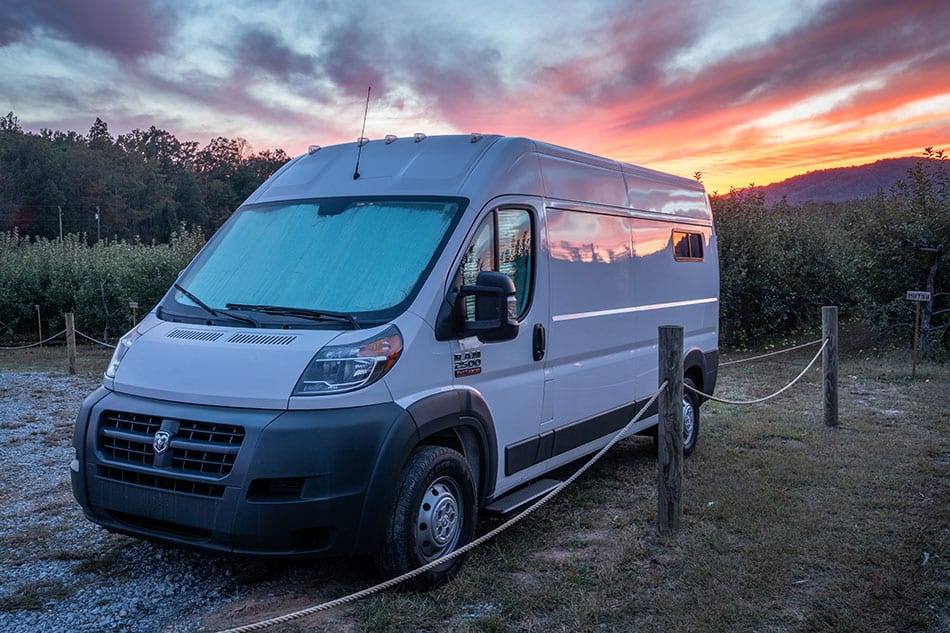
  • Discovering new places that you wouldn’t have otherwise known about. Some of the places are well off the beaten path making it a true adventure just to get to them.
  • Tasting Good Wine. I like wine so naturally, this is one of my favorite parts of the experience.
  • Experiencing farms and tasting freshly grown produce. I also love fruits and veggies and visiting farms to experience a fresh crop of locally farmed goods is amazing.
  • Having an additional option for staying places when out on the road. It’s nice to have as many options as possible when traveling in a camper.
  • Most locations are pet-friendly. We take our dog when we travel so we always look for pet-friendly stays.
  • It’s an affordable way to stay in your camper. The price is worth it if you use it.
  • Meeting friendly hosts and friendly RVers. I’ve met friendly hosts and also other people who were camping the same as I was. It has been very pleasant to meet and chat with these people.
  • The App and website are great. It’s easy to find and read about locations by using the app. I use the iPhone app but I’m sure all of them are great.

Things I Don’t Like About It

  • Limited locations. They are ever-expanding but the locations are sometimes sparse and limited.
  • Some golf locations require you to play golf. I wasn’t happy that some locations require you to golf. I was hoping that buying something at a restaurant or pro shop would be enough.
  • No access to amenities like showers, dump stations, electric, water, wifi, etc. Some locations do offer this but not many that I’ve seen. I didn’t expect to have these things but it is a con when comparing with RV parks.

Harvest Hosts Rules

If you are going to stay at a host location, there are some rules that Harvest Hosts has set forth for you to follow. I believe the rules to be fair for the host and the camper.

There are only a few rules and they are nothing out of the ordinary of what you would expect from a service like this.

You must have a self-contained RV

The RV must include everything that you need inside the van or RV. You are not allowed to use outdoor showers, tents and things like this.

This is understandable because you don’t want to make the host’s location look junky so that it affects the view of the location for their normal customers. This could be bad for business so they want to make sure you are staying as low key as possible.

You are only supposed to stay for one night

You don’t want to wear out your welcome. I have heard that some hosts will offer you more than one night as long as they aren’t overloaded with people. I haven’t had this happen yet but I would imagine that it would be well-received if it did. Especially in a location that you like.

The rules state that you aren’t supposed to ask but it is fine if the host tells you that you can stay multiple nights.

You need to call ahead to make sure it’s ok

I think this is just common courtesy. Arriving unannounced is just rude and could be grounds for denial from the host. Not only is it good for the host, but it’s also good for you because you don’t want to drive out of your way only to find out that the host doesn’t have enough room for you.

Harvest Hosts advises you to spend at least $20 with the host

I think this is fair and helps the host to continue being part of this service. After all, the host is allowing you to stay on their property for free. The least you can do is make a purchase and $20 is cheaper than you would pay at nearly any RV park.

The rules put in place are fair and I would hope that most people would be responsible enough to follow them. The RV crowd is among the most responsible and friendliest people I have met so I can’t imagine this ever being a problem.

Following the rules helps to ensure that this program is a success and that hosts continue being a part of it. It also allows Harvest Hosts to grow its location database by adding more interested hosts.

Bottom Line

Harvest Hosts is great for people who want to try something different and have an additional option other than ordinary RV Parks. It can be a welcoming experience to pull into a host location and experience the tranquility and peacefulness that comes from it.

I’m sure that there are locations that are not as good as others but it has been a great experience for me so far. I will continue to use it but upon renewal, I will likely change to the classic membership and drop the golf option.

I just don’t see myself using the golf option because I do not golf as much as I used to. If golfing is your thing, by all means, there are plenty of golf courses included in the membership for you to enjoy.

Some of the golf courses listed in their locations map seem very nice and would make for an excellent round of golf.

I find Harvest Hosts to be a great alternative to the usual. When combined with RV Parks, Campgrounds, rented locations from Hipcamp or Airbnb, it makes a great addition to your list of options and can add another choice when looking for somewhere to stay.

Class B RV VS Conversion Van – What’s The Difference?

In the case of small campers, vans are a popular option since they offer an all-in-one solution for those looking to hit the road. You can jump in a van and take off without the worry of unwieldy trailers or large motorhomes that can be difficult to drive and maneuver around.

If you are like me, you prefer keeping it small with a camper so that it’s easy to drive, making your camping trip less stressful. A van can be the perfect type of camper for someone who wants to take off and not have the common concerns or worries that a large RV traveler has.

Even though vans are small, they offer advantages that make them a much better choice than some of the other small campers available on the market.

If you are interested in buying a camper van of some type, a decision will need to be made as to whether or not you want to purchase a class B RV or a conversion van. The two are similar but differ in a lot of ways.

A Class B RV is designed and built from the ground up by a manufacturer for the specific purpose of camping. A conversion van is a van that has been customized on the inside from its original intention for a specific purpose such as camping.

Both of these types of vans can be set up as full-featured campers and can be a great choice for someone who wants to maintain a small footprint.

Class B RV

Class B motorhomes are interesting types of motorhomes. These are the smallest drivable motorhomes that you can buy yet some of them are more expensive than even the largest class A motorhomes.

Some of the pricing on these types of motorhomes can be ridiculously high as manufacturers of these load them up with amenities and customizations that make them unique and highly livable considering the space they have.

These motorhomes are very useful for people who want a motorhome but don’t want to feel as though they are driving and lugging something large around.

They often have all that you could need in an RV and most class B motorhomes contain a kitchen area, a bathroom, some type of shower option, seating, bedding, and storage.

Class B motorhomes are not as mass-produced as a class A or class C since they generally appeal to a smaller group of buyers.

Let’s look at three different models of class B motorhomes to give you an idea of what you can expect from this type of RV.

Carado Banff

With an MSRP of $71,625, the Carado Banff is one of the more reasonably priced Class B motorhomes that you will find. If you are looking for a new one, the Banff could make a great choice.

It is built on the Ram Promaster chassis and it has a roomy layout that can accommodate most campers.

It contains a full bathroom including toilet, sink and stand up shower. This makes it a great choice for people looking for an all-in-one solution at a more affordable price.

The video below gives you an idea of what the Banff can provide. Notice how cozy and livable the space actually is.

2020 Winnebago Revel

With the super high MSRP of around $168,000, the Revel is a 4×4 Class B that is designed to take you anywhere you want to go. It has a full shower, toilet and all of the other living areas that you would expect from an RV.

This is a van that is for those who have the money to spend and want something that will get them off the beaten path. You would be able to take the Revel to places that you might not be able to go without the 4×4.

Personally, the price is WAY more than I would ever pay but there seems to be a market for vans in this price range. There is a growing trend of people who are interested in having an off-road adventure machine like this.

2020 Roadtrek Zion

The Roadtrek Zion has an MSRP of $101,681 so it comes in between the two previous models discussed.

This is still a very pricey rig but it does offer a luxury van experience. It’s built on the Ram Promaster 3500 extended so it does have plenty of livable room.

It also has all the amenities that any other one would have in this price range. This is a well-built coach and can offer plenty of room for enjoying a luxury camping experience.

Life In A Class B RV

What does it look like to travel or camp in a Class B RV?

Many people would assume that since these types of vans are so small, it would be difficult to enjoy a roomy camping experience while staying in one. However, this isn’t really the case because they are often roomier than you might think.

A class B RV requires that you spend more time enjoying nature and the journey than you do living inside of a cooped up shelter. The lifestyle isn’t good for those who want to stay indoors and watch TV.

It’s more for those who want to go to a location, park, get out and explore. Many of those who drive vans like this would rather be out hiking, biking or exploring an area that they are in.

They use the van as a place to provide them with shelter and a place to eat, wash up, relax and sleep.

class b van interior

I love the size of a small van because it is cozier and is also easier to cool in warm climates and to heat in colder climates.

When I travel with my conversion van, I usually park my van and use it as needed but I spend a lot of time hiking and being outdoors.

In this case, there is no need to have anything larger than a van because I’m only using it for a place where I can tend to my basic needs. Even families can make a van work and there are many examples of living spaces set up for more than just one person.

I often enjoy sharing my van with my wife and dog. We go on adventures together and the van provides plenty of space for us to live without feeling cramped.

Conversion Van

Much like a class B motorhome, a conversion van made for camping usually includes most everything you would need. The difference is that these are custom-built and converted from a van that had another purpose.

This often involves taking a passenger van and removing seating or other items and then converting the space to a livable area.

Why would someone want a conversion van when there is already something that fills this need?

There are many reasons but here are two of the main reasons that people would want a conversion van versus a class B RV.

1. A conversion van is more affordable.

A conversion van can be bought for a fraction of the cost of a class B RV. While you could spend upwards of $150,000 or more for a class B, you could buy a used work van for a few thousand dollars and then convert it into a camper for a minimal amount of money.

Of course, what you end up with probably won’t be as nice as the class B but that will depend on the van you buy and the quality of conversion that you do.

In my case, I wanted something high quality so I spent a little more on a van. I purchased a Ram Promaster that was like new. I then spent $10,000 on my conversion and made it something that I was extremely proud of.

In the end, I saved a ton of money over what I would have if I had chosen a class B.

2. A conversion van can be customized to your needs.

The best thing about a conversion van, in my opinion, is that it can be customized to your exact specifications. This was important to me as I had a difficult time finding a manufactured class B motorhome that was set up the way I wanted.

I had a hard time with the high price of the motorhome and it still didn’t have a layout that I liked. They also tend to be a bit sterile in their finishes. I enjoy creating things so the possibility of creating a camper van for myself was right down my alley.

I created mine the exact way I wanted it and I know it inside and out so it will be easy to adjust or customize areas as needed.

This is the advantage of a conversion van. You are completely in control of it and can set it up however you need it to be.

Ram Promaster conversion van
My custom conversion van

Advantages And Disadvantages

There wouldn’t be different types of vans for camping if there weren’t some advantages and disadvantages of both types. This is all subjective and will differ based on your experiences.

If you are considering a class B motorhome, here are some of the main advantages and disadvantages that you can expect.

Class B Motorhome Advantages

  • Everything is already done for you. The manufacturer has designed and built a ready-to-use RV so that you can immediately hit the road and begin enjoying the experience.
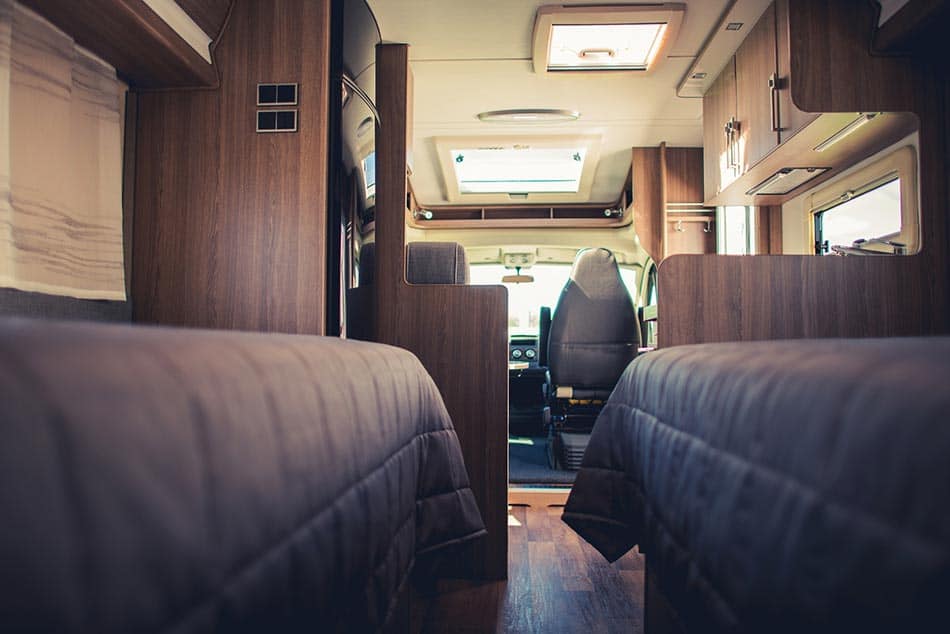
  • Warranty. Just like a car, when you buy a new class B motorhome, it usually comes with a warranty in case you have problems.
  • You’ll be able to park in almost any RV park. Although I haven’t experienced this, there have been reports that many RV parks do not allow conversion vans.
  • High build quality. A class B has been carefully designed and assembled by professionals and you don’t have to worry about things falling off the wall or potential problems from do-it-yourself work.

Class B Motorhome Disadvantages

  • Price. These things can get very expensive so it can be intimidating to throw lots of money down on a small van. Some of the high prices I’ve seen can be downright laughable.
  • You are stuck with a pre-determined layout. This could be good if you find one you like but bad if you have trouble finding the perfect fit for your needs.
  • Only a few vehicle options and sizes. You are limited to a few popular models that manufacturers use for their van builds.
  • Not stealthy. If this is important to you, a class B that a manufacturer has designed and built will look like an RV and lower your chances of successfully stealth camping.

For those looking to convert a van and make it a camper, there are certainly some advantages to do so. Likewise, there are some disadvantages as well. I have outlined a few of each below.

Conversion Van Advantages

  • It’s cheaper. You won’t pay as much for a van conversion unless you go all out or purchase a new van and then have a company convert it for you. Taking on the challenge yourself will yield a more affordable finished product.
  • You get to design your own space. Although challenging, it can be fun to dream and then make that dream into a reality.
  • You can choose your van option. There are many good vans that would be great for conversion. You get to choose the one you like the most and that fits your layout best.
  • You can remain stealthy. If you choose, you can build your van so that it would be difficult for others to know you are living inside.

Conversion Van Disadvantages

  • You have to do the work. Finding a van is easy but converting it to a camper can be challenging.
  • Possible safety concerns. If you purchase a conversion van or convert one yourself, there may be assembly errors that could result in things falling off the wall or possibly dangerous situations from DIY electrical wiring.
  • It may be more difficult to sell. People may have a concern that the conversion was not done in a quality way. They may find it unsafe, making it more difficult to sell when the time comes.

Best Van For A Van Conversion

There are lots of different options for a van conversion and most people will go with a van that has the maximum amount of room. This often leads one to purchase a cargo van that most class B’s are already built upon.

The three main options in the United States include the Ram Promaster, Ford Transit and the Mercedes Sprinter.

This allows someone to create the same type of living space as they might find in a class B that costs much more money.

It doesn’t have to be a cargo van but these tend to be the most popular and most workable option on the market.

A van conversion can be converted from nearly any van as long as it has enough space for your preferred layout. You may have to remove seats, walls and other items to accommodate the conversion.

Is A Conversion Van Considered An RV?

An RV is a vehicle or a trailer that is mobile and contains a living area, including amenities such as kitchens, dining areas, bathrooms, beds, and seating areas. A conversion van certainly falls under this category and can be considered an RV.

Most people who convert vans to RVs include normal living areas that you would find in any RV. Although conversion vans aren’t always titled as motorhomes, they can be as long as they meet certain criteria.

These criteria vary in different places so you would have to check with your locale to determine if this is possible with a conversion van.

Even if a conversion van is not titled as a motorhome, it still falls under the definition of an RV.

Conclusion

Whether you choose a conversion van or a class B RV built by a manufacturer, either can provide you with a great space to take camping. Vans like these make excellent choices for those who are interested in a small motorhome that is easy to drive.

A conversion van can allow you to create your own customized space that will serve you well no matter what needs you have. A class B motorhome is a great option if you don’t mind the high price that you have to pay to obtain one.

Even though these are the smallest of all the motorhome types, they can provide you with an excellent living space that can serve you well on a camping expedition.

The one you choose will depend on the funds you have to spend as well as your desire to tackle a conversion or not. A conversion van is hard work but worth it if you are handy and creative.

Is It Safe To Use A Camping Stove Indoors?

Camping stoves are a staple in the camping community. They offer a great, portable way to have an effective cooking stove while out in the field.

Most people will use these stoves outdoors where there are no issues with ventilation. However, many people also use these inside their RV as a way to cook meals when they can’t be outdoors or just don’t want to be.

Is this safe?

Using a camping stove indoors is not recommended but can be done if used in a properly ventilated area. You should also take precautions to have a carbon monoxide detector nearby as a way of detecting any deadly fumes that may be present.

I would not suggest using a portable camping stove indoors when you do not have ventilation. This could be dangerous and should be avoided. Always make sure you have proper ventilation before lighting a camping stove.

The main problem with using camping stoves is the carbon monoxide that results from incomplete combustion. Carbon monoxide is a deadly gas and doesn’t have a smell so you may think everything is okay even while the room is filling up with it.

Only a quality carbon monoxide detector can detect and alert you that carbon monoxide is in the area. In this case, you can ventilate the area and leave until the gas has dissipated.

In all my years of camping, I have never had an issue with a camping stove. I use my stove on my kitchen counter inside my van but I always have my side door open and my roof vent pulling air out while I’m using it.

I make sure that the area always has air moving and escaping the van before I use my stove. The Maxxair fan that I have installed in my roof makes this easy. It pulls air in from the outside through the windows and then pushes it out of the roof, keeping a constant supply of fresh air in the van.

Carbon monoxide doesn’t have a chance to build up in a case like this. If it is in the air, it is quickly discharged from the van through the ceiling vent.

I also have two CO detectors in my van. One is very near where I am cooking and the other is near my bed area. I feel safer having two of these detectors on duty. I know that if one of them doesn’t catch it, the other one probably will.

I have never had one to sound an alarm and I have always made sure that my van is very well ventilated before I even fire up my camping stove.

It’s best to adhere to the instructions of the specific camping stove you are using. Many of these stoves have different warnings by the manufacturer and they have the final word on using their products safely.

Many RVs have cooking stoves built-in and these are designed to be used indoors. These will typically use a larger propane tank that is stored outside of the RV.

For those who don’t have built-in stoves, portable camping stoves make a great choice.

The good thing about these is that they can be used outdoors so on a nice day, you can take your kitchen outside. That’s exactly what these types of stoves were made for.

They provide primitive campers with the means to be able to cook a fantastic meal while “roughing it” out in the woods.

Common Types Of Camping Stoves

There are a few types of camping stoves on the market that campers use. They all use the same concept but differ in the type of gas that they use and the size and layout of the stove.

Some stoves are larger and designed to have more cooking space while some are smaller and great for hiking and other activities where less size and weight are important.

Let’s look at a few of these types below.

Propane

The most common camping stoves will use propane gas as the fuel that allows the stove to burn. These are usually designed to make use of 1 pound propane canisters that can be purchased nearly anywhere in the United States.

The connection is easy and secure and starting the stove up is a snap. These usually have an easy igniter on them so that you can get the fire started easily. You can cook on it just as you would on a gas stove in a home.

I prefer this type of stove since the propane canisters are so easy to come by. I use the Eureka Ignite camping stove in my camper van and I love it. It has great flame control and allows me to boil or simmer my food.

I use it regularly for brewing coffee and of course, cooking meals.

Propane can be used in very cold climates and can remain stored in cold temperatures when not in use. I leave my 1 pound propane tanks in my van year-round.

Butane

Butane stoves are similar to propane ones but use a different fuel source. One of the main differences is the temperature at which they can be used. In layman terms, butane can’t be used in as cold of a climate as propane can.

If you spend a lot of time in cold climates, say below freezing, you are going to want to stay away from butane. You should only use butane if you are in warm weather climates.

However, just like propane, butane also can emit carbon monoxide in certain situations. It’s also important to use butane stoves in a well-ventilated area to avoid any problems that may arise from this deadly gas.

As with propane, you should follow the manufacturer’s recommendation for safety when using this type of stove.

These stoves are very safe to use when used with caution and in accordance with the recommendations outlined by the manufacturer of the stove.

Propane/Isobutane

This type of fuel is often found in small canisters that are used to fuel small stoves for backpackers. They can also be used in normal camping situations as well.

One of the well-known brands of stoves that utilize this fuel is Jetboil. I use a Jetboil system quite often around areas where I camp or hike. It’s a great system to easily boil water to make coffee, tea, oatmeal or other meals.

These canisters have a mixture of gases in order to maintain a certain amount of pressure in a small lightweight package.

Just like any other system, stoves that use this type of fuel should be used outdoors or in a well-ventilated area.

Alcohol

These types of stoves are among the cleanest burning and most efficient type. However, they can also create carbon monoxide in the process so proper ventilation is critical with these as well.

These are generally small and are great for hiking, backpacking or use as a backup stove.

The Solo Stove is an example of a popular alcohol camping stove.

Tips For Staying Safe When Using A Camping Stove

In case you haven’t noticed, the main safety measure when using a camping stove is proper ventilation. They are designed to be used outdoors when camping. When used in this way, proper ventilation will be used and there should be no issues.

The following tips will help to ensure that you are safely using your camping stove no matter where you use it.

  • Read and adhere to the manufacturer’s instructions.
  • Follow instructions to make sure the gas canister is connected and sealed properly.
  • Make sure the area is well ventilated.
  • If indoors, make sure you have a carbon monoxide detector nearby.
  • Invest in good carbon monoxide detectors. You don’t want to skimp on an item that could save your life.
  • Do not leave any camping stove unattended.
  • Keep out of reach from children or anyone else you don’t want to get a hold of it.
  • Be sure it is a safe distance from anything combustible.
  • Be sure the valve is completely closed after you are finished using it.
  • Let the stove cool down to a safe temperature before putting away.

Conclusion

A camping stove provides an excellent way to enjoy tasty food and beverages while on a camping expedition. They also make great additions to RVs or motorhomes. They are easy to use and can be used outdoors.

Using a camping stove indoors is possible if you allow for proper ventilation and make sure to use common sense. The danger arises when space is closed up and carbon monoxide is allowed to enter and not escape.

Be sure to avoid any situation where the air is not properly moving through the area. If in a tent, be sure the doors and windows are opened. If in a van or other RV, make sure windows or doors are opened and vent fans are turned on.

A carbon monoxide detector is your best friend in these situations so be sure you have one nearby. I prefer to always have two carbon monoxide detectors in case one of them fails.

Camper Van Or Travel Trailer – Which One Should I Buy?

Camper vans and travel trailers can be great options for those who want to camp in comfort. Although they have much in common, they are very different from each other and it can be difficult deciding on which one to buy.

I researched and looked at both types during my search for a camping solution. I liked a lot of what travel trailers had to offer but the convenience of a camper van was nice as well.

I’ve looked at large travel trailers and small travel trailers and tried to figure out which would be best for me. I have always leaned towards the smaller ones because I like the coziness and the simplicity of keeping it small. I never wanted a huge trailer that would be cumbersome to tow around.

This is what led me to look more at camper vans because of the smallness and the convenience of being able to drive anywhere.

I also loved the idea of being able to custom build a camper van which would make it more affordable than buying a manufactured Class B.

If you find yourself in this position of trying to decide between a trailer or a van, I can show you my research notes and why I chose what I chose in the end.

I understand that deciding on the perfect type of RV can be a difficult process. It’s normal to be unsure since it’s such a large expense. It’s important to make the best decision for yourself and choose the one you’ll actually use and get the most out of.

Let’s compare the two options in a few key areas.

Camper Van VS Travel Trailer

It’s likely that if you are looking between a camper van and a travel trailer, you are looking at mostly small travel trailers. Since small trailers aren’t a lot bigger than what a van offers, this is a fair comparison.

Both require you to live more minimal than you would in a larger motorhome or fifth wheel.

Although the size of some of the smaller trailers can be similar to the size of a camper van, there are a few key areas in which they differ. This is where it becomes easy to decide on which is best for you as long as you know what you want.

Let’s discuss the following key areas.

Cost of ownership
Size
Liveability
Mobility
Quality

Cost Of Ownership

Camper Van

Expect to pay: $50,000 – $100,000

A van can be quite expensive if you are looking to purchase a newly manufactured van. Some of the more premium models on the market can be in the $150,000 or more range.

This is a huge expense for anyone looking to purchase a van. Unless this is your primary residence and you have the funds to afford it, this type of purchase doesn’t make much sense for the average consumer. Especially when you consider the small size of a van.

The good news is that there are more affordable options so the high cost mentioned above isn’t always the case. You can purchase brand new Class B vans for around $70,000 and much less than that if you choose to go with a used one.

A used van is a great choice since RVs depreciate. You can get an almost new one for much less than the MSRP or for whatever it was bought for when it was brand new.

The other option is to build your own. You can get an empty van and then turn it into a camper if you have the skillset and interest to do so. If not, you can hire someone to do it for you. The cost for a van of this type would be considerably less than purchasing a new one.

Another cost to consider is maintenance. Not only do you have the maintenance costs of the RV itself but also the van. Although there isn’t a lot of maintenance to the RV portion of the van other than winterizing and making sure it stays leak-free.

You’ll have to get oil changes, tire rotations, tire replacements, and other routine vehicle maintenance. These costs can add up depending on how much you use the vehicle.

Travel Trailer

Expect to pay: $10,000 – $35,000

A travel trailer can be much less than a camper van unless you choose to build your own camper van and buy a cheap, used van. If you choose a newer van or if you buy a pre-manufactured van, you will pay much less for a travel trailer.

However, there are other costs that you must consider if this is the route you go. A trailer has to have a vehicle that can tow it. If you do not currently have a vehicle capable of this, you will have to purchase one and that is an added cost.

With a tow vehicle, it will create wear and tear on that vehicle which may also lead to more maintenance costs.

In my case, during my search, I was focused on purchasing a trailer that had a loaded weight of 5500 lbs or less. My Nissan Frontier with 4.0L V6 engine can tow up to 6500 lbs but I never like to get close to the max on towing weight.

Most small travel trailers that I looked at were below 4000 lbs when fully loaded so it wasn’t a big deal for my vehicle. If I would’ve had to purchase a vehicle to tow a trailer, I wouldn’t even have considered one.

So if the cost is your main concern, travel trailers are likely going to be less expensive. Just don’t forget about the tow vehicle when making the decision.

Small red travel trailer

Size

Camper Van

Camper vans offer a very limited amount of living space and can be among the smallest RVs on the market. The typical van measures from about 19 ft – 25 ft in length from the front bumper to the rear bumper.

With the engine compartment, dashboard, driver and passenger seating taking up space, you are left with a tiny footprint on the inside in which you can live.

Although they are small, they still contain almost everything you could ever need while out on the road. Many of them have full showers, bathrooms, kitchen areas, dining areas, sleeping areas and comfortable seating that allows you to unwind and enjoy.

Camper vans serve a crowd of people who want to take up minimal space but want the convenience of traveling anywhere their heart desires. They don’t want the restrictions that are attached to having a larger camper.

Travel Trailer

Although small, most offer more space than a van can provide. Small teardrop trailers are smaller than vans but larger teardrop trailers can be even larger than the living area in a van.

Trailers also have options that vans don’t often have and that includes slide outs. These slide outs allow you to slide parts of the trailer out while it is parked to create additional living space. Some aren’t even livable until these sections have been slid out.

With slide-outs, a trailer can be very room and make for a very comfortable living arrangement. You won’t see this feature on the smallest trailers but as you go up in size, this will become an option that you’ll see more of.

Overall, travel trailers provide a good amount of living space for the money that you pay.

Liveability

Camper Van

How easy is it to actually live and spend time in a camper van? One would think that it could get a little claustrophobic spending time in such a small space. However, you might be surprised at just how much space you have in one.

Most Class B vans are cleverly designed to maximize space. Although it will never be like living in a much larger RV, it is quite cozy and fun in my opinion.

I travel in mine with my wife and a small dog and we find it to be quite comfortable. The trade-off is that it is highly versatile and the mobility of it allows you to go to places you couldn’t go with an RV with a larger living space.

Dining area in camper van

Travel Trailer

Depending on the size of the trailer, they can be quite livable. It’s like pulling a little house around behind your car that has everything that you need. You can cook, stay warm or cool, watch TV, take showers, use the bathroom just like you would at home.

You probably won’t miss any of the comforts of home if you spend time in a travel trailer. Even a small one is designed to have a livable amount of space and is usually set up to maximize that space.

A travel trailer is an obvious choice if you are traveling with a larger family. If you have children, you’ll need the extra space that a trailer can provide over a van.

Mobility

Camper Van

This is where a camper van will shine over a travel trailer. Camper vans are very versatile and are easy to take wherever you want.

Since the van is an all-in-one solution, you have your vehicle and your home all in one space. You don’t have to hitch up to a trailer and then worry about towing it.

Vans are a huge benefit for those who want to stay small and nimble in their camper and be able to travel and see places that larger RVs can’t.

I’ve never had an issue taking my van anywhere and I feel comfortable driving it anywhere that I have driven my personal mid-sized truck. I can back it into a spot easily and be gone in minutes when it’s time to leave.

Travel Trailer

Trailers are not as nimble and are more difficult to travel with. Although a small trailer can be easy to tow, it’s still something extra that has to be pulled by your vehicle and it can make you a bit uncomfortable having it behind you.

People who aren’t used to towing trailers and only do it every once in a while can have some anxiety about doing this. There is always that chance that you can turn too sharp and hit something or misjudge how much space you need.

Of course, backing into a spot is difficult for many people and a small campground can be difficult to navigate with a trailer. The bigger the trailer, the more difficult it will be.

If you are considering a small trailer, like a teardrop trailer, read about my comparison to a camper van.

Car towing camper trailer

Quality

Camper Van

For the most part, the class B motorhomes that I looked at were noticeably higher in quality than were the travel trailers. You would expect them to be higher quality for the price you pay.

Most of the finishes are what you would expect and they just have an overall feel of quality. Some of the more premium-priced ones are even higher in quality.

I care about quality but this may not matter to some people as much. To me, the quality of the parts you can see is an indication of the quality of work that you can’t see.

If I see a low quality, sloppy job done on the shower caulking, for example, I can only imagine the low quality of work that is probably behind the shower walls.

With Class B motorhomes, most of the areas seem to be high quality and I always had a good feeling when looking at them.

Travel Trailer

During my journey to find a camping solution, one thing stood out as I looked at various travel trailers; the quality is pretty low.

As I walked through trailer after trailer, I noticed the quality was lacking from all the small details. Things like trim not lining up, terrible caulking job, cheap parts, paper-thin walls, etc.

I understand that campers use thinner walls to maintain a lower overall weight but I was amazed during my search that manufacturers could get away with such cheap finishings. It didn’t give me a lot of confidence in purchasing one.

It isn’t like this across the board but a lot of them do not maintain the quality that I like to see in something this expensive.

In the end, I was much happier with the quality and care that I used to build my camper van than I was with any travel trailer that I looked at.

The following video shows some issues you might expect from travel trailers and RVs in general. These issues aren’t always present but it’s good to know what to look for.

Which Is Better?

Ask anyone and you will get a different answer to this question. The one that is better for you may not be better for someone else.

For example, a camper van was better for me because I don’t want the hassle of pulling a trailer. I don’t care how nice the trailer is, I would rather stay in the small space of a van than have to go through the trouble of hauling a trailer all over the place.

That’s my take on it and I’m sure yours is different.

It comes down to what the person wants. If you are looking for more space to live in, you are probably going to be happier with a travel trailer than you would be with a camper van.

On the other hand, a camper van is great for those people who like to travel and see more. It’s great for those who want to be able to drive and not have to worry about any size restrictions since a camper van is small enough to go anywhere.

You are not limited with a camper van like you would be with a larger trailer.

Below, I have outlined some examples of when it would be best to have each type.

Who Should Buy A Camper Van?

A camper van might be a good solution for you if…

  1. You plan on traveling more and don’t want the worries of size restrictions or the burden of towing a trailer.
  2. You want to boondock often and stay somewhat stealthy.
  3. You are camping alone or with one other person and don’t need a lot of space.
  4. You like the idea of taking less stuff so you can enjoy your journey more.
  5. You have more money to spend on a camping solution.
  6. You are looking for something with good fuel economy.
  7. You are handy and like the idea of building your own camper van.
  8. You want your driving area connected to your living space so you don’t have to exit the vehicle.

Who Should Buy A Travel Trailer?

A travel trailer will probably be a better solution for you if…

  1. You have a family and need more space or you are just someone who likes having a lot of space.
  2. You plan on staying at RV parks most of the time. If you plan on pulling into an RV park and parking for the week, a trailer will serve you well.
  3. You have less money to spend.
  4. You already have a good towing vehicle or are willing to purchase one.
  5. You don’t mind towing a trailer behind a vehicle.
  6. You have a good place to store the trailer when not in use.
  7. You don’t mind exiting your vehicle to access your living area.
  8. You want to be able to disconnect from your trailer at an RV park and have a personal vehicle to drive.

Bottom Line

A camper van and a travel trailer might appeal to the same people but they will likely disagree on some of the main features. If you are looking for a home away from home that provides the space you need for you and your family, a travel trailer is your answer.

If you are looking for a vehicle that will take you to places far and wide and give you a cozy, safe place to stay, a camper van could be the answer.

One isn’t necessarily better than the other and it will all depend upon what you aim to use it for.

If you are stuck deciding on what type to pursue, the best thing to do is what I did when I was in the same position. I went searching my local area at RV dealerships and looked at dozens of different models of each type.

Doing this will allow you to get a feel for what it is like inside each type and you’ll start to learn which is best for you.

Nothing can take the place of seeing them with your own eyes so make a plan to step foot inside each of these and determine which one you’ll go with.

What Is Off-Grid Solar?

I am a huge fan of solar and I sometimes get a little bit geeky about it because I think it’s amazing that we can harness an unlimited amount of energy from the sun.

The sun has an infinite amount of energy to offer and I am a huge proponent of using all of it that we can instead of focusing on fossil fuels for our energy needs.

I find it strange that in today’s world, with all of the technology and intuitive products we have, we don’t make use of solar energy more than we do.

If you are like me and are interested in taking advantage of what solar can provide, you will probably be interested in an off-grid solar system. This is just one way that you can achieve your energy needs by relying on the sun.

What is off-grid solar?

Off-grid solar is a solar system that is not connected to a grid such as your local utility service. It is a complete standalone product that pulls energy from the sun to charge a battery bank that can be converted to electrical energy for your home, camper or other livable structure.

The cool thing about off-grid solar is that you can completely harness the sun’s energy for yourself and be totally independent of a grid.

It’s a way of “sticking it to the man” so to speak and using a free method to get electrical power.

This is especially great for campers, van lifers and other adventure seekers who need to power their daily lives but still want to enjoy time away from it all.

A camper is the perfect example of off-grid solar. When you have solar panels attached to a camper or a van, you are completely off-grid and using energy from the sun to provide power throughout your camper.

It’s a good feeling knowing that you do not have to pay for the energy that is coming in and powering your devices. It’s also nice knowing that you are not contributing to dirty energy sources when using off-grid solar.

RV solar diagram

The Difference In Off-Grid And On-Grid Solar

The difference between these two types of systems is mainly where the energy is stored. In an off-grid situation, all of the energy is stored in a battery bank.

In an on-grid system, the energy that you generate with your solar panels gets sent to your utility company’s grid.

In turn, you receive a credit for this and you can withdraw as much solar energy as you have deposited.

With on-grid solar, even though you are drawing energy from the sun, you are still attached to the grid. This means that you are still at the mercy of your utility company to distribute your solar energy as needed.

This is unlike off-grid solar because with off-grid you are drawing energy from the sun and it is 100% usable without anyone else having a say so.

The energy that you get from the sun is stored in your battery banks and you have total control over how much or how little you use. There is no utility company involved in the process.

How Does Off-Grid Solar Power Work

An off-grid solar power system is really quite simple. There are only a few working parts to a system like this.

Below, I have listed the items that are needed to turn the sun’s energy into usable energy for you to use to power devices.

Solar Panels

An off-grid solar system has to have solar panels so that it can pull in energy from the sun. There are many different sizes and they are the piece of the system that converts the sun’s energy into voltage and current that will charge batteries through a charge controller.

Solar panels can either be mounted permanently or they can be portable which many people use when camping since they are easy to position where needed.

Those who would have solar power at a house or some other solid structure would likely have their solar panels mounted permanently.

Oftentimes, solar panels are mounted at an angle that follows the ark of the sun so that it can receive the highest amount of sunlight possible throughout the day. This allows you to absorb as much sunlight as possible.

Once you have solar panels in place, you will need somewhere to store the energy that you receive from the sunlight.

This is where a battery bank is used to store the energy so that you can use it even when there is no sun.

Battery Bank

This is where the energy is stored when you receive it from the sun. It will be stored in batteries and available to use at any time.

Most systems utilize deep cycle AGM batteries because these are the most cost-effective type to use.

Lithium batteries are another popular option and do have more benefits over using deep cycle batteries but they are much more expensive to acquire.

Batteries can be quite heavy.

As an example, a 12 volt, 100 amp-hour, deep cycle battery from Renogy weighs in at 66 pounds. You would probably need two of these to make for an effective solar battery bank. You would be looking at 132 pounds in total.

Compare this to a 12 volt, 100 amp-hour, lithium battery from Battle Born that weighs in at about 30 pounds. Two of these would bring your total weight to 60 pounds.

Charge Controller

This item controls the charge that happens to your battery bank. The charge controller is what determines how much voltage and current is needed to keep your batteries charged.

It also keeps your batteries from being overcharged when the sun is beaming down on the solar panels. When the sun is not out, it keeps your batteries from losing charge or being drained.

You could call the charge controller the brain of the system. It’s like a computer that takes the input from the sun and then determines what to do with it.

Inverter

The main job of the inverter is to invert direct current to alternating current. This could be a very complicated topic so I’ll keep it simple.

The main thing you need to know about the inverter is that it takes the 12-volt direct current and turns it into 120 volts of alternating current.

The 120 volt AC outlets are the ones that are in most homes and powers most of your household devices. The inverter allows you to power these same devices using the same plug.

Other Items

Other essential items that are needed include cables, connectors, racks, and mounts.

All of these items work in combination together to supply you with the energy you need to power your 12 volt DC and 120 volt AC devices.

Of course, a solar system is much more intricate than what I am describing but I am pointing out the basics the way I learned them as I was researching the subject for my van build.

Examples Of Off-Grid Solar

Solar systems are in demand more than ever and there have been many improvements as companies have innovated and have developed some pretty cool systems. These systems are easy for someone to pick up and create an awesome off-grid solar experience.
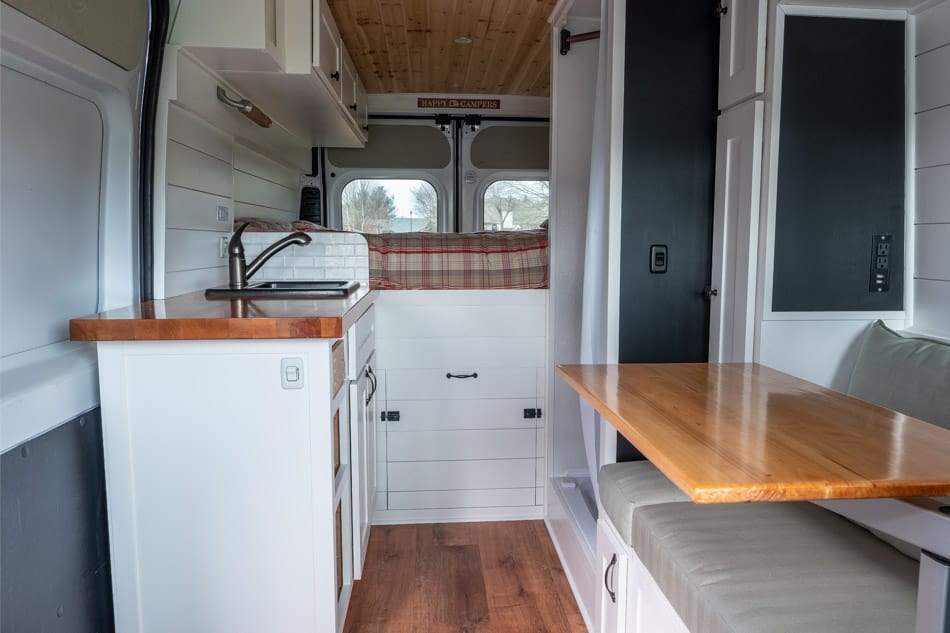
These can be divided into a couple of categories. Some of them will fall under portable solar units where the unit is an all-in-one system that contains your battery, charge controller, inverter and all the connections and hookups that you need.

It is highly portable and can easily be carried from one place to another.

The second type of system is one that is not portable and this includes all of the same components except they are not in a nice portable package. They must be installed permanently.

Let’s look and an example of each type below.

Portable

The Goal Zero Yeti 1400 consists of a very small portable unit that only weighs about 43 pounds and contains a 1400 watt-hour lithium battery (132 amp hours). The inverter is built-in and the unit also contains all of the ports that you will need.

All you need to do is connect solar panels to the input and you have a fully working off-grid, portable solar system.

The solar panels will keep the unit charged so that you can plug your devices into the ports and use them just as you would if you were connected to the grid.

This is the solution I have in my van and I have been very happy with it.

Non-portable

The 12-volt Renogy 100 watt solar RV kit contains a 100 W solar panel, a charge controller, cables, adapter kit, entry housing, mounting brackets, and a Bluetooth module.

The kit contains everything you need except for the battery and the inverter. By adding these two items, you would have a fully-functioning, off-grid solar system.

Building your own non-portable system is usually the cheapest way to go. It’s the best bang for your buck because you are going to get more out of it for less money.

However, the benefit of the portable unit is that you don’t have to install it and you can take it from place to place.

This makes portable units great for those who want to use them for things like camping, using around a farm, in the shed or garage or other places where you might need electrical power.

This type of system is usually installed on campers and many people who build their own custom van or RV use an installed system like this as well.

Conclusion

With so many available products on the market, it’s easier than ever to create a highly functional, off-grid solar system to power your life.

One can live off-grid and still maintain the majority of their energy needs, depending on the size of the solar system they have.

Solar is the way of the future and it is a great feeling to know that you are getting enough energy to power your accessories from the sun alone without having to pay a utility company.

An off-grid solar system is perfect for people who camp and as someone who travels often in a camper van, I couldn’t imagine being without one. Mine serves me well and allows me to keep my electrical devices working while on the road.

It easily powers my lights, refrigerator, water pump, fans, laptop, phone and other items that I want to plug in. No matter where I go, I can power all of my devices just as I would at my house.

That’s the beauty of having an off-grid solar system.

What Is A Stealth Camper Van?

Stealth camper vans have become popular in recent years thanks to a growing movement of online people who have made the lifestyle seem more glamorous than it actually is.

Being stealthy in a camper van sounds like a great idea and it can have its advantages. When I was first considering a camper van, I was taken in with the idea of being stealthy and being able to park nearly anywhere and sleep for the night without being noticed.

Is this a reality though? Is it possible to have a stealthy camping van?

What is a stealth camper van?

A stealth camper van is a converted passenger or cargo van that is set up as a camper inside but doesn’t look the part from the outside. This means that you can park anywhere without being noticed and you may be able to sleep or even live in your van without drawing attention to yourself.

Compare this to a traditional camper or RV, in which it would be difficult to park anywhere without being noticed. With a larger RV or traditional camper, you are likely limited to staying in RV parks or campgrounds.

If you were to park a large RV on the side of the street somewhere, everyone would know that someone is inside and it may cause someone to call the police or to ask you to move.

With a stealthy camper van, you may be able to park on side streets or in parking lots without ever bringing attention to themselves, allowing them to stay for free in locations all over the place.

What Type of Van is Best For a Stealth Camper Van?

Most stealth camper vans are custom built from empty cargo vans that are typically used as commercial work vans. These types of vans are usually solid in color and may have features that make others think they are work vans.

There are a few popular brands that people generally use when converting a cargo van into a camper van for stealth camping. The list below will identify the most popular options currently on the market.

Note: the models listed below are for the American market.

Ram Promaster

The Promaster, made by Ram (Dodge), is a popular option that can be purchased in various configurations. You can purchase it in a standard low roof or you can purchase a high roof to create more space and allow yourself room to stand up and walk around in without hunching over.

Ram Promaster Van
My Ram Promaster van

It can also be purchased in three different sized lengths. For a stealthy configuration, it is best to stay with a low roof van because these types of vans draw less attention. However, a high roof van is also fine since you are seeing more and more of them on the road nowadays.

Many companies use Promasters as their company vehicles. Even companies like Amazon use this type of van for their prime deliveries. I have seen them driving around my neighborhood and other places around my town.

A lot of Class B motorhomes are built using the Promaster as well so it is a very common van.

Mercedes Sprinter

The Sprinter van is also a great choice since these can be found all over the place used by painters, plumbers, delivery companies, electricians and other workers.

As you can imagine, Mercedes makes a dependable work van that many companies love to use. It’s easy to take a Mercedes sprinter and turn it into a camper van that can be stealthy yet highly livable on the inside.

Ford Transit

The Ford Transit is a common option that many class B motorhome manufacturers use for their camper vans. The Transit replaced the Econoline that Ford used to make and is available in a low roof, medium roof, or high roof.

This makes a good choice for a stealth camper van. You can choose a solid cargo van or you can choose to have one with windows installed.

The best way to do it if you were going to be stealthy about it would be to go without any windows at all. However, the trade-off for being stealthy with no windows also may create a closed-in claustrophobic feeling.

The Ford transit is known to be one of the most comfortable vans to drive and it is also now available in an all-wheel-drive model.

This allows you to go off-road or access locations that may have been difficult to access with a standard 2 wheel drive van.

Ford Econoline

Although the Econoline is no longer in production, a good used one can provide a great van to use as a stealthy camper van. These are common vans that are seen used by businesses of all kinds.

I have driven a few of them over the years and they are as good as any other one.

If you choose one of these, you’ll have to settle for a low roof van because that is the only option. However, low roof vans make a great option since no one would expect someone to be living in one.

Nissan NV

The NV is a bit strange looking for a van but it does make a good option as a stealthy camper van. You don’t see a lot of them, at least where I live, but I have seen a few different businesses using them.

They come in low roof and high roof options and they don’t have the look of a standard camper van so they would make a good option if you are considering stealthy camping.

I’ll have to admit, if I was to see a Nissan NV parked in a parking lot somewhere, I would not think that it was a van that someone is camping in or living in.

I would assume that it was a company van parked and someone was shopping in a store or something.

Chevy Express

This one is a trusty old van that is used quite commonly in the United States as company vans. Back when I worked in electronics and installed home theater systems, our company exclusively used the Chevy express vans and these were always solid vans.

They make great stealth camper vans if you don’t mind having a low roof. You will just have to crawl around in it but it is very possible to sleep in it, move around, eat, and find safety from the weather and all the other things you would want out of a camper van.

There is plenty of room inside one of these to build a nice living area, kitchen and have a toilet and other essentials that you might need.

The good thing about these types of vans is that you can find them at almost any dealership and you can find one used online with no problems.

You can usually get a good deal on these but you have to be careful. These types of vans are usually used and abused by companies and they are driven into the ground by different employees.

You will need to do your due diligence if you decide to purchase one of these to make sure you are not getting a piece of crap.

Make sure you have someone that you know who is a mechanic or knows what they are looking at that can help you out and decide on whether it’s a vehicle worth purchasing or not.

You don’t want to end up with a pile of junk that’s going to be more costly with repairs and maintenance.

VW Camper Van

It’s the old tried-and-true camper van that you often think of when someone talks of living in a camper van. These VW vans are classic and have been serving people well for decades.

Visions of peace signs and flower symbols come to mind when I think of a VW camper van. There are many different models but most of these are in a condition that will need repair and maintenance before hitting the road.

When you purchase one of these, you are probably opening yourself up to costly repairs just to get it on the road. Not only that, a VW van is likely not going to make a good stealth camper van, at least in the United States.

The reason for this is that it is unique to what you typically see on the road. This means that you will stick out like a sore thumb amongst all the other traffic. You will probably turn heads in parking lots instead of going under the radar.

The key to being stealthy in a van is to use something that blends in with today’s world. While you might get away with using a VW van, I believe your best bet would be to stick with a van that is more commonly seen so that people don’t even notice it as much.

You would be better off with something that you can just park anywhere and blend in with your surroundings. You would not be able to do this with a classic VW van.

Standard Minivans

Perhaps the best way to create a stealthy camper van is to use a standard minivan. Although not as spacious as a cargo van, a minivan will give the impression that it is just a regular van parked and no one could be living in it.

However, minivans can be converted into camper vans and provide a more spacious floorplan than you might think. Even if it isn’t as spacious, it still allows you to have a place to sleep for the night and do it stealthily.

A standard minivan may also not have the creepy factor that a stealthy white cargo van might have.

A minivan is a great choice to use as a stealth camper van because they are accessible and can be had for an affordable price. You can find used minivans all over the place.

Another plus about minivans is that they are usually owned by families and taken care of better than a commercial van.

What Is The Best Van For A Stealth Camper Van?

If stealth camping is your goal, I would probably seek out one of the options that you see the most of on the road. The idea is to have something that blends in well and no one even knows that it is being used for something different.

Perhaps a minivan is the best option if you want to go completely under the radar. However, this is not the best choice for comfort and overall enjoyment.

The best choice to have a good living or camping experience would be a larger van such as a high roof Sprinter, Transit or Promaster.

I can’t recall a time when I was ever out in public and saw a minivan and thought to myself, I bet someone is living in that.

Minivans just blend in.

However there have been times when I have seen larger, commercial vans parked in parking lots with no windows and no company name on the side and I assumed that there might be someone inside sleeping or living.

The truth is, the larger the van, the larger of a target that you are.

white van

Why Would Someone Want a Stealth Camper Van?

There are many reasons that a stealth camper van could come in handy. The thing that drew me to the idea, in the beginning, was how I could drive to a location, park and sleep in my van without being noticed.

As an amateur landscape photographer, I am often driving to locations early in the morning for sunrise and with a stealth camper van, I would be able to park at my location and be prepared for sunrise when it comes.

Other people may be looking for a cheap way to live and stay in their camper van without having to pay campground fees. This could come in handy if you are traveling around the country and are not always in a location where a good campground exists.

There could be problems that could arise from parking in areas that you are not supposed to. There may be fines imposed or other legal action taken so it’s important to understand where you can and can’t park.

Tips For Staying Stealthy In A Van

  • Keep your van as stock looking as possible. Tricked out vans with aftermarket items all over it is a sure sign that your van is more than just a work van.
  • Stay away from adventure stickers. Many people add stickers to the back of their van windows and this is also another sign that it’s more than just a work van.
  • Fewer windows equals more stealthy. Although you may not have as much airflow, having fewer windows means less opportunity for others to see inside.
  • Use the front doors. Don’t come in and out the side door. Use the front doors as if you are just using the van for driving and working out of. Using the side door all the time may be a giveaway that you are living in it and allow people to see inside of it better when you open the door.

Is It Possible To Be Stealthy In A Van?

Having a stealthy van sounds good in theory but is it really possible to make it work? I used to think that this was going to be an easy task to build a camper van out of a cargo van and stealthily stay anywhere.

However, it is getting much more difficult to do such a thing nowadays as many people have grabbed on to this idea.

I believe it is possible but you have to use common sense about it and plan for where you are staying.

If your van looks remotely like someone could be living in it, people are going to notice it. They may not take action to get you moved but people will look and wonder if maybe someone is living in it.

During the process of building my own stealthy camper van, I abandoned the idea and simply built a camper van to look the part. Why did I do this? Let’s discuss this below.

I decided that I didn’t want to have to worry about sneaking around trying to find good parking spots. Instead, I wanted to park in safe, legal places that were meant for campers to be parked in.

My camper van has a roof fan, sliding window and I generally put window coverings up when I park. A van like this isn’t really stealthy because anyone with awareness would know that someone is in there.

I say this from experience because I have parked in places that have gotten me weird looks and also people looking in the van windows as if someone was inside doing something wrong.

This gave me an eerie feeling and made me want to just pack up and go to a place that I knew I was supposed to be. An RV park or a designated place that allows overnight parking is a much safer option.

My favorite options have become Harvest Hosts and Hipcamp. I can use these platforms to find places to park my van for a minimal amount of money. This way, I know I am welcome at the location and won’t be asked to move or get in any kind of trouble.

As stealth vans become more and more popular it has become more difficult to pull off a stealthy camping experience than it used to be. There are a few reasons for this and there are a few reasons that a stealthy camper van may not even exist nowadays.

Think about it. Let’s imagine that a white van has pulled off on the side of the road in your neighborhood. You haven’t noticed this van before and you know it isn’t your neighbors or anyone else in the vicinity.

Who’s van could this be? Could it be a visitor to one of your neighbors? Maybe or maybe not but it probably will make you a little bit uneasy not knowing why a white van is parked near your house.

There are some dead giveaways that you are possibly in a stealth van and anyone might be able to pick it out. A few of these are listed below.

  • Windows
  • Roof fans
  • Solar panels
  • Shore power plugs
  • Offroad tires
  • Other customizations

Having these items installed onto your van will likely signal to others that you are living inside or it is some sort of van that is set up to have a living area.

If someone were to see a van with a roof fan on top or noticeable solar panels, it’s highly unlikely that they would not assume that someone is inside.

This is especially true of authorities or others who have been tasked to patrol an area.

Tips For Staying Safe In A Stealth Camper Van

If you plan on having a stealth camper van of your own then you might be tempted to stay in almost any location since you can go undetected.

Commonly, people in stealth camper vans ride around and find wherever they can park for free and go unnoticed and that’s where they stay the night.

However, there are some safety concerns with camping stealthily in a van. This is especially true if you are all alone.

The following list provides some tips that can help to keep you safe while you are stealth camping in a van.

1. Know the area that you are in

Avoid sketchy areas that just don’t seem safe. There are going to be some areas where you could potentially stealth camp and go undetected but the area might not be well suited for a safe experience.

You may end up on the bad side of town and not even know it unless you are aware of the area. The important thing is to do your research before you decide to park somewhere so that you know where you are and how safe the area is.

2. Park Yourself In A Position Where You Can Easily Drive Away

If you are parked for the night and a dangerous situation arises, you want to be able to get out of the area as soon as possible. This is one of the benefits of vans so be sure and set yourself up for an easy getaway if the need arises.

Vans are nimble and easy to go places in so be sure when you park in an area that you have assessed that area and made sure you can leave in a moment’s notice.
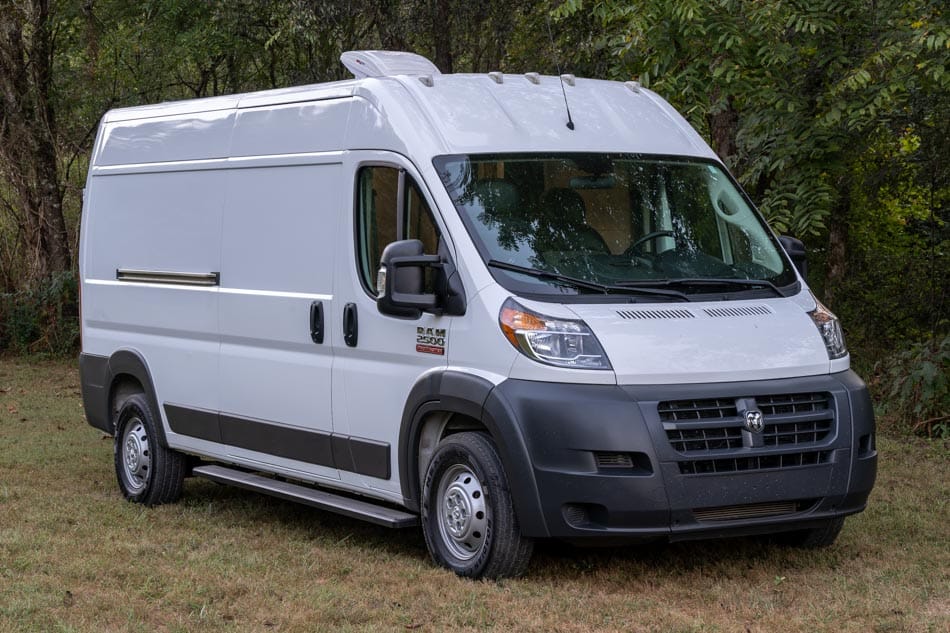
3. Have A Backup Plan

If you do have to leave a certain area because of a dangerous situation make sure you have scoped out what you are going to do and have made a backup plan.

This might not always be possible but make sure that you at least are aware that you might have to leave a location or parking area that you are in and head to a new location.

4. Install an alarm system in your van

An alarm can be something simple like an alarm contact on a door that makes an ear-piercing noise if the door is opened.

If this were to ever happen and the alarm was to go off, it would not only scare the intruder away but it would also alert those around you that something is wrong.

Other people could potentially come to your rescue in a situation like this.

5. Park where you have cell phone coverage if possible

Be sure and always check your cell phone coverage before parking in a location. This could be life-saving if you were to ever need help and need to contact somebody.

If you are in a location where you have no service, you wouldn’t be able to make that call in a dangerous situation. If possible, opt for a location that has good coverage.

Building A Stealth Camper Van Conversion

Building a stealth camper van for yourself is not as difficult as you might think. Although my camper van is not completely stealthy, I did maintain some stealthiness throughout my build.

You can read more about my complete van conversion here.

There are a few reasons that I would not consider my van to be completely stealthy.

  1. My van has a window in the rear that I installed. This can be a dead giveaway that someone is living inside of it since it is a standard RV style sliding screen window.
  2. It has a vent fan on top of it. The typical RV vent fan sticks out like a store sore thumb on top of my van so anyone who sees this will likely know that I am inside of it.
  3. My van has a shower power socket on the side. I installed this so that I could have electrical service when parked at a location that offers it.
converted van

Other than those three things, I consider my van to be fairly stealthy and I would be able to park in several places without being noticed. I have done it a few times and feel that I went mostly unnoticed.

The important part of building a stealth camper van is to pick out a van that will play the part. As mentioned earlier in the article, I would suggest starting with a van that is very common so that no one would suspect anything different from it.

After a van has been chosen, you would want to decide on what you want the inside layout to look like. How livable do you want your van to be?

Many people are fine with a place to sleep and a place to cook and lounge. The sky is the limit on how you can design your van and it can be a fun experience setting it up the way you want it. However, it can also be a challenge so be prepared.

After a layout has been chosen, the real work begins. If you are experienced with this type of work, it may be a fun project but for a total newbie, it will be a difficult process.

I have a fair amount of experience with woodworking and electronics and still had a difficult time with various parts of my build.

Don’t be afraid to hire skilled carpenters, electricians or other workers that you may need to get the job done right. Once your van build is complete, you will feel a sense of pride and enjoyment as you finally hit the road with it.

Conclusion

Having a stealth camper van can be a great way to travel and spend the night in places without having to pay. Many places allow free camping but many places prohibit it.

Being stealthy provides you with a home on wheels that can help to ensure that you will always have a place to stay. Whether you choose to live in it full time or just use it to take occasional trips, it can be a great solution.

If you are going to be building a stealth van, I would advise you to make sure you know the rules in the locations you are going to. Stealthy or not, you don’t want to be staying in areas that are unsafe or that could cause you to get in trouble.

Use common sense and trust your intuition when seeking out a stealth camping spot and enjoy the journey.

Teardrop Trailer vs Campervan – Which is Better?

Since teardrop trailers and camper vans both offer a limited amount of living space, someone who is interested in one may be also interested in the other. Both have similar characteristics but yet they are both vastly different.

I looked extensively at both options on my search for the perfect camper for myself. I was intrigued by a teardrop trailer because I already have a small truck that would easily tow one.

I would only need to purchase the trailer which would not be as expensive as purchasing a camper van. Teardrop trailers are one of the least expensive offerings in livable campers.

The only problem is that the size of a teardrop trailer is extremely small and can be quite claustrophobic if you are not very keen on small enclosed spaces.

Because of this, I ultimately chose the camper van as my choice of camper because I wanted more space than what the teardrop trailers I looked at had to offer.

There are also other reasons that I wanted a camper van and I will discuss this later in the pros and cons of each one.

First, let’s look at what a teardrop trailer is and then we’ll look at the cost of ownership for each of these types of offerings.

What Is A Teardrop Trailer?

A teardrop trailer is a small travel trailer that is often in the shape of a teardrop, hence the name teardrop. These travel trailers are very small and typically offer only a sleeping area.

Many are so small that you cannot stand up inside them and can only lay or sit down on the mattress area that is inside. The mattress typically covers the entire floor area so when you step into the trailer, you step right onto the mattress.

Some teardrop trailers are larger and do allow for walking and moving around space. However, the idea of a teardrop trailer is to provide a small camper for those who want or need minimal space and want the ease of towing a small camper.

towing a teardrop trailer

Most of them have some kind of kitchen unit installed, although it is typically located on the outside of the camper. This can both good and bad depending on how you look at it.

Most small teardrop trailers do not have a bathroom but many of the larger sized ones do.

Most all of them come equipped with amenities like air ventilation, AC, heat, windows with shades, storage areas and power hookups. Some of them have solar installed or offer it as an upgrade option.

With rising popularity, companies have been innovative with designs and have created very livable areas out of teardrop trailers. They can be quite useable and cozy.

They can serve well as a home base for someone who wants a small, comfortable and safe place to sleep but doesn’t intend on spending a lot of time inside.

It’s like having a tent that has a hard shell and is loaded with amenities. Although they are much nicer than a tent, it has the same feel as far as the space it provides and the way you enter and move around inside.

What Is The Cost Of A Teardrop Trailer? (10 Examples)

A teardrop trailer is among the least expensive types of campers that you will find. These are very attractive to those who do not want to spend a lot of money but want a nice safe place to lay their head while camping in the woods.

Although they do not offer a lot of space, they do provide campers with an essential shelter that is easy to travel with. Unlike larger travel trailers, the cost of a teardrop trailer can be very minimal.

Let’s look at the MSRP price of some of the popular teardrop trailers below.

ModelDry WeightNew Price
Vintage Overland Great Escape750 lbs$15,000
Colorado Teardrops Summit1750 lbs$25,700+
Timberleaf Pika970 lbs$13,200+
Mean Bean1850 lbs$16,895+
Oregon Trailer Frontear1100 lbs$14,000+
Vistabule Teardrop Trailer1200 lbs$19,995+
Escapod TOPO1650 lbs$16,995+
Polydrop K-20 Trailer900 – 1150 lbs$17,995+
Colorado Teardrops Basedrop1000 lbs$13,900+
NuCamp T@G Max XL1418 lbs$20,581+

If you don’t want to buy a teardrop trailer, you can also opt to build your own using plans from Big Woody Campers. If you have the time, patience and skill level, you can build a teardrop trailer yourself and pay less than you would for a manufactured one.

As you can see, the cost of a teardrop trailer is less than a large travel trailer but it is still a significant amount of money to spend.

Of course, these are the new MSRP prices and you can likely get them for much less if you opt for a used model. Most dealerships sell for less than MSRP as well so keep that in mind.

The average price of the 10 trailers listed above is around $17,426+. This price is for a base model and you would pay more for options and upgrades.

The video below shows the Escapod TOPO teardrop trailer which is one of my favorites and one that I might choose if I was set on having a trailer of this type.

What Is The Cost Of A Camper Van? (10 Examples)

The cost of a camper van varies depending on the type, size, and model. A DIY camper van will likely be the most affordable option.

Many class B motorhomes are well above $100,000. This is a great deal of money to spend on a van with such limited space.

Let’s look at the cost of some of the popular camper vans on the market as well as what you could expect to pay for a DIY van.

ModelNew Price
2020 Roadtrek Zion$101,681+
2020 Winnebago Solis$100,000+
2020 ModVans CV1$99,418+
2020 Winnebago Travato$125,000+
2020 Carado Axion$71,833+
2020 Winnebago Revel$167,000+
2020 Pleasure Way Tofino$70,850 +
2020 Carado Banff$71,625+
2020 Roadtrek SS Agile$142,518+
2020 Carado Axion Studio$83,305+

As you can see, Class B motorhomes can get quite ridiculous with their pricing. It’s a lot to pay for the little amount that you are getting.

The average pricing in the chart above is $103,323 and these are among the more popular Class B rigs on the road.

The video below shows the features and what you can expect from the Carado Axion which is priced on the lower end of the vans I have included in the chart.

You can find used models for much less than the MSRP and although not cheap, it’s a great way to get a better deal on one.

If you don’t want to purchase a pre-made Class B, there is an alternative. You can choose to do what I did and build your own Class B out of a cargo van.

If you are somewhat knowledgable with construction, you can create a masterpiece for yourself at a fraction of the cost.

If you want to go the most affordable route, you can purchase a used cargo van and then convert it to a camper. Depending on how old and how many miles are on the used van you purchase, you could be looking at a total build cost of $20,000 or less. Some have done it for way less.

I spent $33,000 on my total van build including the cost of the van and everything that went into it. My van was nearly brand new when I purchased it.

If you don’t want to take on the challenge yourself, many companies can do it for you. They will take a standard cargo van chassis and make it into a useable camper van for you. Companies like GTRV can make this happen.

Teardrop Trailer Pros And Cons

Since you know what a teardrop trailer is and how it can be used, you probably want to know what the pros and cons of having something like this are. Some are obvious but others may not be. The following list is concerned with the pros and cons versus a camper van.

Pros

  • Small and lightweight. Having a small and lightweight travel trailer allows you to use nearly any vehicle to pull it and also be able to take it nearly anywhere. It’s easy to maneuver and you don’t have to worry about small roads like you would with a larger trailer.
  • Easy to tow. You won’t even notice a teardrop trailer behind your vehicle it is so small. They weigh very little compared to larger trailers and they are easy to tow even for people who are not used to towing trailers.
  • Easy to store. A teardrop trailer will fit in most garages since they are so small. This makes it easy to store if you want to keep it out of the weather. Even if you don’t want to store it in your garage, it is so small that it can be easily parked on your property and covered during the off-season.
  • Easy to park. Since teardrop trailers are so small and easy to tow, they are also easy to park. You won’t have to work too hard to get it perfectly lined up in a parking spot.
  • Low insurance costs. Insuring a teardrop trailer is going to be cheaper than insuring an entire drivable motorhome.
  • Affordable. As we’ve seen above, teardrop trailers can be among the most affordable RV camping option available. Although they can still be expensive, a good used one can be had at an affordable price.
  • Easy to sell. If you ever decide to sell your teardrop trailer, you will have an easier time selling it at the lower price tag than you would a more expensive RV. Buyers are more willing to buy something more affordable than something that they may consider overpriced.
  • Easy to maintain. There aren’t many moving parts on a teardrop trailer so they are very easy to maintain. Not only that, everything is easy to get to since it is so small. Even routine maintenance can be a breeze with a trailer as small as this.

Cons

  • Small living space. Being small can be a con if you don’t like limited spaces. Living in a cramped space can cause problems for people who are claustrophobic or want to be able to store items, walk around, or just feel like they are in a more roomy environment. A teardrop trailer can feel very small if you have to spend a lot of time in it.
  • No bathrooms or shower. Some people need one and some people don’t. It all depends on what you want. I like to have a bathroom available in my RV and a place to wash up when I am not in a location that offers that amenity.
  • Kitchen is usually outside. Having the kitchen outside can cause problems in inclement weather situations. Although some teardrop trailers have a cover over the kitchen area, it can still be a hassle to have to go outside to cook all the time.
  • You need a vehicle to tow it. While teardrop trailers can be affordable, you still have to have a vehicle to tow it. This can put extra wear and tear on a standard vehicle over the years causing your vehicle to have premature mechanical issues.

Camper Van Pros And Cons

Pros

  • Drive and live in the same space. A camper van makes it convenient to get on the road without any hassles of connecting trailers. You just jump in the van and take off and when you get to your location, you are already in your living space.
  • Easy to store. A camper van is easy to store because it is also a small RV. Although it likely will not fit in a standard garage, it’s easy to store in your driveway, covered up when you are not using it.
  • Easy to park. They are easy to park nearly anywhere and will fit into most standard parking spots. This makes it a breeze to go on trips with and not have to worry about finding a spot to park like you would a larger RV.
  • More living space. Camper vans offer more living space than a teardrop trailer. You can usually walk around in a camper van while you could never do something like this in a small teardrop trailer. Larger teardrop trailers do offer more living space, similar to what you would find in a camper van.
  • More storage space. Since there is more living space, there is also more storage space available. Vans offer quite a bit of storage space and they have more storage areas than a teardrop trailer could offer.
  • Good fuel efficiency. Vans get good gas mileage and can be very fuel-efficient on long trips. I get around 20 miles per gallon with my van. You may or may not get good gas mileage with a teardrop trailer depending on the vehicle you are using to tow it.

Cons

  • Expensive. As shown above, in the chart, vans can get quite expensive, especially if you purchase them new. Purchasing a new van ensures that you will take the brunt of the depreciation.
  • More difficult to sell with a higher price tag. Being expensive makes a van more difficult to sell than a teardrop trailer would be. This is especially true if you have purchased a very expensive class B and expect to get most of your money back. Buyers of this caliber are often difficult to find.
  • Higher insurance costs than a teardrop. You will pay a higher price for insurance on a camper van than you will on a teardrop trailer.

Is A Teardrop Trailer Worth It?

Whether or not a teardrop trailer is worth it will depend entirely upon the person buying it and their expectations of what they want to achieve with it.

For the person who already has a car that is capable of towing a small trailer, it could be a great option.

A small travel trailer is worth the price if you are willing to use it. Many people purchase trailers like this and then they just let them sit. Once the new wears off, they become less interested.

This is true of nearly anything we purchase. We are excited at first but that excitement wanes after a while and then the item becomes something that is just in the way.

Although new teardrop trailers can be costly since they will likely depreciate and you may lose money should you decide to sell, a used teardrop trailer could be a bargain and well worth the cost.

It’s easy enough to find used teardrop trailers or other travel trailers since people get tired of using them and then they decide to sell them.

Just understand that as with any RV, it is not an investment and you should know that you will most likely not earn your money back.

Buy accordingly with the knowledge that you are buying it for the fun and adventure rather than expecting a financial gain out of it.

Conclusion

Both of these options are great if you are interested in camping in a small space. Each of them has pros and each has cons so you just have to figure out what is most important to you.

Each of these options is for different types of people. Likely, the person who is interested in the camper van might not be interested in the teardrop trailer and vice versa.

Although they are both similar in a lot of ways, one has to be set on whether or not they want to tow something or if they want an all-in-one solution like a van would provide.

Overall, either one is a great option and can make a great place to camp or live for those who want to enjoy the adventure of small space camping.